

World News — Putin’s Desire to Destroy Western Unity
Economists
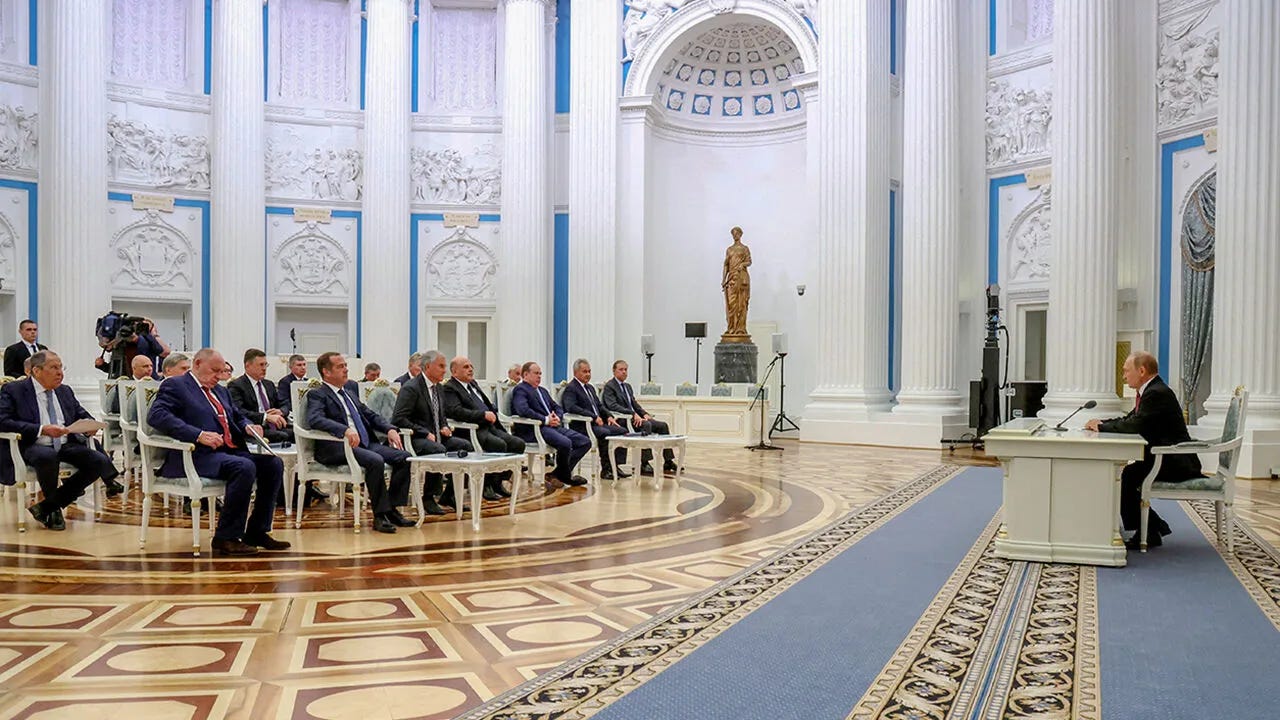
Vladimir Putin’s recent theatrics following his summit with Donald Trump underscore his dual strategy of pressing for a military advantage in Ukraine while simultaneously dangling diplomacy as a means of securing victory on Russia’s terms. His Alaska visit was less about negotiation than performance—designed to impress his domestic elite and to showcase his restored international relevance after Trump ended his isolation. While Russia’s economy strains under war spending and battlefield gains remain limited, Putin is wagering on either a breakthrough on the front or a Trump-mediated deal that legitimizes Russia’s territorial seizures, locks Ukraine out of NATO, and weakens Western resolve. For him, diplomacy is not the end of war but an extension of it—keeping Trump aligned with Moscow and sowing divisions within Ukraine and across Europe. Even if the guns temporarily fall silent, Putin’s core objective—to fracture Western unity and dismantle the post-Cold War security order—remains unchanged.
Tech — Can AI Tilt Elections

Economists
The 2024 election cycle marked the first true test of AI’s political power, and the results suggest the technology tilted campaigns in both promising and troubling ways. A new global study shows AI played a role in four out of five elections, with its most common use in generating political content—much of it untraceable, and a significant share created by foreign actors. While governments sometimes harnessed AI benignly, such as to expand voter access or multilingual outreach, the majority of deployments were harmful: from resurrecting dead politicians to authorize fake endorsements, to deepfakes aimed at sowing doubt or chaos, as seen in Bangladesh and the Solomon Islands. Two-thirds of AI use fell into manipulative or deceptive categories, with Romania even forced to rerun a presidential election after AI interference. The evidence makes clear that AI is reshaping electoral environments everywhere, often to their detriment—but the extent to which it actually changes outcomes remains uncertain, leaving governments and voters to grapple with a fast-moving threat.
Business — Roadblocks to the AI Boom

FT
US tech stocks experienced a notable sell-off after warnings from OpenAI chief Sam Altman and a critical MIT report raised fresh doubts about the sustainability of the AI-driven market boom. Nvidia, the chip giant that recently hit a $4tn valuation due to AI optimism, fell 3.5%, while Palantir dropped 9.4%, and Arm slipped 5%. The Nasdaq Composite saw its sharpest one-day decline in nearly three weeks, down 1.4%, while the S&P 500 lost 0.7%. The declines rippled through Asian markets, reflecting wider investor jitters. Concern was fueled by the MIT study, which found that 95% of organizations are realizing no returns from their generative AI investments, and by Altman’s warning that investors are probably “over excited” about AI, hinting at a possible bubble. As traders rotated away from high-growth tech names, more defensive sectors like consumer staples and utilities gained, even as the S&P 500 tech sub-index retained a 14% rise since mid-May, led by major AI-related stocks.
Culture — America’s New Plan To Fight a War With China

Economists
The United States is overhauling its Pacific military strategy to counter China’s growing missile capabilities, reviving WWII-era facilities like Tinian and expanding backup airstrips in places such as Guam to support a doctrine called Agile Combat Employment (ACE), which focuses on dispersing aircraft to survive attacks, regrouping for counterstrikes, and constantly moving to complicate Chinese targeting. Recent war games and think-tank analyses reveal that China could strike hundreds of American targets a day within the first and second island chains, challenging the US’s ability to maintain air power and logistics throughout a vast region with limited usable airfields and vulnerable assets like old refuelling tankers and exposed aircraft clusters. To adapt, the US is prioritising rapid airfield repairs, portable shelters, increased use of drones—including runway-independent models—and robust command structures that let units operate with minimal connectivity, seeking to offset China’s firepower and industrial capacity. However, despite the urgency—as China aims to be ready for a Taiwan invasion by 2027—the slow pace of upgrades and a flat defence budget pose significant hurdles, and American planners acknowledge China might only need to hold off US intervention long enough to achieve its goals.
The Daily Spark
The US yield curve has started steepening, not only 2s10s but also 10s30s, see the first chart below.
There are three reasons why this is happening:
1. The Fed is cutting rates.
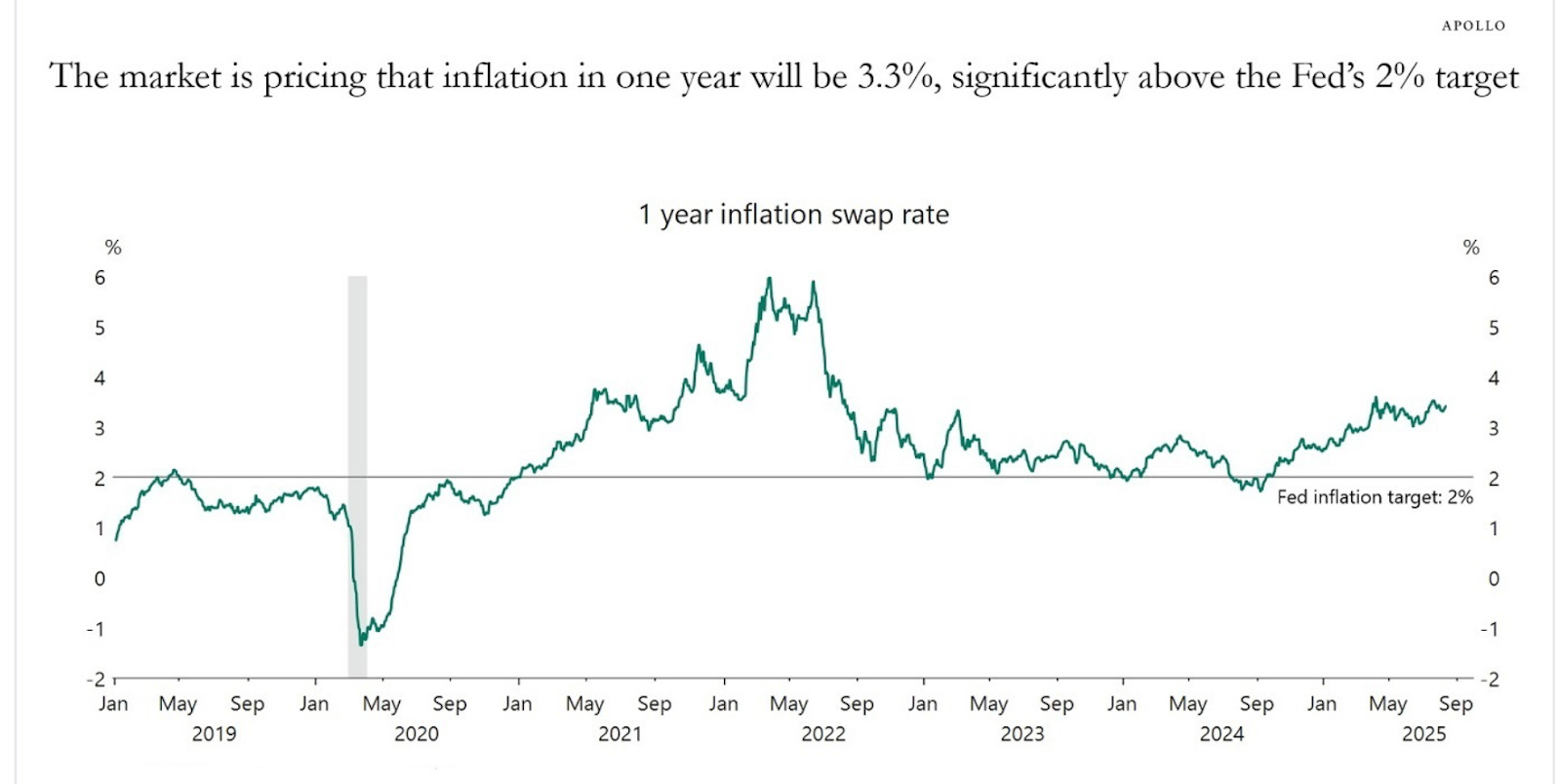
2. If the market thinks the Fed is cutting for political reasons, it puts upward pressure on inflation expectations and ultimately long rates, which also steepens the curve, see the second chart.
3. Growing Treasury issuance is putting upward pressure on long rates, see the third chart.
If Fed Chair Powell, in his Jackson Hole speech on Friday, is going to signal less commitment to the Fed’s 2% inflation target, the curve will steepen further.
We have put together a chart book looking at this topic, including some of the recent weakness in Treasury auctions. It is available here.
Song Recommendation — Homesick
Quote of the Day
"Anyone can cook, but only the fearless can be great." - Ratatouille (2007)