

World News — Carney Distances Federal Government from Ontario’s Anti-Tariff Ad Campaign

Canadian Prime Minister Mark Carney is seeking to reassert federal control over U.S. trade negotiations after Ontario Premier Doug Ford’s anti-tariff television ad prompted President Trump to threaten an additional 10% tariff increase on Canadian goods. Carney emphasized that negotiations with the White House are the “sole responsibility of the government of Canada,” while the controversial 60-second spot featured excerpts from Ronald Reagan’s 1987 address criticizing tariffs and aired during World Series broadcasts, drawing Trump’s angry response.
Ford agreed to pause the ad campaign Monday to allow trade talks to resume, though provincial responses remain divided—British Columbia is launching its own digital campaign highlighting U.S. forestry tariffs on Canadian lumber, while Alberta’s premier urged consistent federal diplomacy instead. Carney is now attempting to leverage their shared attendance at the ASEAN summit in Malaysia to de-escalate tensions and restart negotiations.
Tech — AWS Shows Signs of Weakness
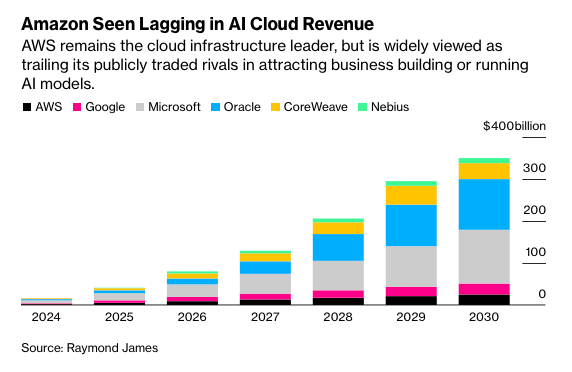
Amazon Web Services (AWS), the company that pioneered cloud computing and once dominated with nearly half the market share, is now struggling with internal bureaucracy, a lackluster AI strategy, and intensifying competition that has eroded its leadership position to 38% of the market. The division suffered a damaging 15-hour outage and watched rival Google secure a major deal to supply up to 1 million AI chips to Anthropic—the startup Amazon invested $4 billion in but initially passed on supporting—while Microsoft now grows its corporate sales backlog faster than AWS.
Interviews with 23 current and former employees reveal an organization weighed down by pandemic-era management bloat, where decision-making has slowed dramatically and teams spent months rewriting pitches while markets moved on, causing AWS to fall behind competitors like Google and Oracle in attracting AI startups and losing its reputation as the default platform for emerging companies. Despite maintaining customer loyalty and plans to launch new AI services in December, AWS faces mounting pressure as it scrambles to validate its Trainium2 chips through the massive Indiana data center complex being built for Anthropic, even as that same startup now has alternative options through Google’s deeper partnership.
Business — US EV Investment Plummets as Trump Policies Risk Ceding Ground to China
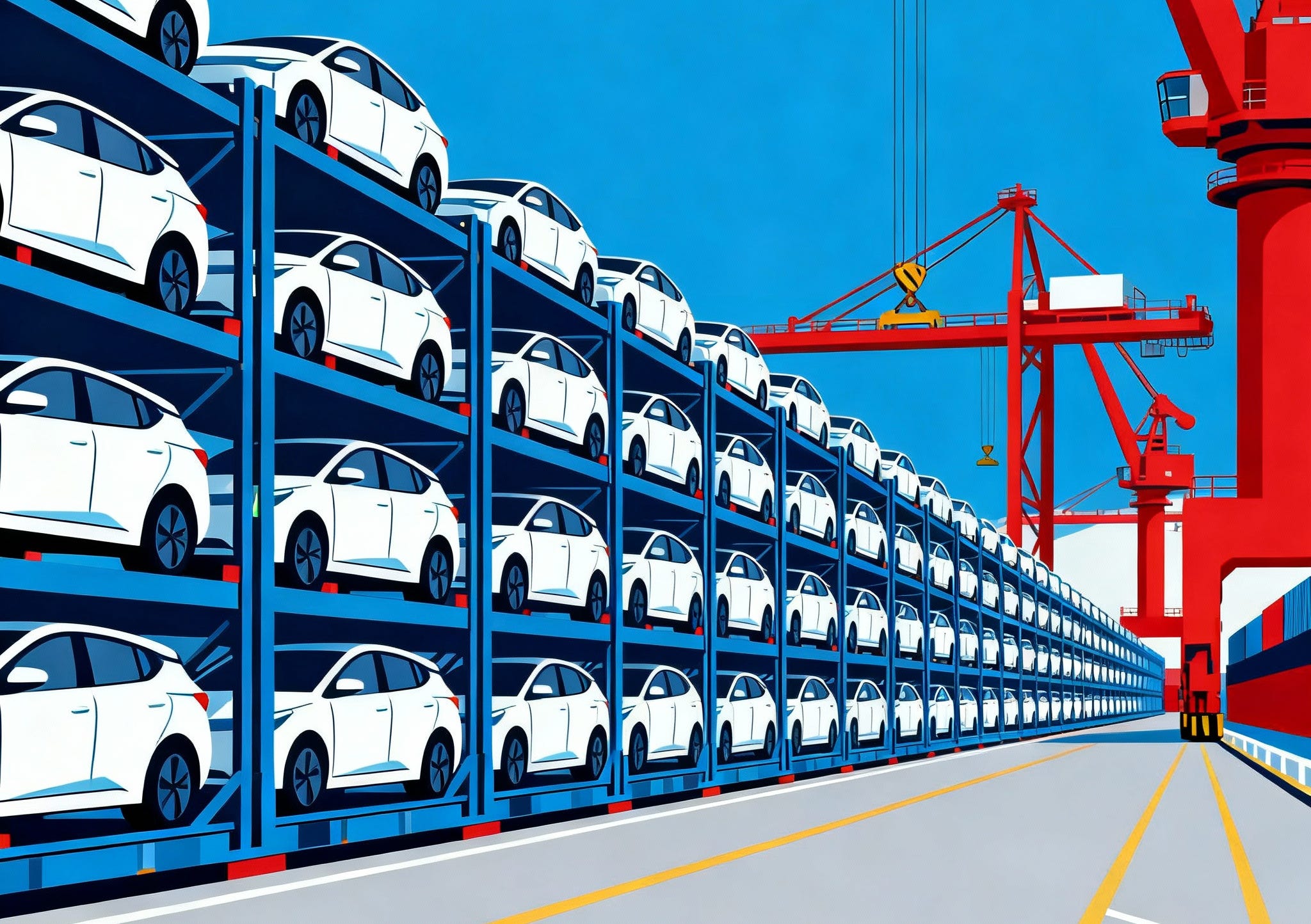
The US risks falling further behind China in the global electric vehicle race after the Trump administration’s reversal of Biden-era EV support led to a nearly one-third plunge in EV investments to $8.1 billion in the third quarter, with about $7 billion in planned investments scrapped between April and September. Trump has eliminated consumer tax incentives and proposed axing emissions rules while warning that EVs will cause “complete obliteration” for the US auto industry, prompting forecasters to slash 2030 US EV sales projections from 25% to just 18% of the market—far below expected rates of 40% in Europe and 51% in China.
The policy shift creates a dilemma for legacy automakers who profit more from petrol cars in the short term but risk ceding long-term technological advantages in batteries, pricing, and software to Chinese rivals like BYD and Geely, with industry experts warning that stepping off the EV development treadmill could leave Western manufacturers permanently behind. While companies like Stellantis and Ford are pivoting back toward internal combustion engines—Ford’s EV unit lost $3.6 billion in nine months while its petrol business earned $2.3 billion—European executives like Volvo’s CEO warn that weakening policy signals will slow development needed to compete with China’s accelerating EV dominance.
Culture — Alcohol Industry Adapts as Health Concerns Meet Premium Drinking Trends

The global alcohol industry faces mounting pressures from health warnings—including the WHO grouping alcohol with tobacco and fossil fuels, and the US surgeon general linking it to cancer—alongside economic headwinds like China’s sluggish spending, Trump’s tariffs costing Diageo $200 million annually, and declining consumption among young Western drinkers, pushing major spirits makers’ valuations below tobacco companies. However, the industry’s outlook is brighter than it appears: while global alcohol volume has dipped since COVID, total spending continues rising toward $1.2 trillion this year as consumers trade up to premium products, and emerging markets like India, Brazil, and South Africa show growing consumption among expanding middle classes that now contribute over 65% of earnings for major brewers like AB InBev and Carlsberg.
Western drinking habits are also evolving rather than disappearing—Gen Z alcohol consumption jumped from 66% to 73% in two years as post-lockdown socializing resumed, premixed cocktails are surging in popularity, and the no- and low-alcohol segment is booming to $28.6 billion with brands like Heineken 0.0 and Guinness 0.0 commanding premium prices, including £6.70 for an alcohol-free pint at London’s Lucky Saint pub. The industry is adapting by shifting focus to premiumization, emerging markets, and tapping into the growing “drinking less but better” trend among health-conscious consumers who favor craft options over mass-market brands.
Chart of the Day
Quote of the Day
“I believe in only one thing, the power of human will.” ― Joseph Stalin