

World Events — Russia Is Raining Hellfire on Ukraine
The Economists
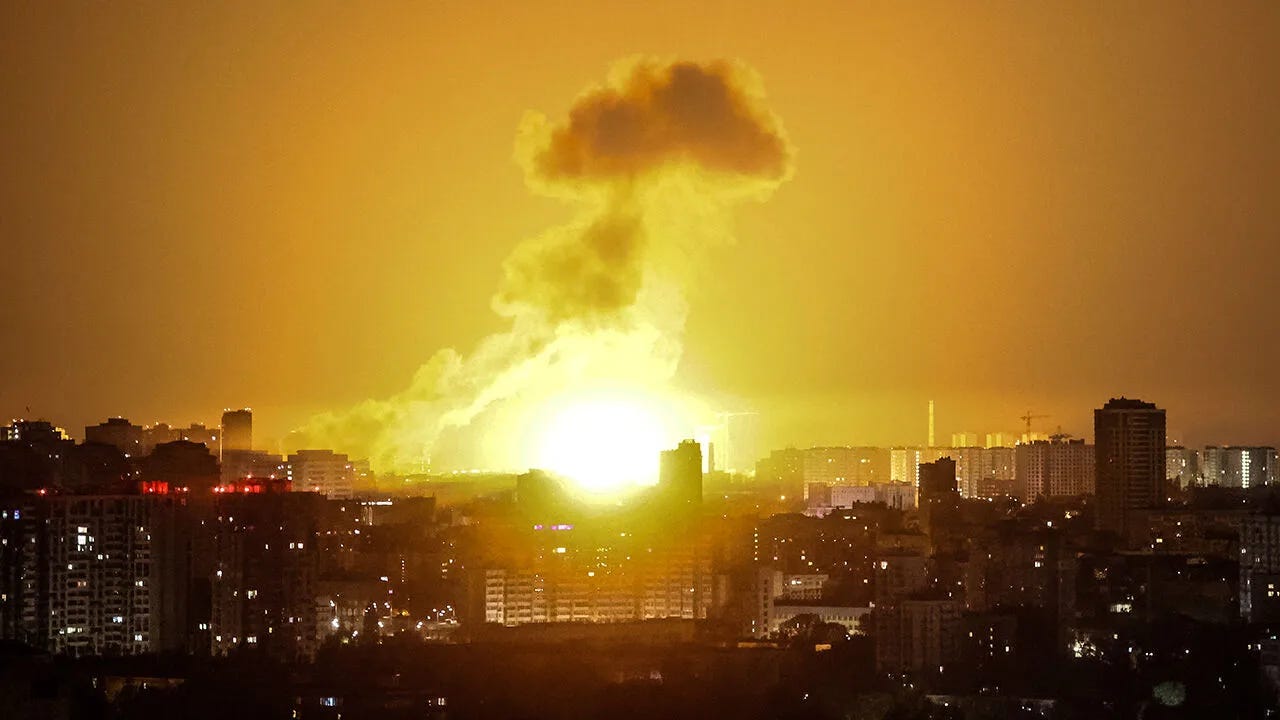
Russia has dramatically escalated its aerial campaign against Ukraine, unleashing the largest drone and missile assault of the war on the night of May 24–25, 2025. In this unprecedented attack, Russia launched 298 drones—primarily Iranian-designed Shahed models—and 69 missiles of various types, targeting more than 30 cities and villages across the country, including Kyiv, Zhytomyr, Khmelnytskyi, Ternopil, Chernihiv, Sumy, Odesa, Poltava, Dnipro, Mykolaiv, Kharkiv, and Cherkasy. The saturation of Ukraine’s air defenses pushed them to their limits, with Ukrainian forces reportedly shooting down a significant number of incoming threats, but at least 12 people were killed and dozens injured as some missiles and drones penetrated defensive lines. This attack, described by Ukrainian officials as a deliberate strike on civilian infrastructure, underscores a significant shift in Russian tactics: a surge in the volume and sophistication of aerial attacks, including the use of AI-driven drones that are increasingly resistant to electronic countermeasures. As Ukraine’s stockpile of interceptor missiles dwindles and Western support becomes less certain, the country faces mounting challenges in protecting its skies, with officials warning that unless the balance of air defense and offensive deterrence shifts, the devastation from such massed Russian strikes will only intensify.
Tech — Huawei’s Comeback

The Economists
Huawei’s remarkable resurgence after being blacklisted by the US in 2019 highlights the limits of Washington’s attempts to contain China’s technological ambitions. Despite sweeping sanctions that cut off access to American technology and pressured allies to exclude Huawei from telecom networks, the company rebounded with robust state support, pioneering homegrown technologies like the HarmonyOS operating system and advanced chips such as those in the Mate 60 smartphone. Huawei’s ability to produce a 7-nanometer chip domestically—just a few years behind the global cutting edge—was celebrated in China as a victory over US export controls, and the company has since become a central player in Beijing’s push for tech self-sufficiency, especially in AI and semiconductors. While US restrictions have curtailed Huawei’s global reach, the firm now dominates its vast home market, expands into sectors like electric vehicles, and continues to draw intense scrutiny from US officials, who warn that Huawei’s growing capabilities pose enduring security and economic challenges.
The Markets — A Higher Bond Yield Spells Trouble
Round numbers, though theoretically irrelevant in financial markets, often carry psychological weight, and the fact that U.S. 30-year Treasury yields have hovered above 5% since May 21, 2025, has unnerved investors. This spike came just as the House narrowly passed President Trump’s deficit-expanding budget, intensifying concerns about America’s fiscal trajectory and the reliability of Treasuries as a safe haven. The U.S. government has borrowed $2 trillion (6.9% of GDP) in the past year, and with fiscal deficits rising and central banks unwinding their balance sheets, the supply of long-term bonds remains high while traditional buyers like pension funds are stepping back. As a result, yields are rising not just in America but across other major economies, reflecting both local inflation worries and the global impact of U.S. fiscal policy; higher U.S. yields force up borrowing costs worldwide, and uncertainty over trade and fiscal policy is prompting investors to demand greater risk premiums. If the usual long-term buyers have already locked in attractive yields and are now withdrawing, the stage is set for even higher borrowing costs and greater fiscal strain ahead.
Society — Trump’s Assault on Science
The Economists
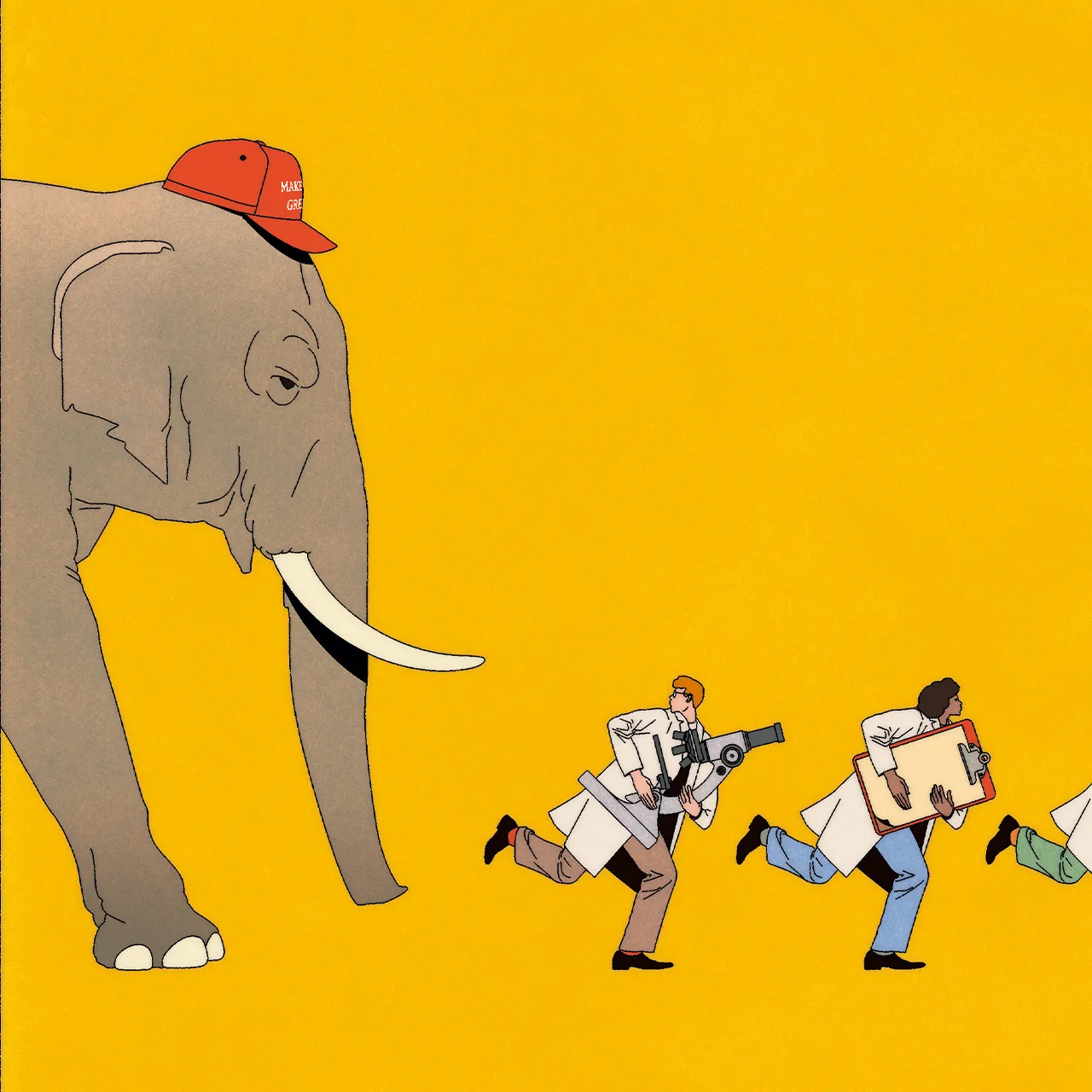
The Trump administration’s sweeping cuts to federal science funding—slashing budgets at agencies like the NIH and NSF by up to half, canceling thousands of research grants, and targeting elite universities such as Harvard and Columbia—represent a profound act of self-harm for America. While officials justify these moves as efforts to eliminate inefficiency and “woke” ideology, the cuts are indiscriminate, gutting not just diversity programs but core scientific research across medicine, climate, and basic sciences. The fallout is immediate: thousands of scientists have lost jobs or funding, research projects on everything from Alzheimer’s to quantum physics have been abruptly halted, and top talent is seeking opportunities abroad, fueling a brain drain that threatens America’s global leadership in innovation.The long-term consequences are dire—not only will ordinary Americans lose out on advances in health, technology, and disaster preparedness, but the country risks ceding scientific and economic primacy to rivals like China, undermining the very foundation of its prosperity and security.
The Daily Spark
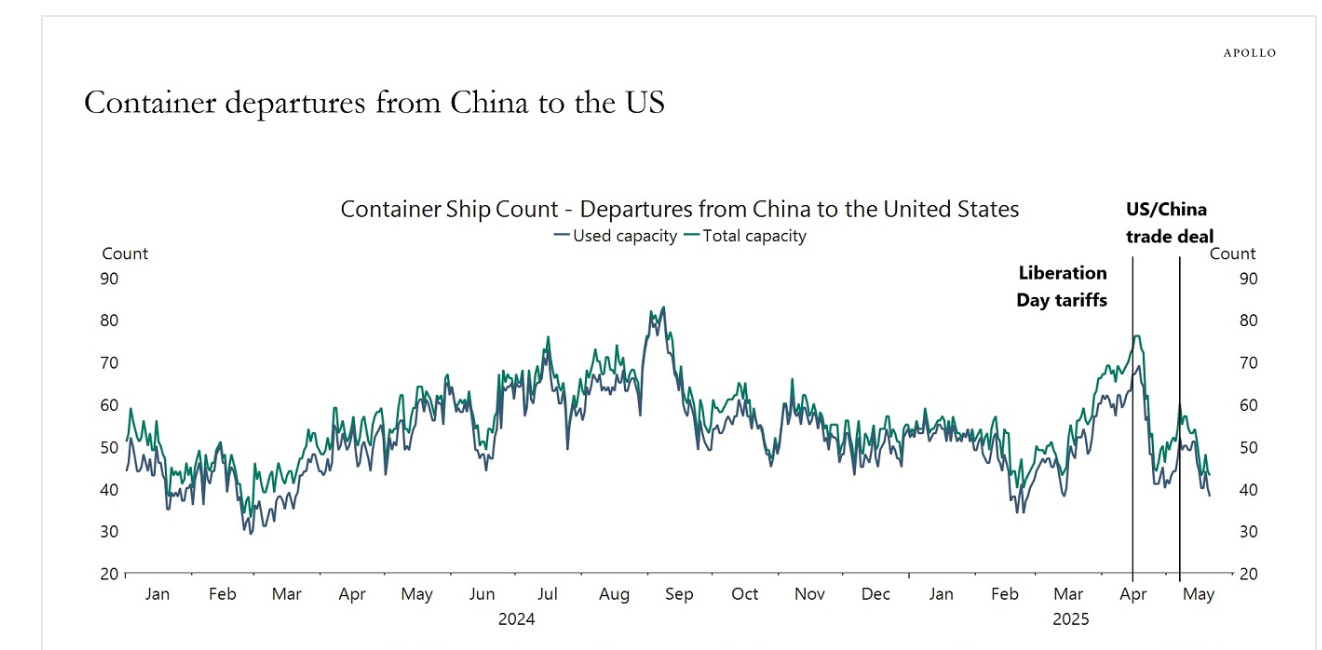
It’s been nearly two weeks since the China/US trade deal, but container traffic from China to the US hasn’t shown a strong rebound, see chart below.
This raises the question: Are 30% tariffs on China still too high? Or are US companies simply waiting to see if tariffs will drop further before ramping up shipments?
Song Rec — Messy (Rose)
Quote of the Day
"I am no bird; and no net ensnares me; I am a free human being, with an independent will." — Charlotte Brontë