

Walk into any college library, coffee shop, or airport terminal and you’ll see them: grey sweatpants. The cropped white tee. The oversized hoodie with “Santa Monica” across the chest. It’s like a uniform, except nobody issued it.
If you’re a guy, you’ve either been dragged into a Brandy Melville store by your girlfriend—and stood there confused while she waited in a 45-minute line—or you’ve heard about it in hushed, reverent tones from female friends who describe it like it’s a religious experience.
Here’s what makes it weird: Brandy Melville only sells women’s clothes in one size. Most items come in “one size fits most”—which really means “one size fits some.” The brand has been called discriminatory, fatphobic, and everything else you can think of. There have been documentaries. Boycott campaigns. The internet has tried to cancel Brandy Melville approximately 47 times.
And yet, every girl you know is still wearing those sweatpants.
So here’s the question: How is a brand that openly refuses to make clothes for most women not only surviving but thriving in 2025?
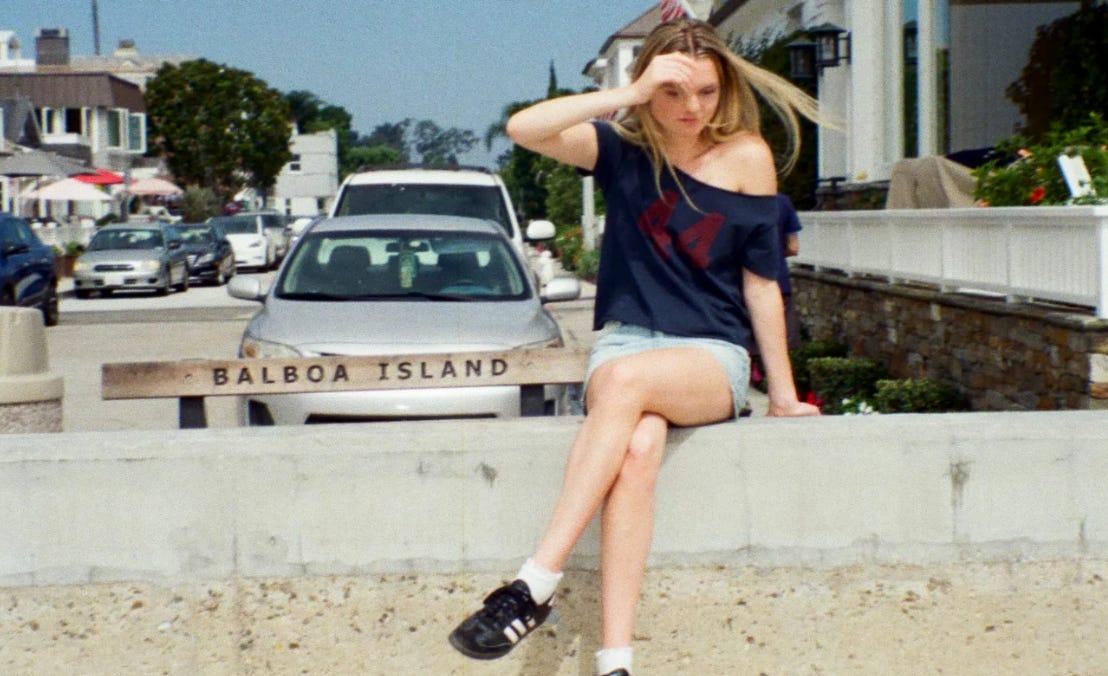
Founded in Italy in the 1980s by Silvio Marsan and his son Stephan (who’s still CEO), the brand didn’t become what it is today until after the 2008 financial crisis, when it opened its first U.S. store in Westwood, right off the UCLA campus. The timing was perfect. The vibe was California-casual: pastel colors, relaxed fits, that Malibu-adjacent aesthetic that makes you think of beach bonfires and driving down PCH with the windows down.
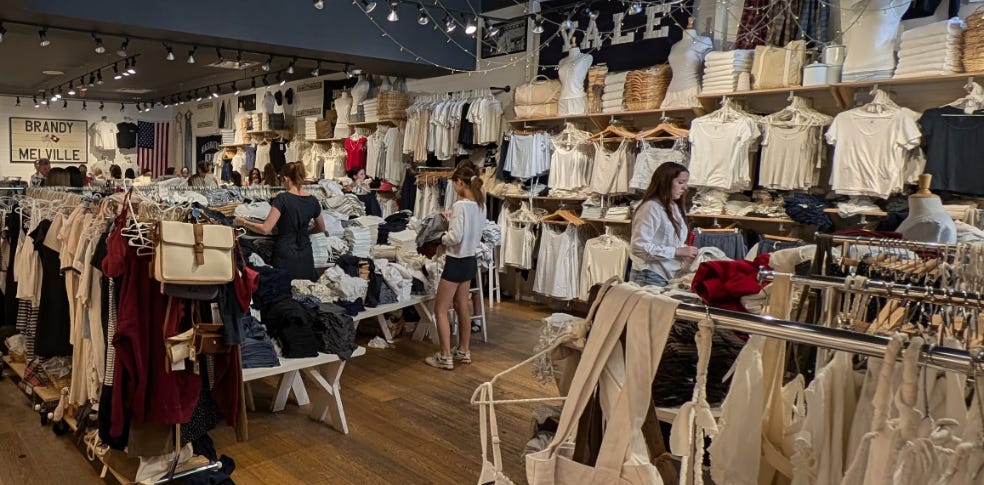
By the 2010s, Brandy expanded to major cities—New York, D.C., even Toronto. Today, there are over 100 locations worldwide. But here’s what’s strange: walk into any Brandy Melville and it looks exactly the same. Wooden interior, vintage flags hanging on the walls, sweatshirts with American city names, that carefully curated “effortless” California vibe. It’s like Apple Store-level consistency, but for teenage girls.
And the strangest part? Brandy Melville does almost zero marketing.
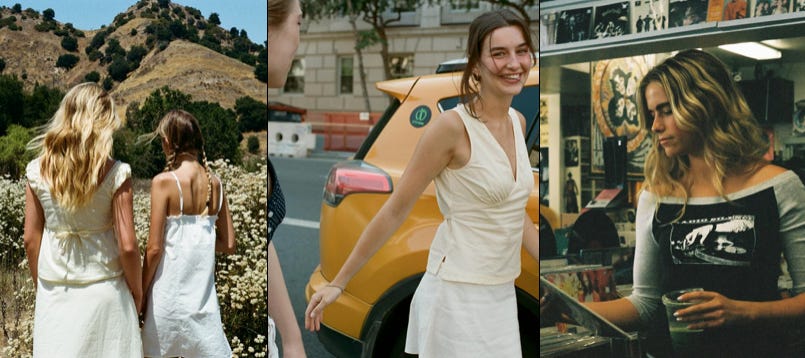
No TV commercials. Just an Instagram account that posts photos of skinny, blonde girls wearing the clothes in soft lighting. That’s it. That’s the entire marketing strategy.
Compare this to how every other Gen Z clothing brand operates. Hollister and Abercrombie practically assaulted you with advertising in the early 2000s—shirtless guys spraying cologne at the mall entrance, provocative campaigns everywhere. Zara and H&M flood your Instagram with sponsored posts. Shein bombards you with discount codes and influencer haul videos.
Brandy? Nothing. Radio silence. And somehow, that’s exactly why it works.
In that regard, Brandy Melville is the complete opposite of everything modern fashion has become.
The last decade has been defined by democratization. Social media promised to make everything visible and acceptable. Body positivity movements pushed brands to be more inclusive. Victoria’s Secret cancelled its famous runway show in 2019 after backlash over lack of body diversity. Abercrombie & Fitch nearly died because people called out its sexualized marketing and exclusionary sizing. The message from culture was clear: fashion needs to be for everyone.
Brands listened. They expanded size ranges. They featured models of all body types. They hired diverse creative teams. They changed their messaging to be more inclusive, more welcoming, more “for you, no matter who you are.”
And a lot of those brands struggled. Victoria’s Secret lost its cultural relevance. Abercrombie spent years trying to rebuild its image. Traditional retailers couldn’t figure out who they were anymore because they were too busy trying to be everything to everyone.
Brandy Melville looked at all of this and said: “No thanks.”
They kept the one-size model. They kept posting photos of the same body type. They kept the exclusive, California-cool aesthetic that only “works” if you fit a very specific mold. They didn’t apologize. They didn’t pivot. They didn’t try to be inclusive because inclusion was never the point.
And here’s the uncomfortable truth: it worked. Because it was exclusive, not despite it.
The Economics of Desire
Let’s talk about what Brandy is actually selling. It’s not just sweatpants—you can get sweatpants anywhere. It’s selling an identity. When you wear Brandy Melville, you’re signaling something specific: you’re young, you’re carefree, you’re effortlessly cool, and most importantly, you fit.
The one-size policy isn’t a bug. It’s a feature. It creates desirability through scarcity. Not everyone can wear Brandy, which means wearing Brandy means something. It’s the same psychology behind luxury brands—Hermès doesn’t make bags for everyone, and that’s exactly why people want them. Burberry would rather burn excess inventory than discount it, because scarcity maintains value.
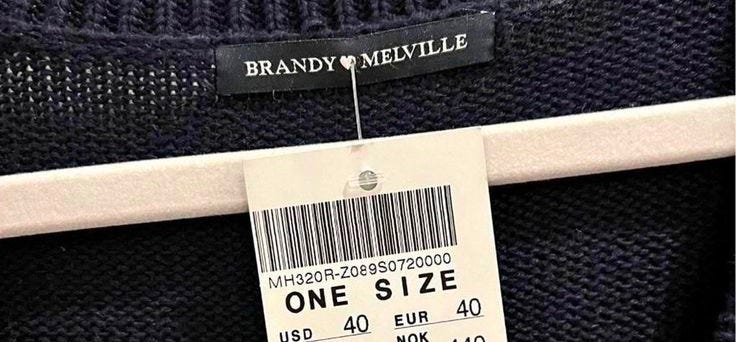
Brandy Melville isn’t a luxury brand in price—most items are $20-$50, comparable to H&M, Zara, Hollister. But it operates with luxury brand logic: exclusivity creates desire. The fact that you can’t buy it if you don’t fit is part of what makes it appealing to those who do.
Is that problematic? Sure. But it’s also honest. Brandy knows exactly who its customer is and makes no apologies for it. Unlike brands that expanded too fast, tried to please everyone, and lost their identity in the process, Brandy has stayed relentlessly true to its aesthetic.
The numbers back this up. Brandy Melville does $200-250 million in annual sales with only about 54 stores in the U.S. Hollister does 5x that revenue but has hundreds of stores and still struggles with brand relevance. Brandy operates more like a cult brand than a fast-fashion retailer—small footprint, massive cultural impact, fiercely loyal customer base.
And here’s the key: Brandy is private (so much so that it purposely obscures information about its operations and corporate structure). It’s not beholden to public shareholders demanding quarterly growth. It doesn’t have to expand rapidly or chase trends or pivot every time the cultural winds shift. It can just... be Brandy. Selling the same California aesthetic, year after year, without extensive pressure to evolve.
You might be thinking: “Okay, but this is just about teenage girls buying overpriced basics. Why does this matter?”
It matters because Brandy Melville represents a counter-narrative to everything we’ve been told about modern consumer culture. We’ve been told that inclusivity sells. That representation matters. That brands need to meet customers where they are, adapt constantly, respond to criticism, evolve with the times.
Brandy proves that none of that is necessarily true. Sometimes, having a clear point of view—even a controversial one—is more valuable than trying to appeal to everyone. Sometimes, exclusivity is more powerful than accessibility. Sometimes, staying small and focused beats rapid expansion.
This isn’t to say Brandy’s approach is morally right or that other brands should copy it. But it reveals something uncomfortable about consumer psychology: we say we want inclusion, but we’re drawn to exclusion. We say we want brands to be for everyone, but we’re more attracted to brands that are selective. We criticize gatekeeping while simultaneously wanting to be on the inside of the gate.
The girls lining up for 45 minutes at Brandy aren’t stupid. They know the sizing is exclusive. That’s partly why they want it. Wearing Brandy signals something—youth, thinness, a certain aspirational lifestyle—that wouldn’t mean the same thing if everyone could buy it.
The Bigger Question
This brings us to an uncomfortable place: What does it say about a generation that Brandy Melville is thriving?
On one hand, we’re supposedly the most body-positive, inclusive, socially conscious generation in history. We cancel brands for lack of diversity. We demand representation. We call out problematic behavior online with unprecedented fervor.
On the other hand, we’re making Brandy Melville—a brand that represents the exact opposite of those values—wildly successful.
Maybe the answer is simpler than we want to admit. Maybe we’re not as evolved as we think we are. Maybe the desire to be part of something exclusive, to signal status through what we wear, to aspire to a specific aesthetic ideal—maybe all of that is more powerful than our stated political values.
Or maybe it’s just that authenticity matters more than politics. Brandy Melville never pretended to be something it’s not. It didn’t release a statement about body positivity while quietly keeping the same sizing. It didn’t hire diverse models for Instagram while maintaining exclusive stores. It just... stayed Brandy. Unapologetically.
In a world where every brand is trying to have the “right” values, to say the “right” things, to appeal to the “right” demographics, there’s something almost refreshing about a brand that just owns what it is. Even if what it is isn’t particularly noble.
Brandy Melville isn’t selling clothes. It’s selling the fantasy of being effortlessly cool, perpetually young, California-casual even if you live in Ohio. It’s selling the feeling of fitting in—both literally and socially. It’s selling aspiration at an accessible price point.
The genius is that it never promises to be for everyone. Luxury brands have known this forever: Hermès doesn’t apologize for $10,000 bags. Burberry doesn’t apologize for being expensive. They’re exclusive, and that’s the point.
Brandy just applied that same logic to fast fashion. It’s democratized exclusivity—you don’t need to be rich, but you do need to be thin. That’s the trade-off. And enough people accept that trade-off to make the business model work.
Is it fair? No. Is it inclusive? Absolutely not. Is it good for society? Debatable. But is it working? Undeniably yes.
So to go back to the question, why is every girl you know wearing the same sweatpants? Because Brandy Melville figured out something the rest of fashion forgot: you don’t have to be everything to everyone. You just have to be unapologetically yourself—and know exactly who wants to be you.
The California girl aesthetic isn’t real. Most of the girls wearing Brandy don’t live in California, don’t surf, don’t have that effortless tan. But they want to feel like they do. They want to signal that they could.
And Brandy gives them that. One size fits most. If it fits you, you’re in. If it doesn’t, well—there’s always H&M.
The brand’s unofficial motto might as well be: “Nothing is sexier than being yourself, shhhh…but only if yourself fits into our clothes.”
And somehow, it sells.