

World News — Trump Asked Lawmakers Whether He Should Fire Fed’ Jay Powell
FT
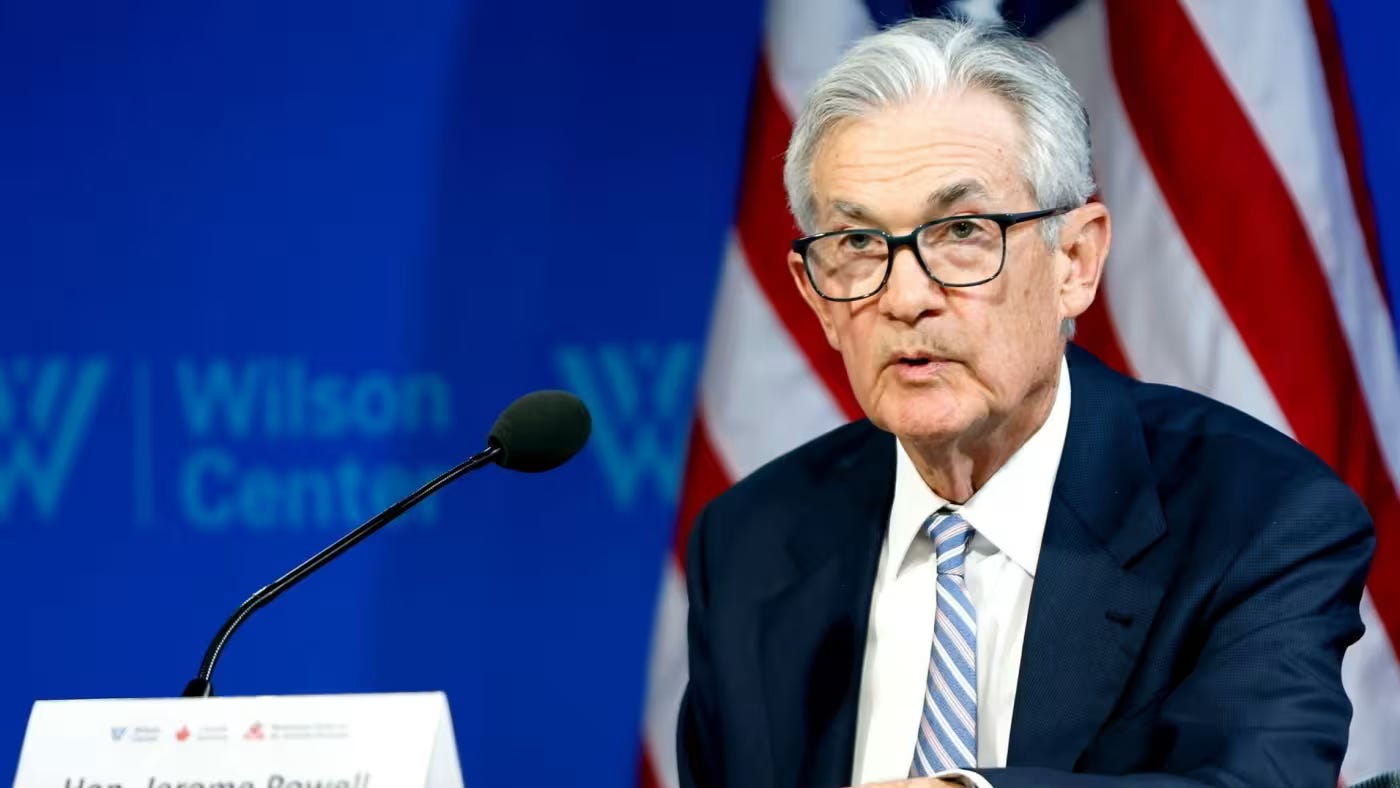
Regarding recent developments, President Donald Trump asked Republican lawmakers in a recent Oval Office meeting whether he should fire Federal Reserve Chair Jay Powell, raising fresh concerns about the central bank’s independence and sparking volatility in currency markets. Although many lawmakers supported the idea and Trump displayed a draft dismissal letter, he later stated it was “highly unlikely” he would proceed unless there was evidence of fraud. The administration’s criticism of Powell has focused on both monetary policy—specifically the refusal to cut interest rates—and management of a costly Fed headquarters renovation. Legal experts and senior officials emphasize that firing the Fed chair would likely provoke a significant legal and political battle, as the law only permits such an action “for cause,” and market leaders warn that undermining Fed independence could have adverse consequences for the economy.
Tech — Amazon Launches More Kuiper Internet Satellites
CNBC
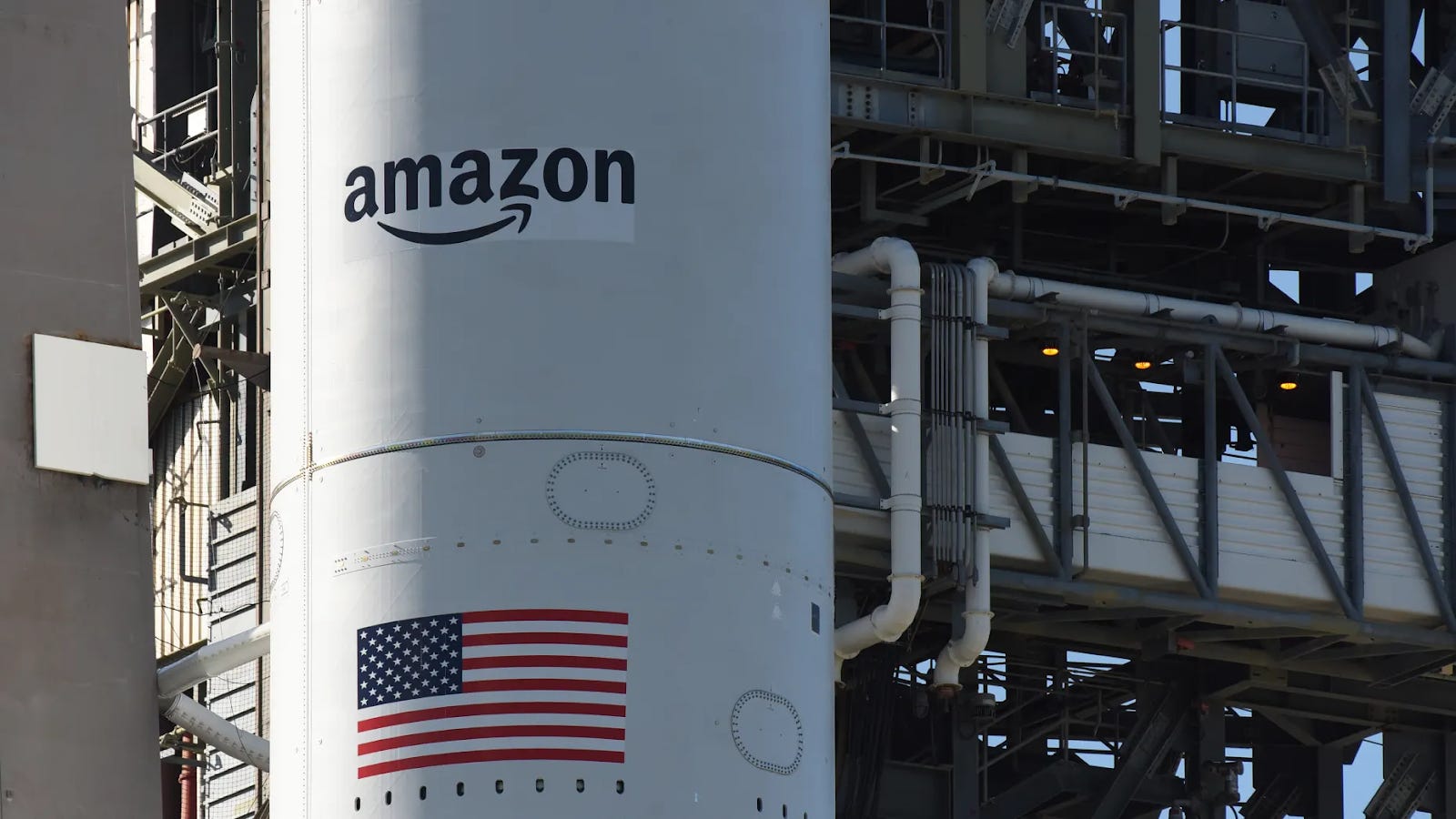
Amazon has successfully launched another batch of 24 Kuiper internet satellites aboard a SpaceX Falcon 9 rocket from Florida’s Cape Canaveral Space Coast, marking an unusual collaboration between the two rival companies. This launch brings Amazon’s total Kuiper satellites in orbit to 78 as it races to compete with SpaceX’s dominant Starlink constellation of roughly 8,000 satellites. Project Kuiper aims to deploy over 3,200 satellites to provide broadband internet globally, with a stringent Federal Communications Commission deadline requiring about 1,600 satellites in orbit by July 2026. Despite Blue Origin—Jeff Bezos's rocket company—also contributing launch capability, Amazon has turned to SpaceX for three of its planned 83 launches to meet this deadline. Kuiper represents a major investment for Amazon, estimated to cost between $10 billion and $23 billion, not including customer terminal costs. The growing satellite internet market, projected to reach $40 billion by 2030, sets the stage for intense competition between Musk’s Starlink and Bezos’s Kuiper, with analysts forecasting Amazon could earn over $7 billion annually from Kuiper by 2032 if it captures 30% of the market.
Economics — Should China Adopt 0% Interest Rate
FT
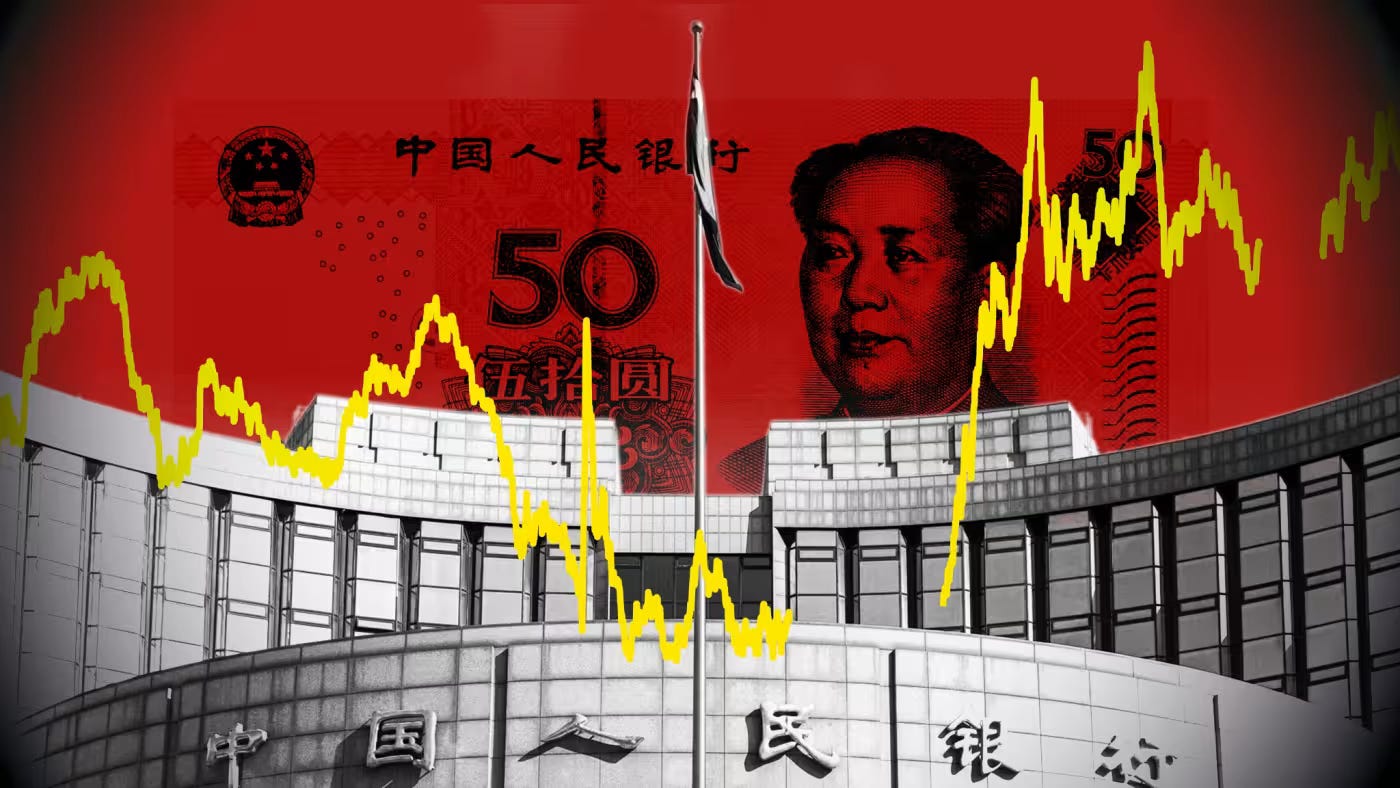
China’s policymakers are sharply divided over whether to formally adopt a zero interest rate policy as the nation confronts robust real economic growth alongside weak nominal growth due to ongoing deflation. While recent central bank actions have trimmed key policy rates to historic lows—the seven-day reverse repo rate now sits at 1.4%—some analysts argue the effective interest rate is already near zero for many borrowers, though others doubt a formal move is imminent. Supporters of deeper cuts, including some research economists, believe zero rates could help refinance local government debt and boost public investment, but opponents warn this would further compress banks’ already shrinking net interest margins, threaten financial stability, and do little to stimulate consumption amid high household savings and persistent property sector challenges. Additionally, concerns remain over the negative precedents set by the US and Japan: excessive risk-taking or long-term stagnation. Despite scenario planning and consultations with foreign institutions, Chinese authorities currently appear more inclined to maintain room for future policy easing rather than push immediately to zero, especially as they weigh both domestic risks and external pressures from global trade and tariff disputes.
Culture — On Lego, Love and Friendship

Economists
Hidden within Lego’s corporate museum in Billund, Denmark, the Vault is a chronological archive of around 10,000 Lego sets, evoking nostalgia and powerful emotions in visitors as they rediscover childhood memories. Marketing researchers identify five key types of consumer-brand connections: brand love (intense emotional attachment), brand hate (active aversion), communal relationships (obligation or concern, as with local stores), brand addiction (compulsive buying), and brand friendships (positive but less intense affinity). While Lego inspires deep nostalgia-driven affection—a feeling akin to reconnecting with a cherished childhood friend—it falls short of true “brand love” since most adults no longer interact frequently with the product. These nuanced distinctions matter to marketers, as understanding the specific nature of a consumer’s connection to a brand, such as Lego’s strategy of building early-life bonds, can shape more effective and lasting marketing strategies.
The Daily Spark
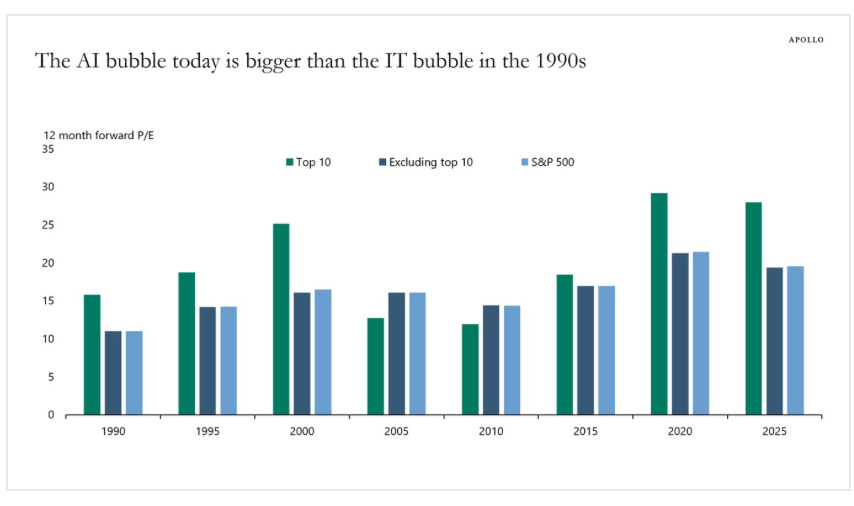
The difference between the IT bubble in the 1990s and the AI bubble today is that the top 10 companies in the S&P 500 today are more overvalued than they were in the 1990s, see chart below.
Song Recommendation — The River
Quote of the Day
“Do not wait to strike till the iron is hot; but make it hot by striking.” — William Butler Yeats