

World Events — Iran Vows Revenge After Israeli Strike
Bloomberg
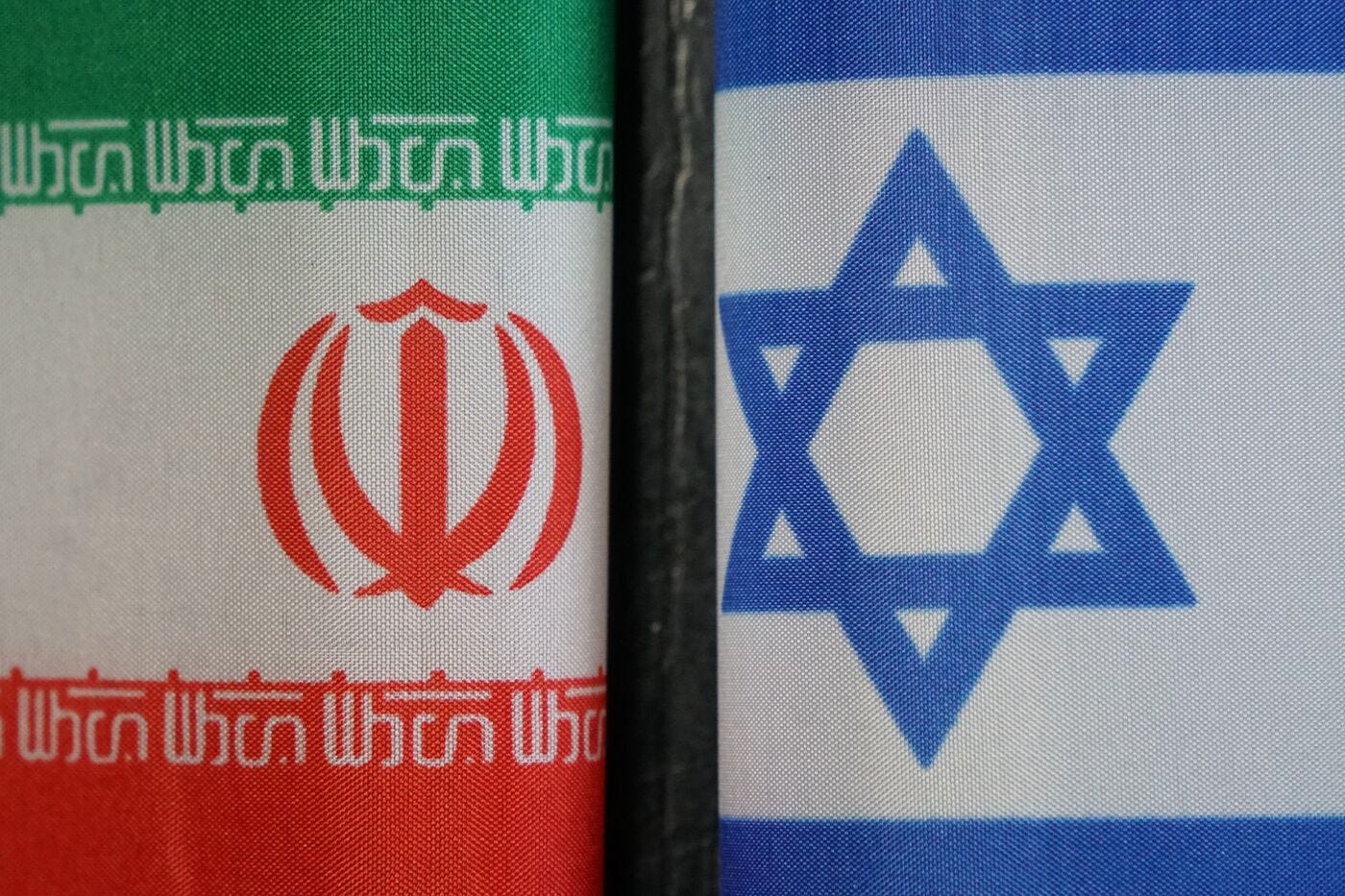
Israel has launched a sweeping series of airstrikes against Iran, directly targeting the country’s nuclear facilities, missile manufacturing sites, and top military and scientific figures—marking the first time Israel has struck Iran’s nuclear program and senior leadership in such a coordinated assault. Explosions were reported at key sites including Natanz, Iran’s main uranium enrichment facility, with Iranian state television confirming the death of Revolutionary Guard commander Hossein Salami and at least one other high-ranking official, as well as two nuclear scientists; civilian casualties were also reported, including children killed in a residential area of Tehran. In response, Israel declared a state of emergency, closed Ben Gurion Airport, and mobilized tens of thousands of troops in anticipation of potential Iranian missile or drone retaliation—with Defense Minister Israel Katz warning that such an attack is expected imminently. Iran’s leadership has vowed a “severe punishment” for both Israel and the United States, though the U.S. has denied involvement and cautioned Iran against targeting American interests. The dramatic escalation has triggered a surge in oil prices—Brent crude jumped nearly 12%—and a sharp drop in global stocks, as investors brace for the possibility of a broader regional conflict and increased geopolitical instability, while upcoming nuclear talks between the U.S. and Iran now hang in the balance.
Tech — Apple Needs to Open Up

Economists
In the age of AI, Apple urgently needs to embrace openness and let go of its tight control over its ecosystem, which has shifted from asset to liability. While Apple’s annual developer conference showcased a slick visual refresh and deeper integration among its devices, the company faces mounting challenges: supply chain risks due to tariffs, regulatory scrutiny over its App Store policies, and—most critically—lagging behind in artificial intelligence. Apple’s strategy of keeping AI models small and device-bound, prioritizing privacy, has left its offerings uncompetitive compared to rivals’ powerful cloud-based models. Recent moves, like partnering with OpenAI to integrate ChatGPT more deeply into Apple’s devices, are a step in the right direction, but not enough. Apple’s history shows that opening up—as it did with the App Store in 2008—unleashed innovation and propelled the iPhone to global dominance. For Apple to thrive in the AI era, it must trust users and developers with more control, allowing outside AI models to flourish on its platform rather than clinging to its control-freak instincts. Only then can Apple hope to remain at the forefront of technology as it did with the smartphone revolution.
Business — Chinese Car Industry Running on Fume

FT
China’s car industry is running on fumes as a brutal price war and mounting supply chain pressures leave major manufacturers struggling to pay their bills, with over a third of listed carmakers reporting current liabilities that exceeded current assets at the end of last year, according to Financial Times analysis. The squeeze is most severe at BYD, the leading electric vehicle maker, whose working capital deficit ballooned to Rmb125.4 billion by the end of 2024—36% higher than at the start of the price war—while rivals like Geely, Nio, and state-backed BAIC and JAC also face mounting liquidity risks, forcing many to delay payments to suppliers in a bid to maintain cash flow. Beijing has intervened, urging carmakers to settle supplier invoices within 60 days and warning against aggressive discounting and dubious practices like selling new cars as discounted used vehicles, but the industry’s aggregate profits and margins continue to shrink, with operating profit margins averaging just 3.9% in early 2025 and year-on-year profits dropping by 6.2%. Analysts warn that the sector is heading toward an “industry-wide elimination phase” by 2026, as relentless competition and weakening liquidity push weaker players to the brink, raising fears of a broader crisis akin to the recent property sector turmoil.
Culture — Bride Price Are Surging In China

Economists
Bride prices in China have surged to unprecedented levels, with rural areas especially hard-hit—figures like 380,000 yuan are not uncommon, far exceeding local incomes and plunging many families into debt. The government struggles to curb these payments despite repeated calls for action and sporadic local regulations, such as caps on bride prices or incentives for low-cost weddings, because entrenched cultural norms and a severe gender imbalance make enforcement difficult. With millions more men than women of marriageable age—an outcome of China’s one-child policy and son preference—families feel intense pressure to offer ever-higher payments to secure a bride, and efforts to intervene are often resisted by both families and local officials who fear disrupting tradition or provoking conflict. Moreover, women may view high bride prices as a form of financial security, further complicating reform efforts, while the lack of penalties and inconsistent enforcement means that many regulations are easily circumvented through informal gifts or asset transfers. Ultimately, the government’s superficial interventions fail to address the root causes: deep-seated gender inequality, rural poverty, and the commodification of marriage, leaving the crisis unresolved.
The Daily Spark
In the United States, the securitization market is 50% of GDP. In Europe, securitization markets are only 7% of GDP, see chart below.
Expanding the securitization market in Europe would unlock significant GDP growth in Europe.
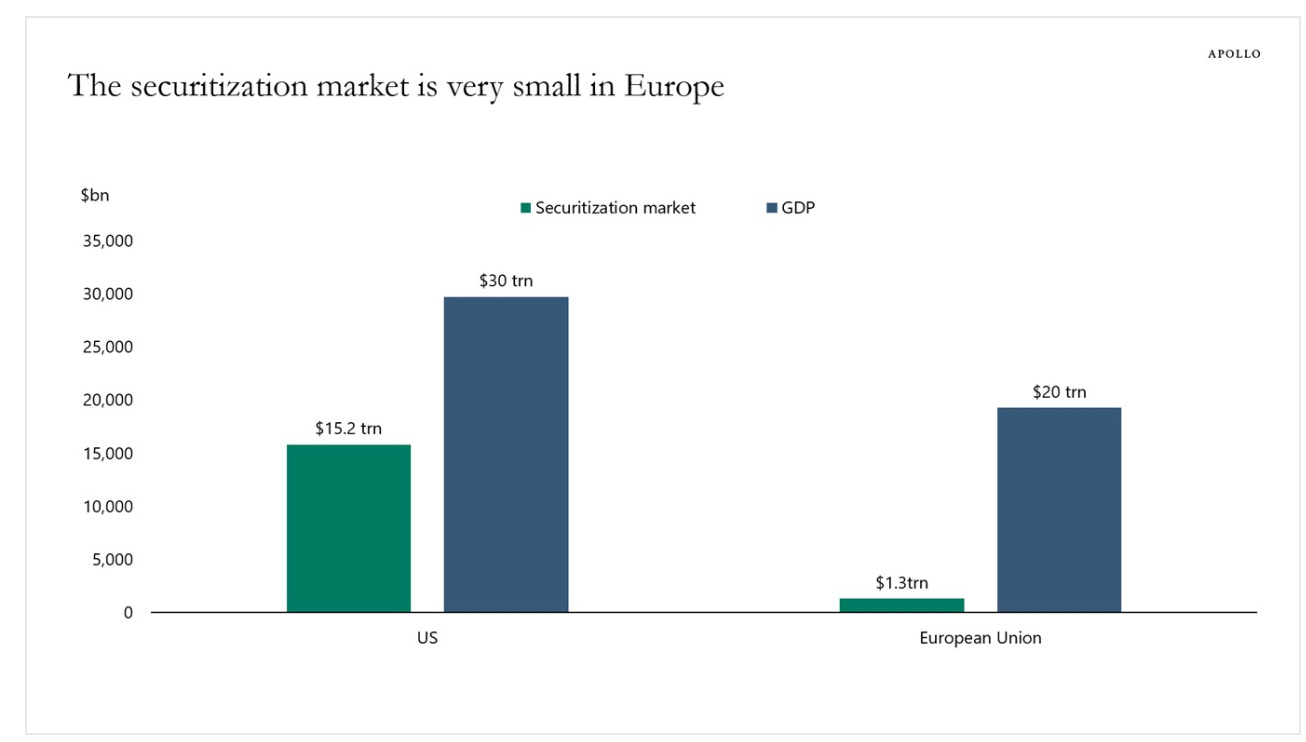
Note*: The securitization market is a financial market where illiquid assets are transformed into tradeable securities, allowing for greater liquidity and investment opportunities. It essentially involves pooling various assets, like mortgages or auto loans, and repackaging them into securities that investors can buy.
To read more: https://www.investopedia.com/terms/s/securitization.asp
Song Recommendation - In My Arms
Quote of the Day
"Death is a dialogue between the spirit and the dust." - Emily Dickinson