

World News — Bessent Warns China of Global Decoupling
FT
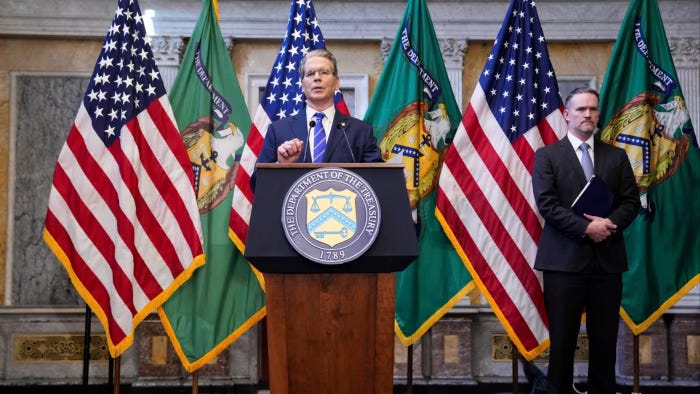
US Treasury Secretary Scott Bessent has warned that China’s new export controls on rare earths and critical minerals could force global decoupling, calling the measures “economic coercion on every country in the world.” The controls, set to take effect in December, will require government licenses for non-Chinese companies exporting products containing even trace amounts of these materials, potentially disrupting supply chains for everything from AI systems to smartphones and household appliances. President Trump has threatened an additional 100% tariff on Chinese imports by November 1 if the controls proceed, while Bessent maintains optimism for de-escalation ahead of a planned meeting between Trump and Chinese President Xi Jinping at the APEC forum on October 29.
Tech — Is GenAI THAT Useful? No, Not at the Hedge Fund Citadel
Billionaire Ken Griffin told investors that generative AI has failed to help hedge funds uncover alpha or produce market-beating returns, stating “with GenAI there are clearly ways it enhances productivity, but for uncovering alpha it just falls short.” Speaking at the JPMorgan Robin Hood Investors Conference, the Citadel founder said the technology hasn’t replaced meaningful research at his $69 billion hedge fund and is unlikely to create widespread or profound changes across the industry, though he acknowledged AI is driving corporate America to finally make technology advancements that should have happened over the past 25 years. Griffin has previously expressed skepticism about AI’s capabilities in investment analysis and its potential to replace human jobs in the near future.
Markets — Trump’s Wood Tariff
Bloomberg
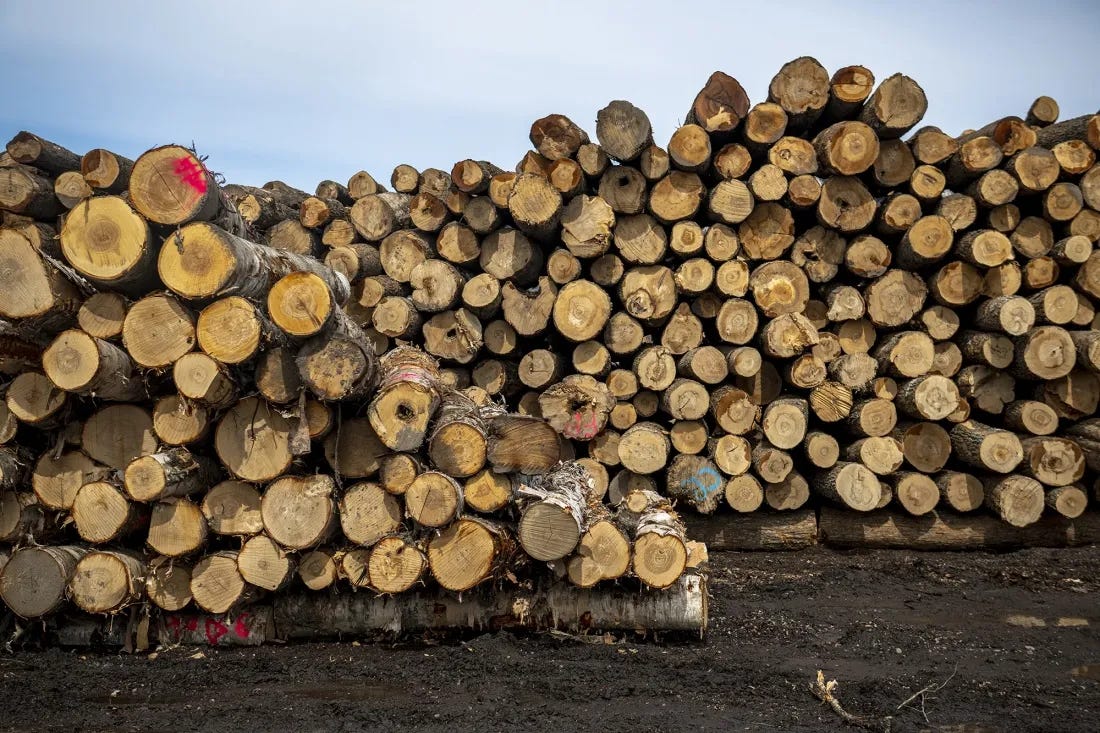
President Trump’s new tariffs on wood products, effective October 14, impose 10% duties on softwood lumber and 25% fees on kitchen cabinets and bathroom vanities (rising to 50% in January), with Canada bearing the heaviest burden as the tariffs stack on top of existing 35.19% duties already in place on Canadian lumber. The measures, justified by a Commerce Department national security probe claiming imports weaken the US economy, escalate a decades-long US-Canada dispute over alleged Canadian subsidies through below-market “stumpage rates” for timber harvesting on government-owned forests. While the tariffs aim to boost domestic manufacturing, US homebuilders and retailers warn they will drive up housing and furniture costs for consumers, and expanding domestic production faces significant hurdles including the need for new sawmills, trained workers amid immigration crackdowns, and the fact that Canadian spruce pine fir—favored for its workability—isn’t a perfect substitute for faster-growing US southern yellow pine.
The Daily Spark
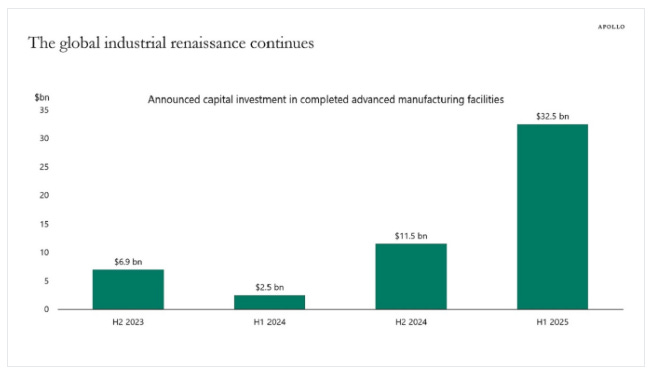
The US manufacturing cycle is gaining traction. With nearly 200 factory completions since mid-2023 and a $590 billion pipeline led by $5 billion-plus megaprojects, advanced manufacturing is set to be a durable growth engine for the US economy with positive spillovers to industrial real estate, private credit and nationwide employment, see chart below.
Quote of the Day
“It seemed funny to me that the sunset she saw from her patio and the one I saw from the back steps was the same one. Maybe the two different worlds we lived in weren’t so different. We saw the same sunset.”
― S.E. Hinton, The Outsiders