

World Events — Europe At a Critical Juncture
The Economists
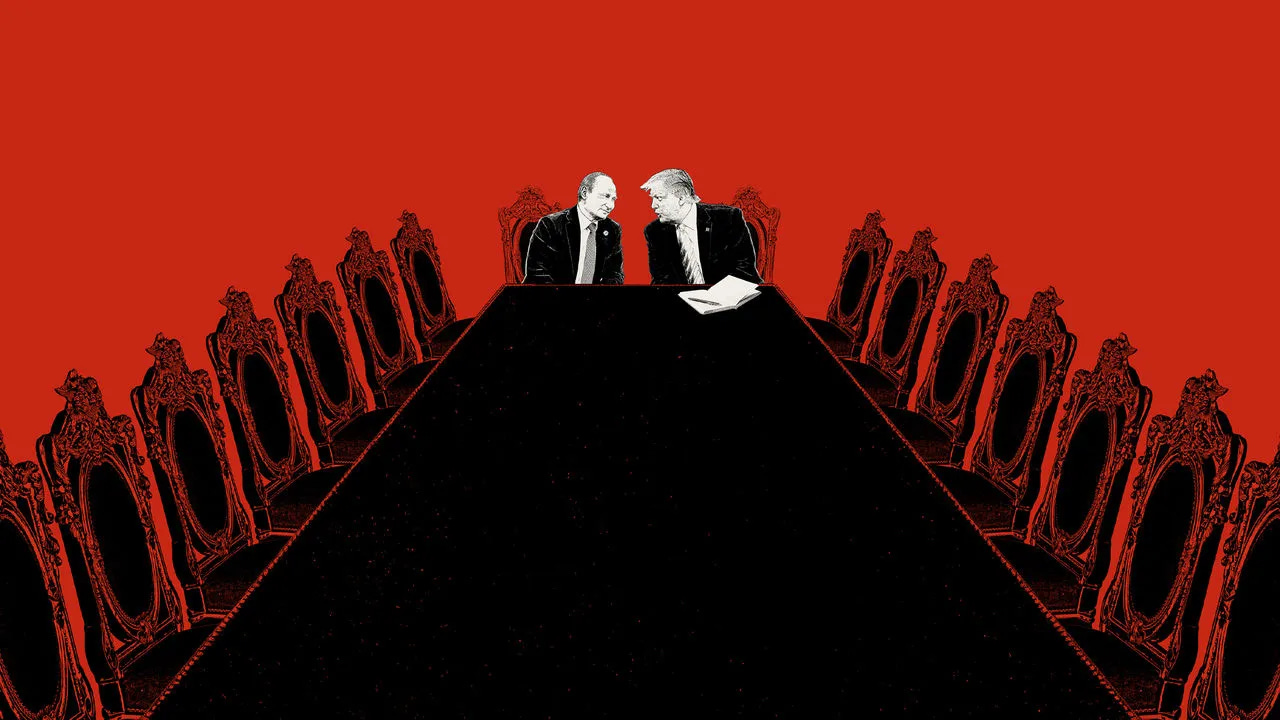
Europe faces a critical juncture as the post-war order is being dismantled by Donald Trump and Vladimir Putin. The continent must urgently relearn how to acquire and wield hard power in response to this new reality. European leaders need to move beyond their defensive crouch and outdated worldview of multilateral treaties and shared values. The immediate priorities include appointing a single envoy for negotiations with Ukraine, Russia, and America, tightening the embargo on Russia, and unilaterally using frozen Russian assets to support Ukraine. In the medium term, Europe must undertake a massive defense mobilization, increasing spending to 4-5% of GDP, and developing its own military capabilities independent of American support. This will require a fiscal revolution, including welfare cuts and economic reforms to boost growth. Ultimately, Europe may need to reimagine its organizational structures to enable faster decision-making and include key actors like Britain while sidelining obstructionist members.
Tech — What’s Driving Up The Electricity Demand

MIT Tech Review
Global electricity demand is projected to grow by nearly 4% annually through 2027, driven by a complex mix of factors beyond just AI and data centers. Three key points about electricity in 2025 are: 1) Developing and emerging economies, particularly China, India, and Southeast Asia, account for 85% of demand growth, with China alone responsible for over half of the increase in 2024. 2) While data centers are significant in advanced economies, they represent less than 10% of global electricity demand growth through 2030, with other factors like electric vehicles, air conditioning, and heavy industry playing larger roles. 3) The impact on climate change is nuanced, as renewable energy sources are expanding to meet new demand, but existing fossil fuel plants continue to operate. The challenge lies in growing low-carbon sources fast enough to not only meet new demand but also replace dirtier existing sources.
Economics — American Credit-card Delinquencies Surged

The Economists
American credit-card delinquencies have surged to a 13-year high, reaching 11% of credit-card debt in serious delinquency as of the final quarter of 2024, primarily affecting younger, subprime borrowers in poorer neighborhoods. This increase is largely driven by rising interest rates, which have escalated from under 15% in 2021 to over 21% today, placing immediate financial pressure on borrowers who lack the protections afforded to homeowners with long-term mortgages. While this trend raises concerns about individual financial health, it does not necessarily indicate a broader economic downturn, as most American households maintain relatively stable balance sheets with credit card balances at about 6% of personal disposable income. The situation has prompted banks, particularly smaller institutions with higher delinquency rates, to tighten lending standards and focus on issuing credit to more financially secure borrowers.
Business (Bonus) — Walmart’s Cautious Outlook

Bloomberg
Walmart's recent earnings report and cautious outlook for fiscal year 2026 have raised concerns about the broader consumer sector. Despite posting strong results for Q4 FY25, with revenue up 5.3% to $182.6 billion and U.S. same-store sales growing 4.6%, Walmart's stock fell sharply due to conservative guidance for the coming year. The retail giant forecasts net sales growth of 3% to 4% for FY26, lower than analysts' expectations, and projects adjusted earnings per share of $2.50 to $2.60, below Wall Street estimates. This cautious stance, influenced by factors such as potential tariff impacts and economic uncertainties, suggests that even the world's largest retailer anticipates challenges ahead. While Walmart's outlook is nuanced and reflects specific company factors, its position as a bellwether for consumer spending means that its conservative projections could signal broader concerns for the retail industry and overall consumer behavior in 2025.
Health — The Burnt Toast Theory
Very Well Mind
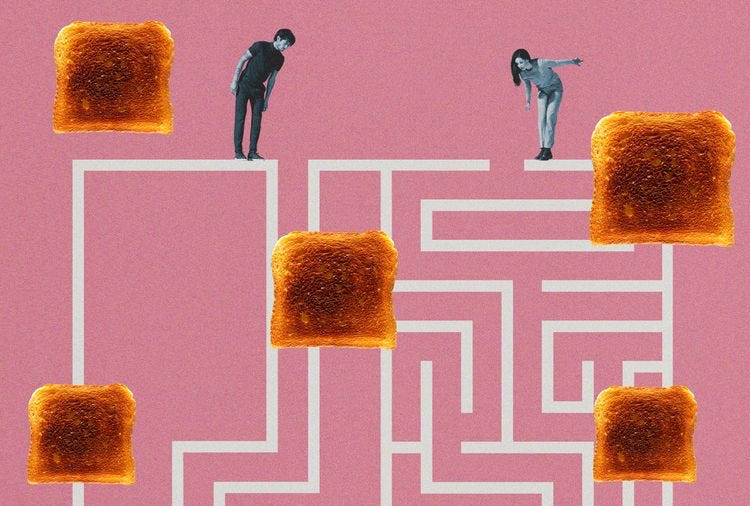
The "burnt toast theory," popularized on TikTok, offers a perspective on setbacks, suggesting that frustrating or upsetting events might actually be clearing the path for something better. Rooted in the idea that a seemingly negative occurrence, like burning your toast, could prevent something worse or lead to a more favorable outcome, the theory encourages self-compassion, mindfulness, and clarity, helping individuals navigate disappointments like breakups or job losses. While not applicable to trauma, the burnt toast theory can aid in moving forward by shifting focus from dwelling on the past and unanswered questions to embracing the possibility of a better future.
Food — Apple Pie
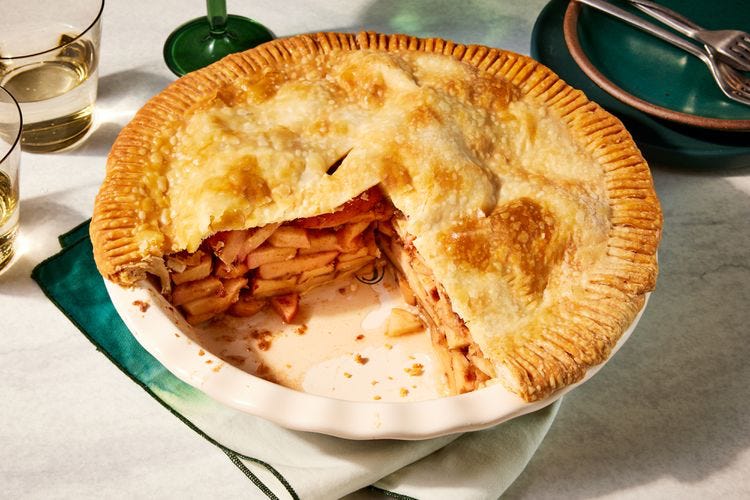
This no-sugar-added apple pie achieves its sweetness from dates, which also contribute antioxidants and fiber. A touch of cider vinegar elevates the overall flavor. While Gala apples are recommended for their sweet and crisp qualities, any sweet and firm variety can be substituted. For those who prefer a tart pie, including a Granny Smith apple is a great addition. The recipe utilizes pre-made frozen pie crusts for both the base and top, ensuring the top crust dough is pliable enough to release from its tin after thawing for about 10 minutes.
Eating Well
Song Rec — I Know it Won’t Work (Gracie Abrams)
Quote of the Day
"I can live alone, if self-respect, and circumstances require me so to do. I need not sell my soul to buy bliss. I have an inward treasure born with me, which can keep me alive if all extraneous delights should be withheld, or offered only at a price I cannot afford to give." — Emily Brontë, Jane Eyre