

World Events — Trump Won’t Back G7’s Push for Iran-Israel Descalation

Bloomberg
The United States is refusing to endorse a G7 statement calling for de-escalation between Israel and Iran, a stance that underscores growing disunity between President Donald Trump and other world leaders at the Alberta summit, where Trump instead seeks to maintain pressure on Iran over its nuclear ambitions. While other G7 members aim to present a united diplomatic front, Trump has shown little interest in such joint messaging and has prioritized bilateral trade negotiations, even as the summit is overshadowed by the intensifying Israel-Iran conflict and its humanitarian toll.Trump has publicly blamed Iran for the escalation, arguing that Tehran should have accepted a nuclear deal before Israeli airstrikes began, and now claims—amid ongoing hostilities—that Iran is eager to negotiate, suggesting a potential deal could still be reached if Iran acts quickly. The US refusal to back the G7’s de-escalation push highlights both the administration’s focus on preventing Iran from obtaining nuclear weapons and the broader challenges of achieving consensus among Western allies on key global issues.
Tech — Meta Introduces Ad to WhatsApp

FT
Meta is introducing advertising to WhatsApp, marking a significant shift for the world’s most popular messaging service—which now boasts over 3 billion monthly active users—as the parent company seeks new revenue streams beyond its core social media platforms. The ads will be placed in the Status section, visible via the Updates tab, thereby keeping them separate from personal chats and addressing concerns about user privacy; this rollout comes after years of denial by WhatsApp leadership that ads would ever appear on the service, despite earlier discussions and speculation. The decision reflects both pressure from businesses seeking new ways to reach customers and Meta’s broader strategy to monetize WhatsApp, which has largely remained ad-free since its acquisition by Facebook in 2014. Additionally, WhatsApp will introduce a paid subscription feature for exclusive content Channels, with certain channels able to pay for promotion, while maintaining end-to-end encryption for messages, calls, and statuses; the company will use basic user data such as location, device language, and channel preferences to target advertisements, but assures users that personal conversations will remain private.
Economics — Why Today’s Graduates Are Screwed

Economists
Today’s graduates face a job market where their traditional advantages have eroded: entry-level positions are scarcer, the “university wage premium” is shrinking, and sectors that once welcomed young degree-holders—like tech, law, finance, and journalism—are now either shedding jobs or automating tasks through artificial intelligence. Across the West, graduates aged 22 to 27 with a bachelor’s degree or higher now experience unemployment rates consistently above the national average, a historic reversal that reflects both a slowdown in graduate-friendly hiring and the rise of AI displacing early-career roles. Meanwhile, as the value of many degrees diminishes, students are still flocking to universities—sometimes for subjects with poor job prospects—while employers increasingly find that non-graduates can handle work previously reserved for the educated elite, thanks to widespread digital literacy and a flattening of skill requirements in many industries. The result is a generation confronting fewer opportunities, less job security, and a more uncertain future than their predecessors.
Culture — Factory Work is Overrated
Economists
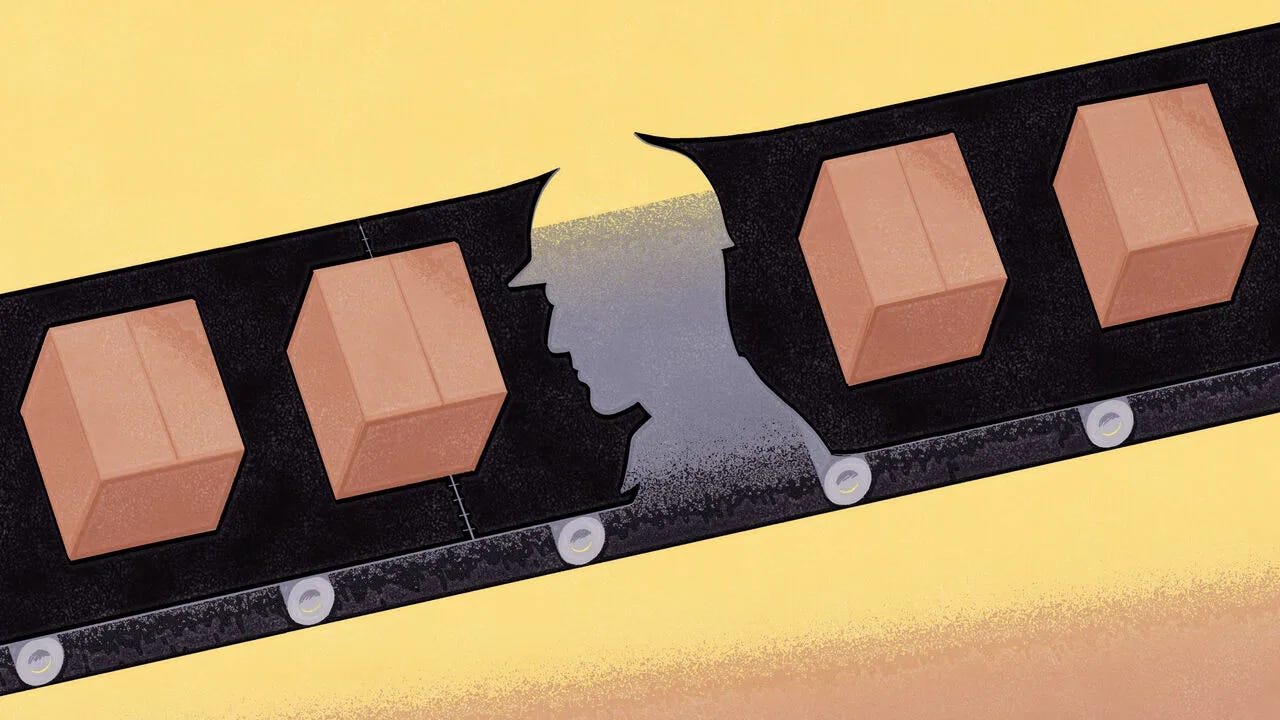
Despite political promises to revive American manufacturing, the reality is that even if factories return, the old, plentiful, well-paid jobs of the past will not. Automation and rising productivity mean that factories now produce far more with far fewer workers, and the majority of “manufacturing” jobs today are actually in support or professional roles rather than on the factory floor. Whereas nearly a quarter of American workers were in manufacturing in the 1970s, today it’s less than one in ten, and the wage premium for factory work has all but disappeared, especially for those without a college degree. Modern manufacturing jobs are harder to get, less likely to be unionized, and pay less than many service-sector roles, while the kinds of stable, non-degree jobs that once supported entire towns are now more likely to be found in the skilled trades, repair, or security sectors. These jobs offer decent pay and unionization but lack the community-building power of old factory work, and the future of work for those without degrees is increasingly in health care and personal services—fields that pay less and look nothing like the manufacturing jobs of the past.
The Daily Spark
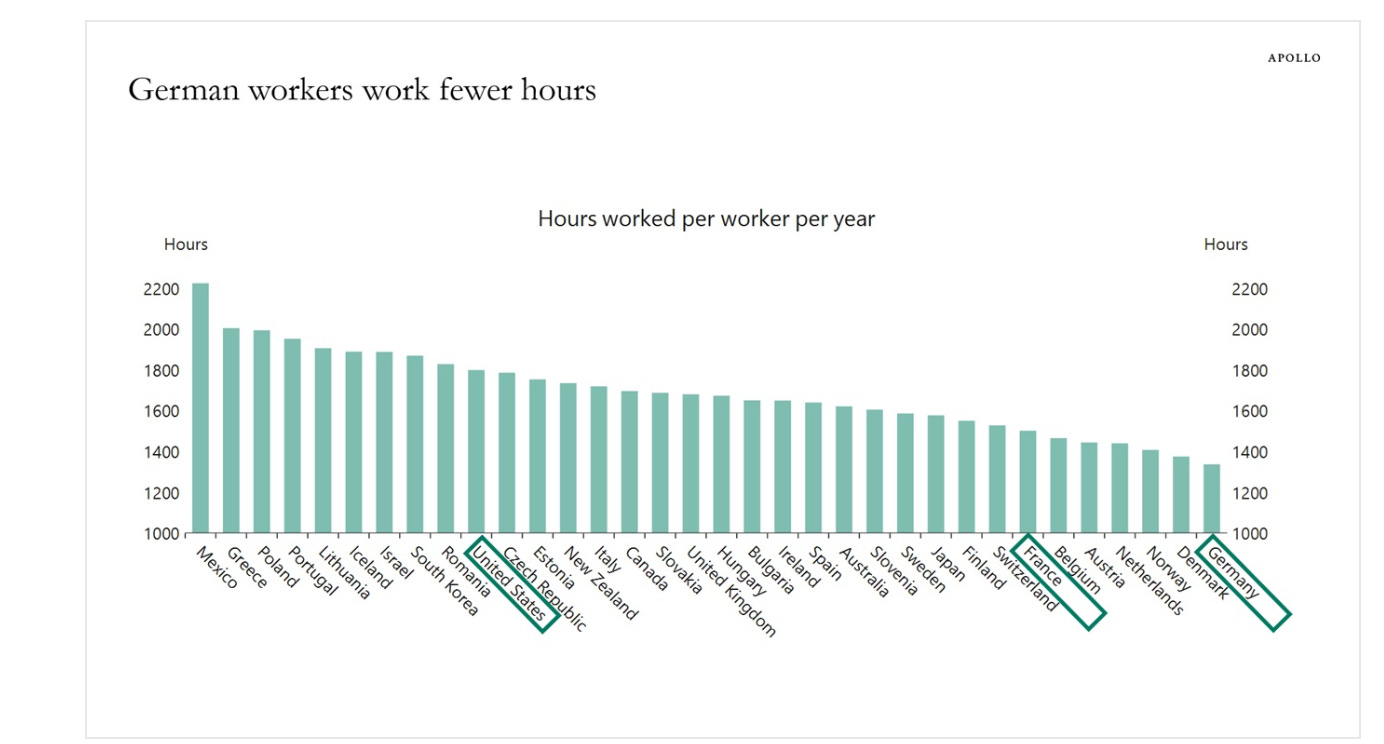
Europeans work far fewer hours per week than Americans, see chart below.
Song Recommendation - deja vu
Quote of the Day
“Where there is no hope, it is incumbent on us to invent it.” – Albert Camus