

World News — Scott Bessent Calls Probe Into the Federal Reserve
FT
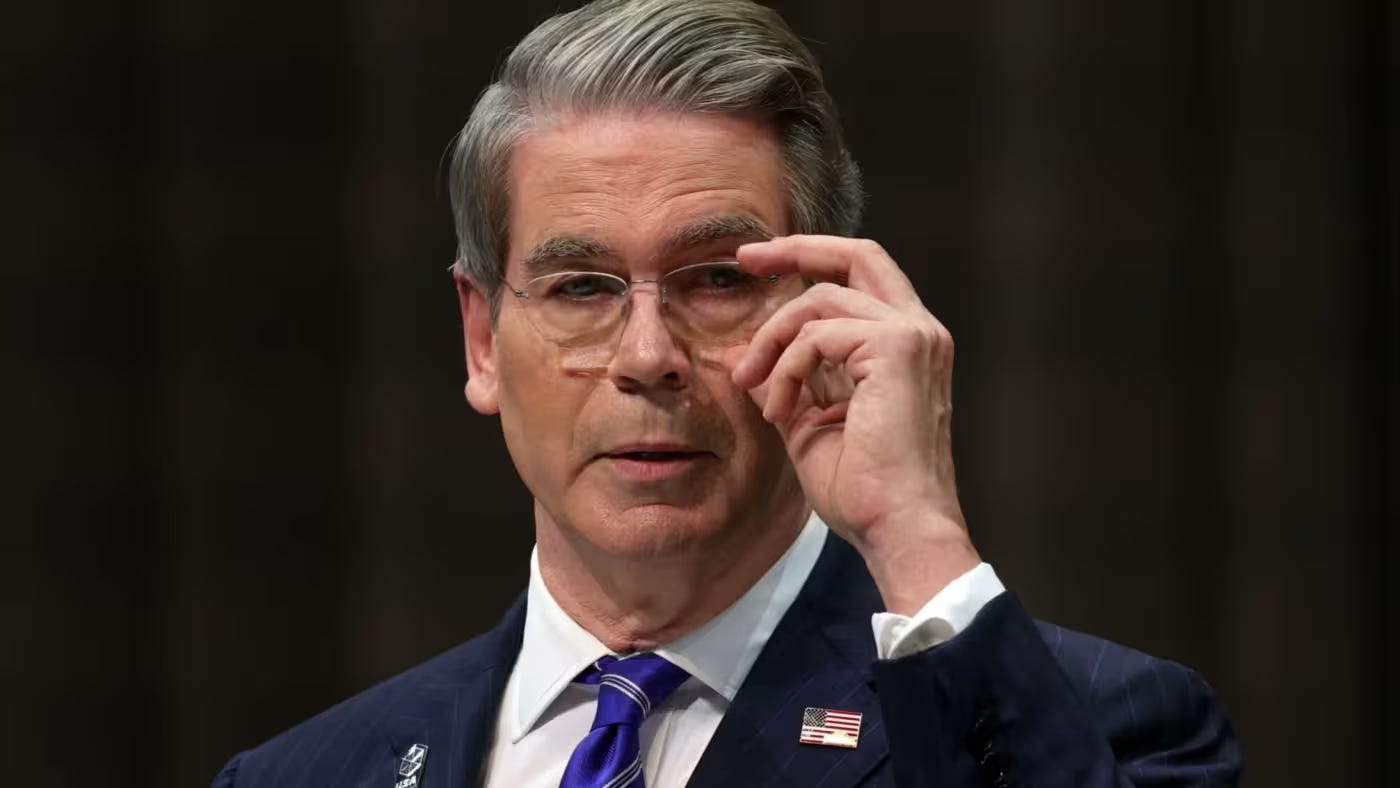
US Treasury Secretary Scott Bessent has intensified criticism of the Federal Reserve, calling for a comprehensive probe into the institution and questioning its effectiveness in monetary policy. Bessent argued that the Fed’s independence, a pillar of US economic stability, is threatened by its expanding mandate and growing criticism. These comments arrive as President Trump and his officials have repeatedly challenged the Fed and Chair Jay Powell for not lowering interest rates, with Trump even raising the possibility—then dismissing—removing Powell. The administration has also accused the Fed of mismanaging a $2.5 billion renovation of its headquarters, prompting an inspector general review due to cost overruns. While most Fed officials remain cautious about rate cuts—keeping borrowing costs at 4.25-4.5%—Bessent claims that the Fed is overstating the risks of tariffs and maintains that recent US inflation figures are positive. Meanwhile, speculation continues about Fed leadership succession, with Powell expected to step down in 2026 and several names, including Bessent and Christopher Waller, considered as potential replacements.
Tech — Netflix Using AI Startup Runway For Video Production
Netflix has begun using video generation tools from startup Runway AI in its content production, marking a significant adoption of generative artificial intelligence by a major Hollywood studio. Runway AI’s software is being used to accelerate and reduce the cost of certain production tasks, including visual effects, though Netflix has not specified which projects are using the technology and declined to comment on specifics. Co-CEO Ted Sarandos confirmed the use of AI to create special effects shots faster and more affordably than traditional methods, highlighting opportunities for greater efficiency and ambition in content creation. Runway’s tools have drawn attention in the industry for democratizing motion design, speeding up processes like rotoscoping, and being featured in both promotional and in-show applications, though their growing use has also heightened concerns among creatives about the impact of AI on entertainment jobs and copyright issues.
Business — Has Trump Damaged Dollar?
Economists
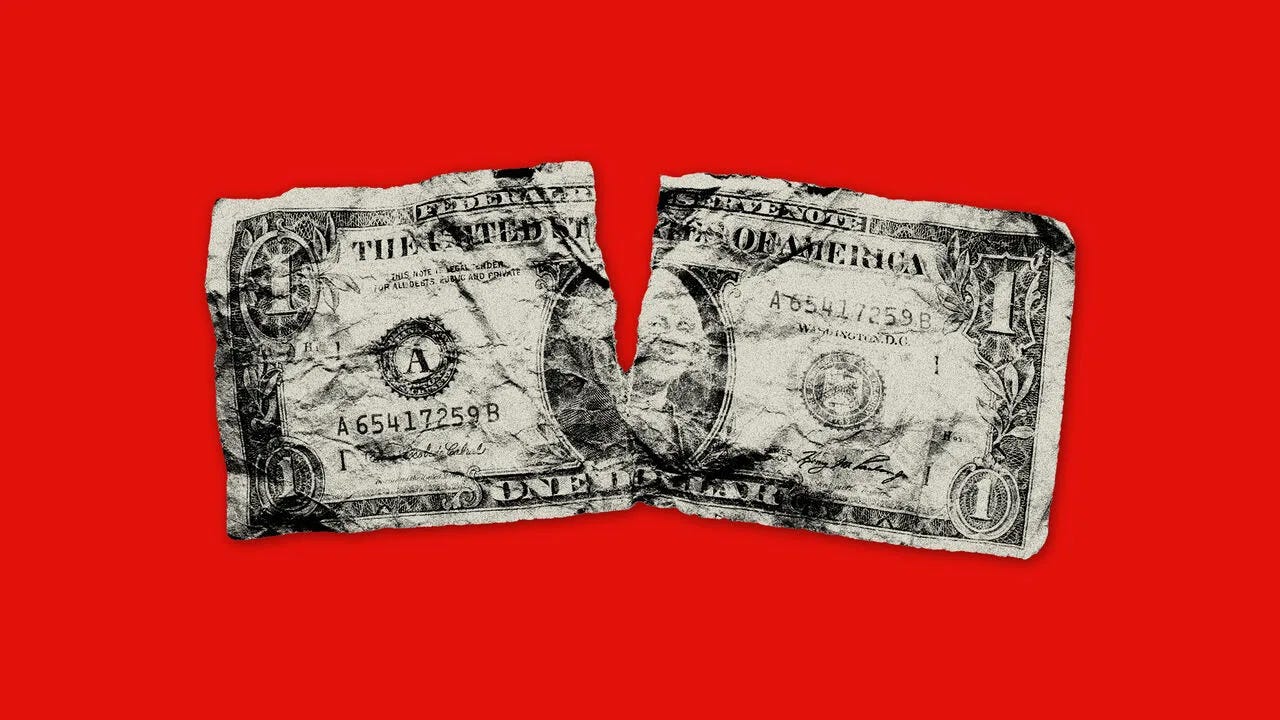
Since Donald Trump’s return to the White House, the US dollar has experienced a substantial decline—falling nearly 10% against a basket of major currencies—largely due to his unpredictable economic policies, aggressive tariff announcements, and political pressure on the Federal Reserve. These moves have shattered investor confidence in the dollar as a safe-haven asset, evidenced by atypical market reactions: whereas the dollar would typically strengthen amid market volatility, it instead weakened during recent episodes of stock market turbulence. Contributing factors include capricious tariff-setting, escalating fiscal deficits, attempts to undermine the Fed’s independence, and fears over the sustainability of US government borrowing, all causing global investors to reassess their exposure to American assets. While the dollar’s drop has not yet provoked a full-blown crisis, the underlying fragility remains—markets have not regained ground lost in April 2025, and the greenback’s reputation as the cornerstone of international finance appears wounded but not irreparably broken. Analysts emphasize that the full extent of the damage will only become clear during the next global crisis, when the world’s appetite for dollar safety may be truly tested.
Culture — What Football Shirts Can Tell Us About Finance and Geopolitics

Economists
A football shirt is far more than a piece of athletic wear; it is a billboard that encodes layers of finance and geopolitics, revealing hidden connections between global money flows, statecraft, and the shifting landscape of commerce. As Joey D’Urso argues, the logos and sponsors emblazoned on club kits have evolved from local beer and electronics brands to multinationals and even state-owned enterprises, reflecting football’s ascendancy as a global megabusiness. The choice of shirt sponsor can signal deep strategic and economic interests—such as Gazprom, a Russian state-owned gas giant, using its Schalke 04 deal to burnish Russia’s image and extend influence in Germany, or Qatar Airways’ partnership with PSG, both emblematic of how autocratic states deploy football sponsorships as tools of soft power and international branding. Meanwhile, the chase for revenue has led clubs to partner with opaque crypto firms or contentious gambling companies, raising ethical and regulatory questions and leaving fans caught between sporting loyalty and unease over who benefits from these financial entanglements. Thus, a club’s kit not only reveals its commercial ambitions but also maps the intersections of politics, global finance, and cultural identity in the modern world.
The Daily Spark
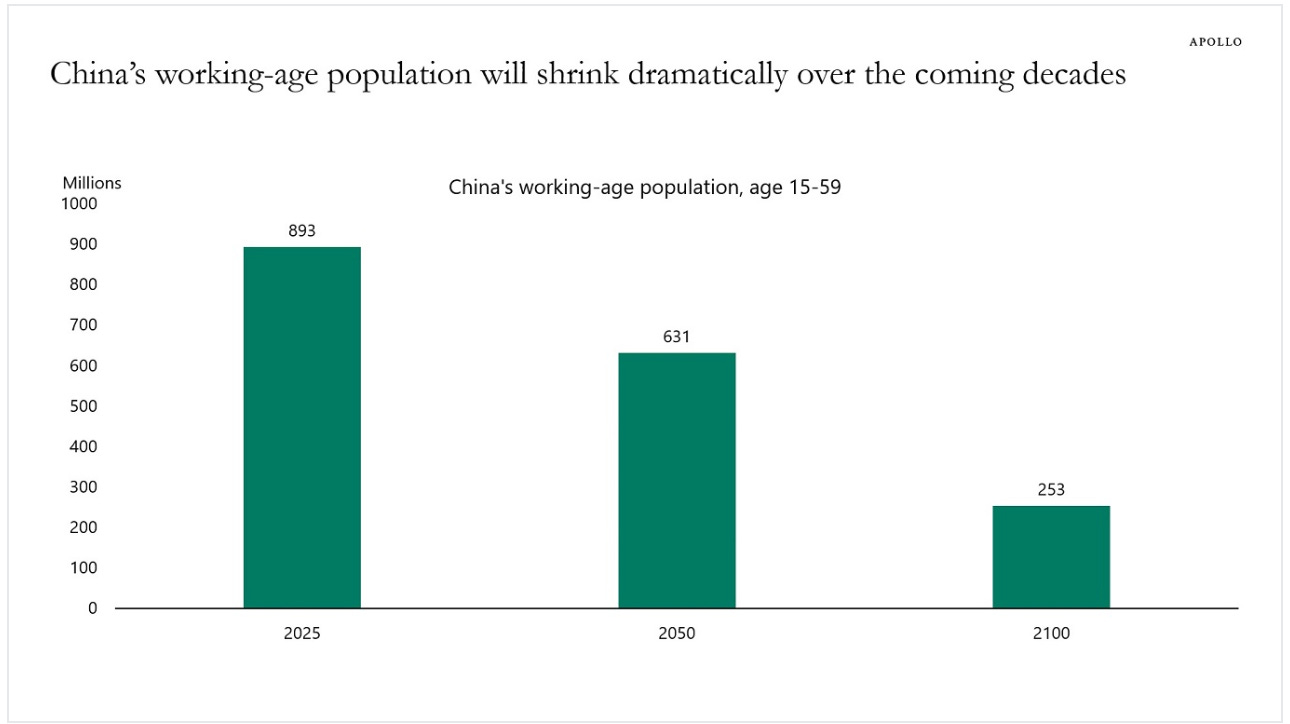
China’s working-age population will shrink dramatically over the coming decades, driven by the lagged effects of the one-child policy, an aging population, and a significant decline in fertility rates—which currently stand at 1.09 births per woman, far below the 2.1 needed to maintain population size.
This decline in the working-age population will have significant implications for economic growth, the fiscal outlook due to an aging population, and investment and productivity growth.
These risks to China’s long-term outlook are, in many ways, similar to those we have seen in Japan in recent decades.
Song Recommendation — Broken Hearts
Quote of the Day
"The cave you fear to enter holds the treasure you seek. The very thing that scares you the most is often the gateway to your greatest growth and deepest fulfillment. We spend so much time running from discomfort, avoiding the difficult conversations, postponing the challenging decisions, and staying safely within our comfort zones. But life's most profound rewards—love, creativity, purpose, connection—all require us to walk through the fire of uncertainty. The skills you haven't developed, the relationships you haven't nurtured, the dreams you haven't pursued are all waiting on the other side of fear. Your limitations are not permanent fixtures but temporary boundaries you've accepted. Every expert was once a beginner who refused to give up. Every breakthrough came after someone decided that the pain of staying the same was greater than the pain of changing. So when you feel that familiar flutter of anxiety about taking the next step, remember: that feeling isn't a warning to turn back—it's a compass pointing toward exactly where you need to go." - Joseph Campbell