

World News — More Tariff Deals
Bloomberg
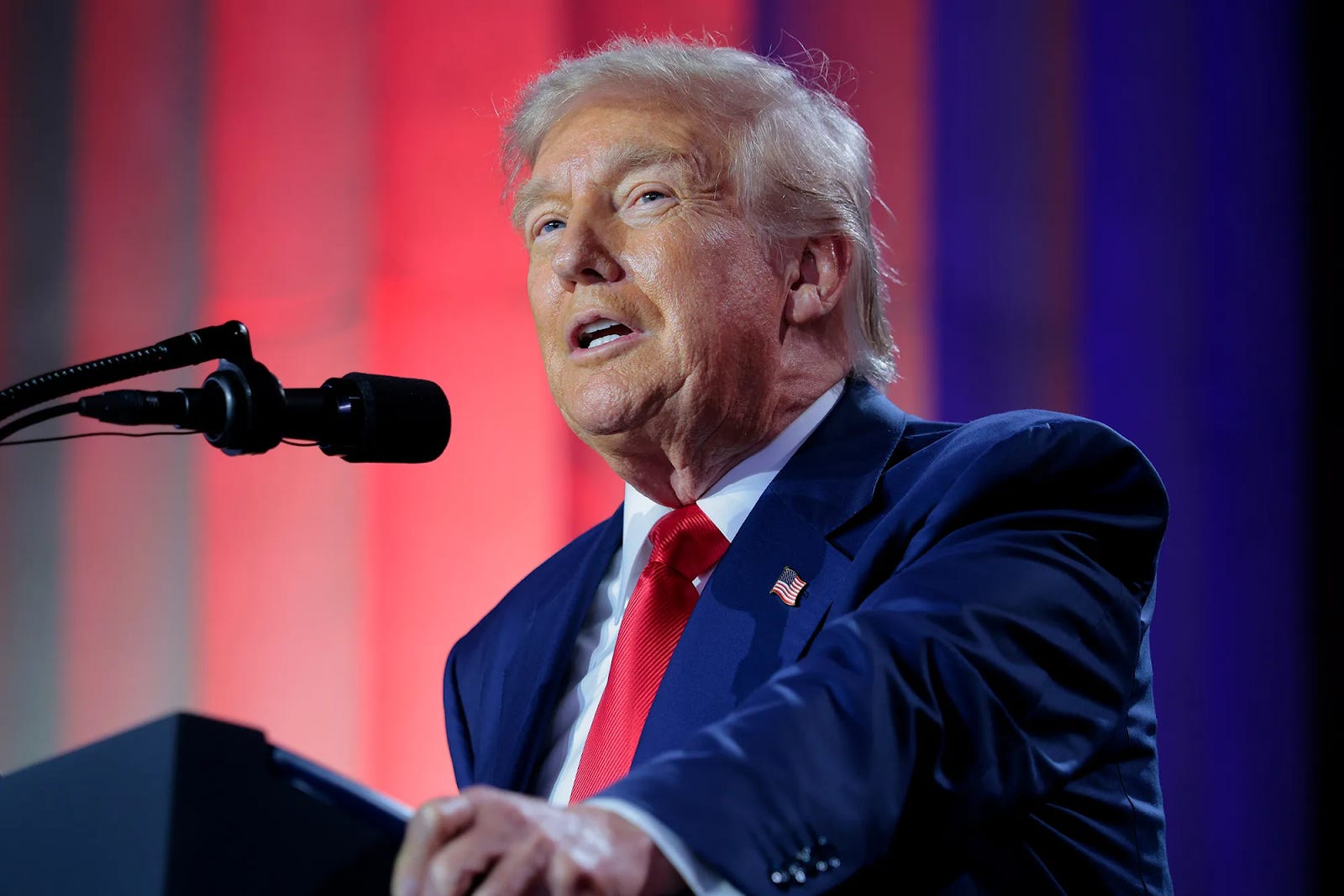
US President Donald Trump, speaking at an AI summit in Washington on July 23, announced that the United States will implement straightforward tariffs ranging from 15% to 50% on exports from most countries, marking a significant escalation in his administration's approach to global trade. Trump emphasized that the minimum tariff rate will not drop below 15%, raising the floor compared to earlier proposals, and justified higher tariffs, up to 50%, by citing poor relations with certain nations. He clarified that nations such as those in the European Union could qualify for lower tariffs if they agree to further open their markets to American businesses. While maintaining that individual negotiations are impractical for so many countries, Trump indicated that exceptions could be made in exchange for concessions, as seen with Japan, which received a reduced tariff rate following an agreement to lift restrictions on US products and support a major investment fund. Overall, the policy reflects a shift away from broader trade negotiations in favor of imposing wide-ranging tariffs, with the possibility for select countries to secure reduced rates through new agreements.
Tech — Google’s Search Business Remains Strong

FT
Alphabet’s second-quarter results for 2025 marked another period of strong growth fueled by the company’s deepening investments in artificial intelligence and surging demand for cloud computing. Net income rose 19% to $28.2bn, exceeding analyst expectations, while total revenue jumped 14% to $96.4bn. Google’s core search and advertising business grew 12% to $54.2bn, and cloud computing revenue surged 32% to $13.6bn, underscoring the company’s expanding reach in digital services and its ability to fend off competition from AI chatbots like OpenAI’s ChatGPT and Anthropic’s Claude. As a response to these trends, Alphabet announced an increase in annual capital expenditure plans to $85bn—$10bn higher than previously forecast—mostly dedicated to data centers, servers, chips, and AI infrastructure. While this ramp-up reflects confidence in future AI-driven growth, it has been met with some investor skepticism due to the uncertain timing of returns. Nevertheless, Alphabet’s new AI features, such as AI Mode and AI Overviews, are credited with increasing user engagement and maintaining robust ad monetization rates. Despite rising costs and legal uncertainties—including recent antitrust rulings and potential business model changes—Alphabet remains a pivotal player in the global technology and AI landscape.
Business — America Throws Big Money At Small Earth Mines

Economists
The US government has made a landmark $400 million investment in MP Materials, acquiring a 15% stake to boost America's only significant rare-earths producer and reduce dependence on China, which still accounts for about 70% of US rare earth imports and over 90% of global refined rare earths. This funding will enable MP Materials to expand both mining in California and magnet production in Texas, with Apple committing $500 million to purchase magnets and build a recycling facility. Though the US aims to match domestic magnet production with national demand, challenges—including stringent environmental regulations, the scale of Chinese dominance, and risks inherent in government intervention—remain formidable. Despite MP Materials' progress, the US remains highly vulnerable to Chinese export restrictions and must further broaden its supply chain to truly challenge China's chokehold on this sector.
Culture — Ikea’s Prints Have Transformed Homes’ Looks

Economists
IKEA has fundamentally transformed the look and feel of homes worldwide, not just through its iconic flat-pack furniture, but especially via its bold and accessible textile designs—an impact showcased by the “Magical Patterns” exhibition in Edinburgh. While IKEA started with minimal, muted textiles, the 1960s marked a shift when the company enlisted young, often female, designers to inject vibrancy and playfulness into its fabrics, resulting in patterns like the striped “Strix” and the adventurous collaborations that followed. These prints democratized interior design, giving everyday people easy, affordable access to youthful, contemporary aesthetics and encouraging creativity through mix-and-match possibilities and DIY projects. The widespread presence of products like the “Rinnig” tea towel or “Strix” cushions illustrates how IKEA’s textile innovations have shaped global taste, making distinctive Scandinavian design a standard in homes and public spaces from Airbnbs to family living rooms.
The Daily Spark
If 3,000 people are deported every day, the labor supply will decline by about 1 million in total in 2025.
Combined with additional immigration restrictions, job growth is slowing down.
If legal immigration continues at current levels and illegal immigration declines to zero, the new level of monthly nonfarm payrolls will be 72,000.
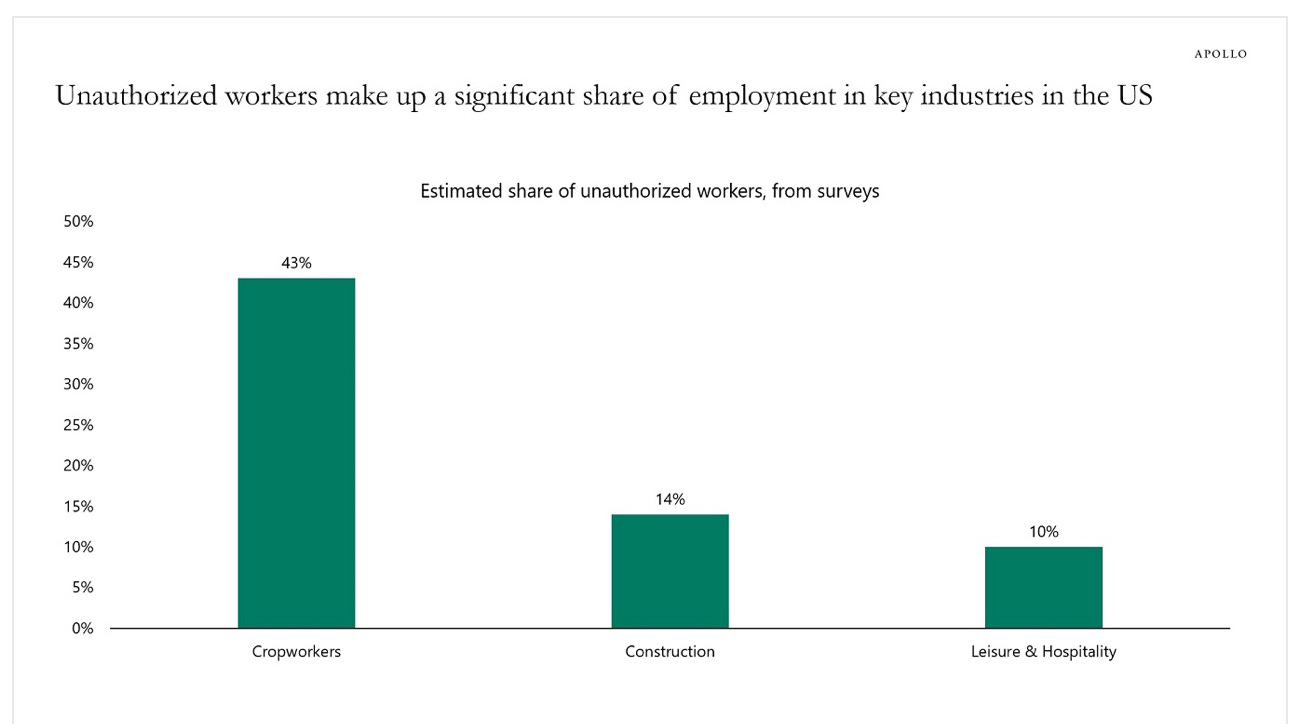
Deportations and immigration restrictions are likely to increase wage growth in agriculture, construction, and leisure & hospitality.
Deportations and immigration restrictions lower demand for housing.
The bottom line is that immigration policy has implications for labor supply, nonfarm payrolls, wages, and housing demand. To better understand these effects, we have compiled a chart book, which is available here.
Song Recommendation - The Longest Goodbye
Quote of the Day
"There is no greater agony than bearing an untold story inside you. We delight in the beauty of the butterfly, but rarely admit the changes it has gone through to achieve that beauty. A wise woman wishes to be no one's enemy; a wise woman refuses to be anyone's victim. If you don't like something, change it. If you can't change it, change your attitude. You may not control all the events that happen to you, but you can decide not to be reduced by them." - Maya Angelou