

You’ve probably thought about it. Quitting your corporate job or dropping out of school to start that coffee shop, launching your own clothing line, or finally building that app idea you’ve been sitting on. The dream feels so close. It is just one leap away from freedom, purpose, and doing something that’s actually yours.
You’re not alone. According to a 2020 survey from WP Engine, 62% of Gen-Z plan to start or have already started their own business. Your Instagram feed is full of 25-year-olds running seven-figure businesses from Bali, and TikTok entrepreneurs promise you can dropship your way to financial freedom.
But here’s what nobody’s telling you: most of those stories on social media are leaving out the parts that matter most. The behind-the-scenes reality looks nothing like the highlight reel. So what does running a small business actually look like?
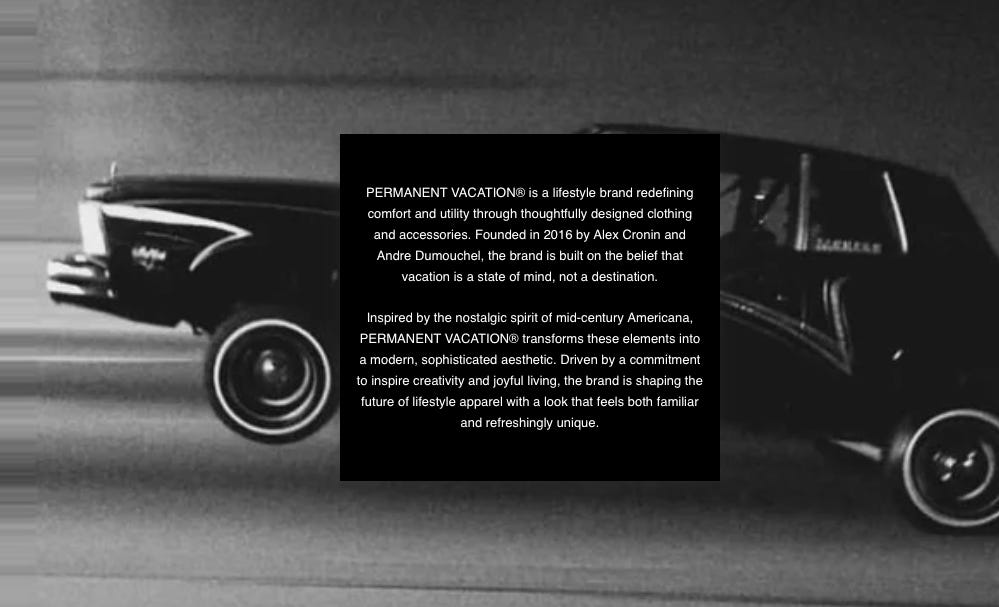
I recently had the chance to talk to Alex Cronin. Approaching 40, he’s built something real. His company, Freetone Printing, has printed apparel for Heineken, Audi, and Mejuri, and they’re on track to gross over $1 million in revenue this year with just three people. On the side, his clothing brand Permanent Vacation generated an estimated $250,000 in sales this year.
To any bystander scrolling through social media, this sounds like the dream. What people don’t show you is that Alex nearly lost everything getting here.
Alex started with Permanent Vacation, a streetwear brand built on uncompromising quality. He sourced premium fabrics and obsessed over every detail. The brand became a slow burn—building a loyal following, establishing credibility, creating something he was genuinely proud of.
Then March 2020 hit, and everything collapsed.
When the pandemic shut down global supply chains, the specific fabrics Alex used couldn’t be shipped to Canada anymore. He faced a choice: switch to lower-quality fabrics and keep revenue flowing, or stop selling altogether.
Alex chose to stop. His income went to zero in a matter of weeks.
“I refused to compromise on quality,” he told me. But principle doesn’t pay the bills. Alex took out loans from banks. He borrowed money from family and friends. He did whatever he could to stay afloat, drowning in debt with no clear path forward.
Imagine going to your friend in your 30s and telling them you need to borrow money. Asking the question is already hard enough, but asking it several times is hell. That’s the part that
gets skipped over. That’s the reality that 62% of Gen-Z aspiring entrepreneurs have no idea they might be walking into.
The turning point came from Alex’s frustration with the poor quality of printing services for Permanent Vacation. After other printing companies kept messing up his apparel, Alex made a desperate decision: buy the machinery and do it himself.
Think about how insane that decision must have seemed. Alex was already drowning in debt from a failing clothing company. The logical thing would have been to cut losses and get a stable job. Instead, he borrowed more money to buy industrial printing equipment and learn an entirely new skill set from scratch.
When I asked what it took to learn those machines, he gave me a simple answer: “If you have a curiosity, then you have the patience to learn it.”
While his friends were enjoying their free time after their 9-to-5s, Alex was teaching himself screen printing, troubleshooting machines that cost more than many people’s annual salary, betting everything on a pivot that might not work.
A few years in, through slow and steady work, the printing business became viable. The same obsessive attention to quality that nearly bankrupted Permanent Vacation became Freetone Printing’s competitive advantage. In a market full of cheap, fast printing services, they became known for doing it right.
Alex’s story matters because it reveals something crucial about the entrepreneurship craze among Gen-Z. We’re not just chasing a dream—we’re fleeing a nightmare.
Gen-Z is facing a fundamentally different economic reality than previous generations. According to recent surveys, 56% of Gen-Z doing independent work would actually prefer a permanent, stable job. More than half of us who are “choosing” entrepreneurship would rather have traditional employment if it were actually viable. We’re working multiple jobs not out of ambition but necessity. The gig economy isn’t freedom—it’s survival dressed up in startup language.
McKinsey, a consultancy firm, found that 59% of Gen-Z don’t expect to ever own a home, as the average age of homeownership climbs to 56. Most of us will be approaching retirement age before we can afford what our grandparents bought in their twenties. When the traditional markers of success feel impossible, starting your own business starts to look less like ambition and more like the only path left.
Into this void stepped an army of influencers selling escape. Gen-Z grew up with social media portraying life as rosier than reality, from Tai Lopez’s garage Lamborghini to today’s laptop-on-a-beach entrepreneurs. The formula is always the same: show the lifestyle, hint at vague struggles, then sell you their system. When you’re 25, working a job you hate, watching your paycheck disappear into rent and student loans, those stories become magnetic. But that version is dangerously incomplete, missing the bankruptcy and sleepless nights.
Our generation also desperately craves purpose in a world that seems designed to strip it away. We grew up in a digital world where life became frictionless to the point of feeling meaningless. We’re more pessimistic and depressed than previous generations. Religion has declined sharply, leaving many without the frameworks that gave previous generations meaning.
Entrepreneurship promises to fill that void. It offers purpose, autonomy, and the feeling that you’re building something that matters. The problem is that when you’re running from economic desperation while seeking existential purpose, you’re vulnerable to anyone selling an easy solution.
I asked Alex what he’d tell younger people considering entrepreneurship. His answer wasn’t what most people want to hear.
“People try to skip crucial steps because they hear over-glorified stories,” he said. “You should take a few years to work and learn. Inspiration exists, but it has to find you working.”
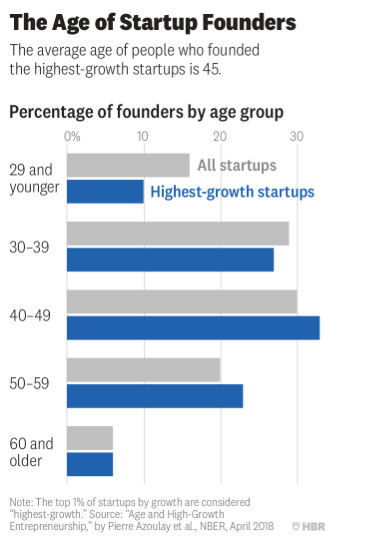
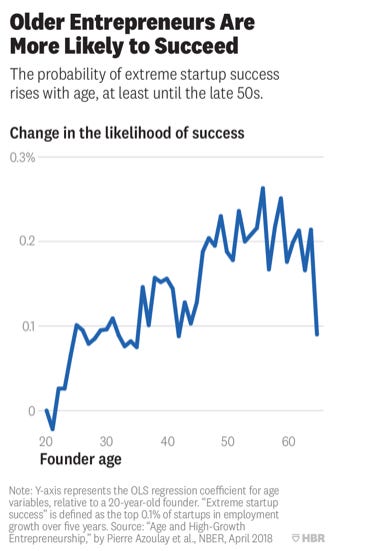
Alex didn’t start his successful business in his 20s—he’s almost 40 now. And that’s actually the norm, not the exception. Research consistently shows that most successful entrepreneurs start their businesses in their 30s and 40s, not their 20s. They succeed because they’ve spent decades building skills, understanding industries, and accumulating knowledge that can only come from experience.
But it’s more glamorous to cover Mark Zuckerberg dropping out of Harvard at 19 or Bill Gates starting Microsoft at 20. These stories are real, but they’re extreme outliers. For every 20-something founder who makes it, there are thousands who crash and burn, and we never hear about them because failure doesn’t go viral.
“Try different things,” Alex told me. “You don’t have to quit your job, but do consider working in an industry that interests you.”
This is the advice that doesn’t sell courses or get likes on LinkedIn, but it’s what actually works. Build skills in your 20s. Make mistakes on someone else’s dime. Learn how businesses actually operate. Build relationships. Save money. Develop expertise. Then, when you’re ready—when you have the knowledge, the network, the financial cushion, and the resilience—start something of your own. This is how Stephen Schwarzman founded Blackstone, now the largest private equity fund, and how Vera Wang started her own prominent wedding dress brand after working at Vogue for 17 years.
Social media has made success look so quick and attainable that we’ve forgotten how long real mastery takes. Alex’s journey shows that building something real takes time, sacrifice, and often comes at a cost nobody warns you about.
What struck me most is that despite everything—the near-bankruptcy, the stress, the loans, the years of uncertainty—Alex wouldn’t trade his journey for anything. What kept him going was his love for the business itself. Not the idea of being an entrepreneur. Not the lifestyle or freedom. The actual work.
That’s the difference between entrepreneurship as escape and entrepreneurship as calling. And it’s a difference that determines whether you survive the inevitable moments when everything falls apart.
For Gen-Z, you shouldn’t start a business because you think it will magically give you purpose, or because you believe entrepreneurship is a quick way to strike gold. You should start a business because you’re so obsessed with solving a specific problem or creating a specific thing that you’re willing to nearly lose everything for it.
The entrepreneurship dream is real. But so is the nightmare of nearly losing everything. Nobody on Instagram will show you the loans from family, the panic attacks at 3 AM, or the years of grinding it takes—way more years than you think—with no guarantee any of it will work out.
Alex’s success didn’t come from following a formula or taking a leap of faith. It came from curiosity strong enough to generate patience, from refusing to compromise on quality even when it nearly destroyed him, and from loving the actual work enough to keep going when any sane person would have quit.
That’s the reality. Not the highlight reel.