

Good morning,
What if all our biggest crises right now—economic inequality, loneliness, market speculation—stem from the same fundamental mistake of trying to optimize human problems with algorithmic solutions? Today’s newsletter tracks this pattern everywhere: Trump’s tariffs that mathematically punish the poor, Tinder’s AI desperately trying to fix Gen Z abandoning dating apps for actual human interaction, and Palantir’s $450 billion valuation betting that AI can reshape everything from government ops to fast food logistics. But then there’s Jellycat—a $40 stuffed mushroom that does absolutely nothing except exist and be soft—outselling expectations precisely because it doesn’t try to solve anything, which honestly might be the whole point.
World News - Trump’s Tariff’s May Be Soon Gone

Based on oral arguments at the Supreme Court on November 5th, Donald Trump’s sweeping tariffs face serious legal jeopardy, with a majority of justices appearing skeptical of his administration’s authority under the International Emergency Economic Powers Act. While the solicitor-general argued the 1977 law supports Trump’s “trafficking” and “reciprocal” tariffs of up to 50%, all three liberal justices and three conservatives—including Chief Justice John Roberts—expressed doubts, with Roberts suggesting the major-questions doctrine may require explicit congressional authorization for such consequential executive action. Only three conservative justices—Alito, Kavanaugh, and Thomas—seemed inclined to uphold the tariffs, suggesting Trump may need to find alternative legal justification for his trade policies.
A Quick Explainer On Tariff
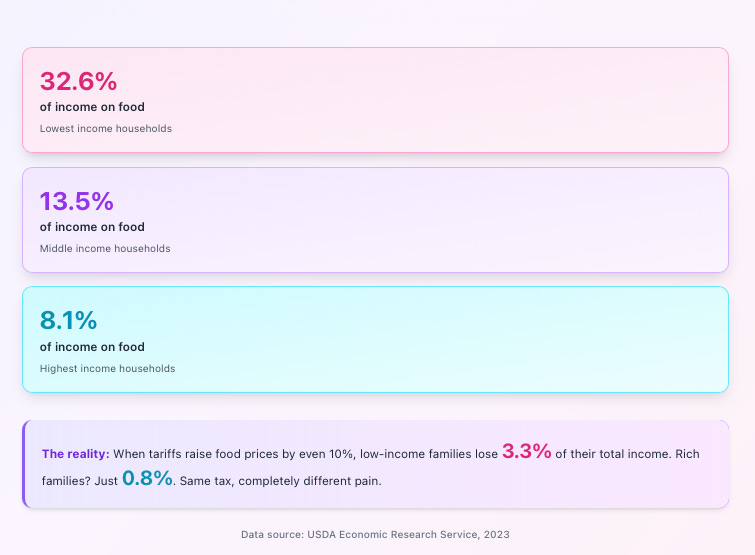
What’s a tariff, really? Strip away the trade-war theatrics and you’re left with something far less exciting: a tax on consumers. Sure, Trump rolled out these tariffs to fix America’s trade imbalance—cue the patriotic music—but here’s the plot twist nobody ordered: they’re turbocharged the exact economic bifurcation we’re already drowning in. The wealthy? Barely flinch. When you’re spending 10% of your income on groceries, a price hike is an inconvenience. But if you’re lower-income and already dedicating half your paycheck to basic needs, those tariffs hit like a freight train to your purchasing power. And just when you thought the story couldn’t get bleaker, enter stage left: accelerated inflation, the villain that keeps on giving, further eroding what little buying power younger and poorer Americans have left. So here’s the punchline—striking down these tariffs isn’t just about legal technicalities at the Supreme Court. It’s about giving the economy an actual stimulus, one that might let us afford both rent and groceries in the same month. Revolutionary concept, we know.
Tech - The Swipe Is Dead. Tinder Just Won’t Admit It
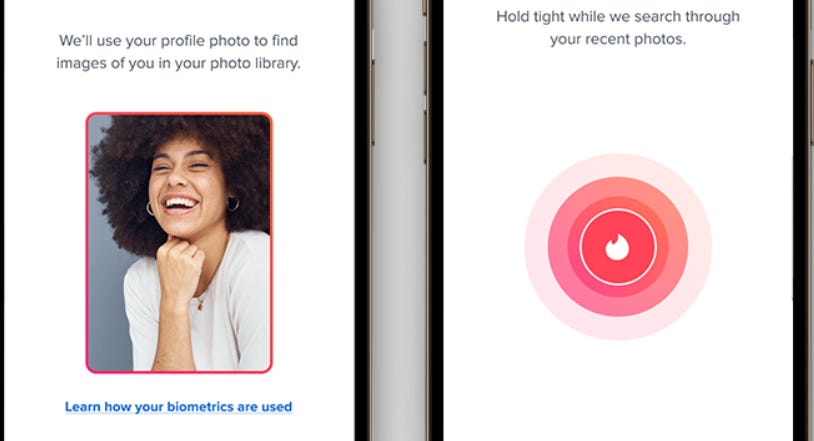
Tinder is desperately deploying AI to reverse nine straight quarters of subscriber declines, testing a “Chemistry” feature in Australia and New Zealand that requests access to users’ Camera Roll photos and asks invasive questions to supposedly improve matches—offering minimal user benefit while raising privacy concerns similar to Meta’s recent AI photo grab. The initiative, positioned as a cornerstone of Tinder’s 2026 strategy, is already costing Match Group $14 million in testing revenue and contributing to Q4 guidance falling short at $865-875 million versus analysts’ expected $884.2 million, while Tinder’s Q3 results showed 3% revenue decline and 7% fewer paying users. Despite throwing everything at the wall—AI message warnings, photo selection tools, dating “modes,” double dates, facial verification, and redesigned profiles—Tinder can’t overcome fundamental market shifts as young people increasingly reject online dating for real-world connections and economic pressures squeeze discretionary spending, suggesting that AI gimmicks and feature bloat won’t solve the company’s core problem of users simply abandoning the swipe-based model.
Don’t Swipe Just Yet
The Setup: Gen Z has ghosted dating apps so hard that Match Group is bleeding subscribers for nine straight quarters—7% fewer paying users, 3% revenue drop—and honestly? It tracks. The Conflict: We grew up chronically online, so you’d think we’d be all over digital dating, but COVID was the plot twist that exposed the emperor has no clothes: swiping through profiles in your apartment for two years straight made everyone realize that meeting people through screens just hits different (and not in a good way). Now the generation that was supposed to save these apps is literally running away from them—specifically to run clubs, because apparently sweating together is the new meet-cute. Even Match Group admitted in their own earnings that “some young people are leaning away from online dating in favor of more real-world experiences,” which is corporate speak for “we’re cooked.”
So what’s Tinder’s solution? Double down with an AI feature called “Chemistry” that stalks your Camera Roll and personal data to algorithmically optimize your love life—basically taking social media’s greatest hit (promising connection while delivering loneliness and polarization) and remixing it for romance. We’ve seen this movie before: the algorithm said it would bring us closer, we got more isolated and tribal instead, and now they want us to trust AI to find our soulmate? The math isn’t mathing. This isn’t a tech problem or even a product problem—it’s a fundamental misunderstanding of what Gen Z actually wants, which is the one thing algorithms can’t manufacture: genuine, unoptimized, beautifully messy human connection that happens when you’re not performing for an app.
The Market - Are We in an AI Bubble or Just Watching the Future Get Built?

Palantir even has its own merch
Despite its eye-watering valuation of nearly $450 billion—far exceeding typical tech multiples at 137 times sales and 624 times profit—Palantir’s underlying business fundamentals are remarkably strong and built for longevity. The analytics company’s revenue surged 63% year-over-year with operating profits up 118%, driven by its popular AI software suite and a unique business model that embeds “forward-deployed engineers” directly into client organizations, creating deep integration that’s difficult to unwind. After two decades of losses, this approach has finally reached profitable scale with 33% operating margins, while its dual revenue streams—both commercial contracts and growing government defense spending under the Trump administration—provide diversification and momentum that should outlast any AI hype cycle, even if the stock price eventually corrects from meme-stock territory.
Zooming Out
So here’s the situation that’s got everyone’s group chats blowing up: Palantir is trading at 137 times sales and 624 times profit—numbers so unhinged that even Nvidia’s 28x multiple looks reasonable by comparison. Michael Burry, the guy from The Big Short who called the 2008 crash, has bet against it. Wall Street is sweating. Your finance bro cousin won’t shut up about it. The question everyone’s asking is: are we watching the next bubble pop in real-time, or are the boomers just mad they don’t get it?
Here’s the plot twist: despite indices hitting record highs this year, the market has actually been cooked with anxiety. The Fear and Greed Index? Leaning fear. Volatility outside of April’s tariff chaos? Surprisingly chill. Translation: investors aren’t throwing money at anything with “AI” in the pitch deck anymore—they’re actually being selective, only backing companies that prove AI generates real returns. And Palantir is delivering the receipts despite the sky-high expectations: 63% revenue growth, 118% profit surge, 53 deals over $10 million this quarter versus 16 last year. The answer? AI isn’t a bubble about to burst—it’s infrastructure being built in real-time, reshaping everything from CIA ops to how Wendy’s manages its supply chain. For Gen Z, this isn’t just another tech hype cycle to meme about; it’s our generation’s internet moment. The move is to actually learn these tools, become domain experts, and position ourselves at the front of the line while everyone else is still deciding if it’s real. Because spoiler alert: it already is.
Culture - Why Is Everyone Suddenly Obsessed With Jellycat?

I’ve been seeing Jellycats everywhere lately—scattered across dorm beds, clutched in the arms of stressed-out students during finals, and yes, even witnessed a group of college guys at the campus bookstore genuinely debating whether a $40 plush badminton birdie was a “reasonable purchase.” (Spoiler: they bought it.) At first, I thought this was just a quirky trend limited to my university bubble, but then I saw the numbers: Jellycat’s annual income jumped nearly eightfold from 2013 to 2022, hitting £43.4 million, with growth nearly doubling between 2021 and 2022 alone. We’re talking almost 143,000 TikTok posts and 1.2 billion tags on Xiaohongshu. This isn’t just hype—it’s a full-blown cultural moment.
So what’s behind this stuffed animal renaissance? The easy answer points to pandemic nostalgia and Gen Z’s alleged need for “comfort in an ever-changing world”. And sure, celebrity endorsements from Kylie Jenner and Blackpink’s Jisoo didn’t hurt. But here’s the thing: humans have always been obsessed with collecting cute, unnecessary things. Andy Warhol hoarded cookie jars. Beanie Babies caused literal fights in the ‘90s. Some Jellycat collectors own 300+ plushies, and discontinued designs now resell for 40 times their original price. We’re not breaking new ground here—we’re just doing it with better marketing and Instagram-worthy “fish and chips” themed pop-up shops.
My personal theory? Jellycats hit that sweet spot of being adorable, tactically soft (they’re genuinely described as “velvety” and feeling “like they will hug you back”), and most importantly, socially acceptable. Unlike, say, announcing you still sleep with your childhood teddy bear, buying a $30 plush croissant somehow feels like a valid lifestyle choice. There’s also definitely a FOMO element—when your entire feed is people unboxing their new jellycat “family,” it’s hard not to wonder if you’re missing out on peak coziness.
But I want to hear from you: what’s the actual appeal? Is it the softness? The dopamine hit of adding to a collection? The fact that a stuffed mushroom somehow makes your desk setup feel complete? Reply and tell me what draws you to Jellycat—or if you think we’ve all collectively lost it.
Song Recommendation - Worth It
Chart of the Day
Quote of the Day
“If you’re wiser it doesn’t make you happier. One of the girls in one of your movies said something like, ‘ I don’t want to be smart, because being smart makes you depressed.”
― Andy Warhol