

World Events — Modi Not Invited to G-7
Bloomberg
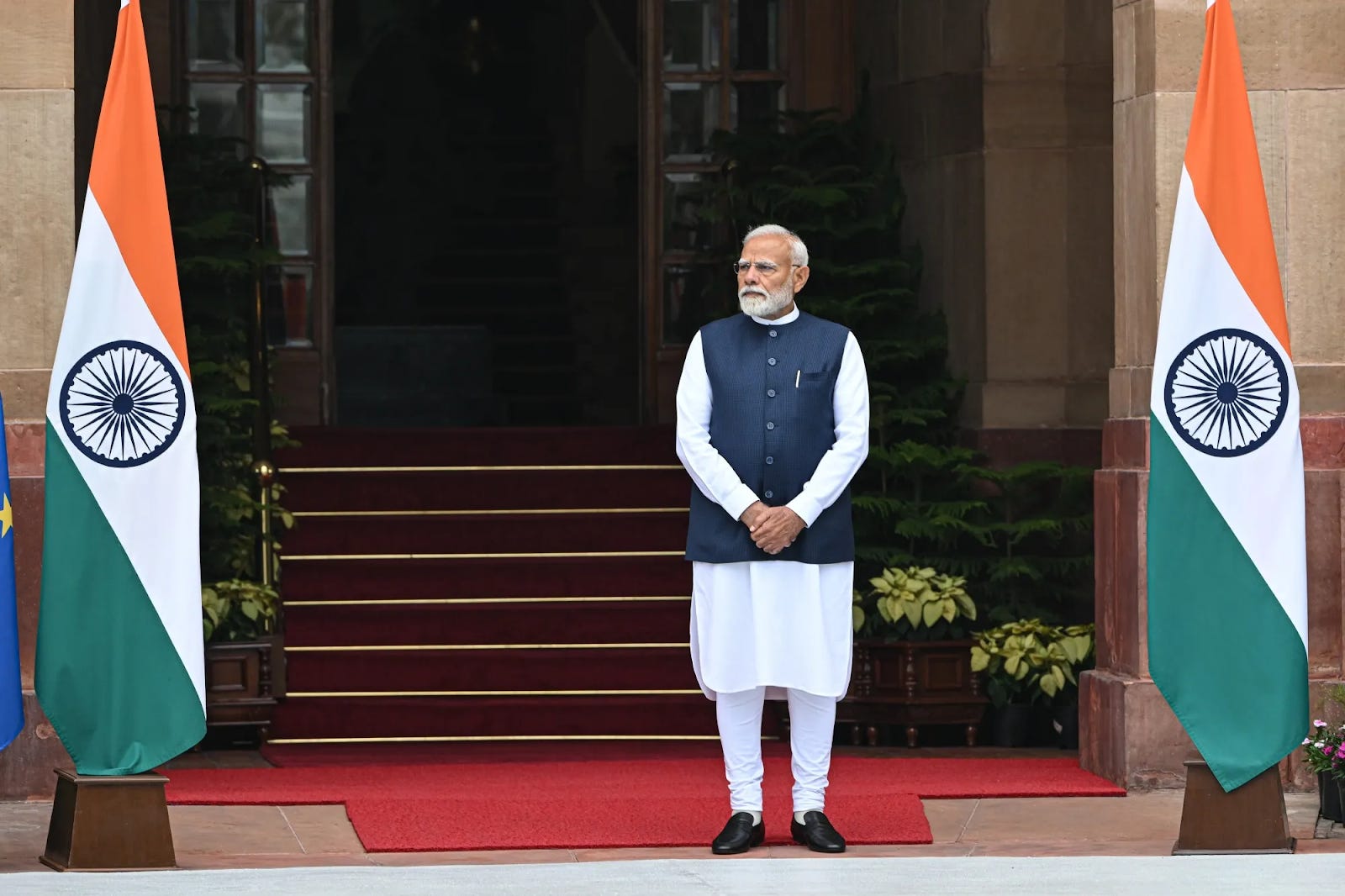
Indian Prime Minister Narendra Modi has not been invited to the upcoming Canada-hosted Group of Seven (G-7) summit, marking the first time in six years that India will be absent from the gathering—a development widely seen as a reflection of the deepening diplomatic rift between India and Canada. The decision comes amid ongoing tensions following Canadian allegations in 2023 that Indian agents were involved in the assassination of Sikh activist Hardeep Singh Nijjar on Canadian soil, charges that India has strongly denied. While India is not a G-7 member, it has been regularly invited as a guest since 2019, and Modi’s exclusion is viewed as a diplomatic setback that could dent his image as a global statesman. Indian officials indicated that even if an invitation had been extended, Modi was unlikely to attend due to unresolved concerns about Sikh separatist groups operating in Canada and uncertainty over how Canada’s new government would address these issues. Meanwhile, Canada has invited other non-G-7 leaders, including those from Ukraine, Australia, and Mexico, underscoring that India’s absence is not due to a broader policy shift but rather the specific deterioration in bilateral relations.
Tech — Can AI Be Trusted in School
The Economists
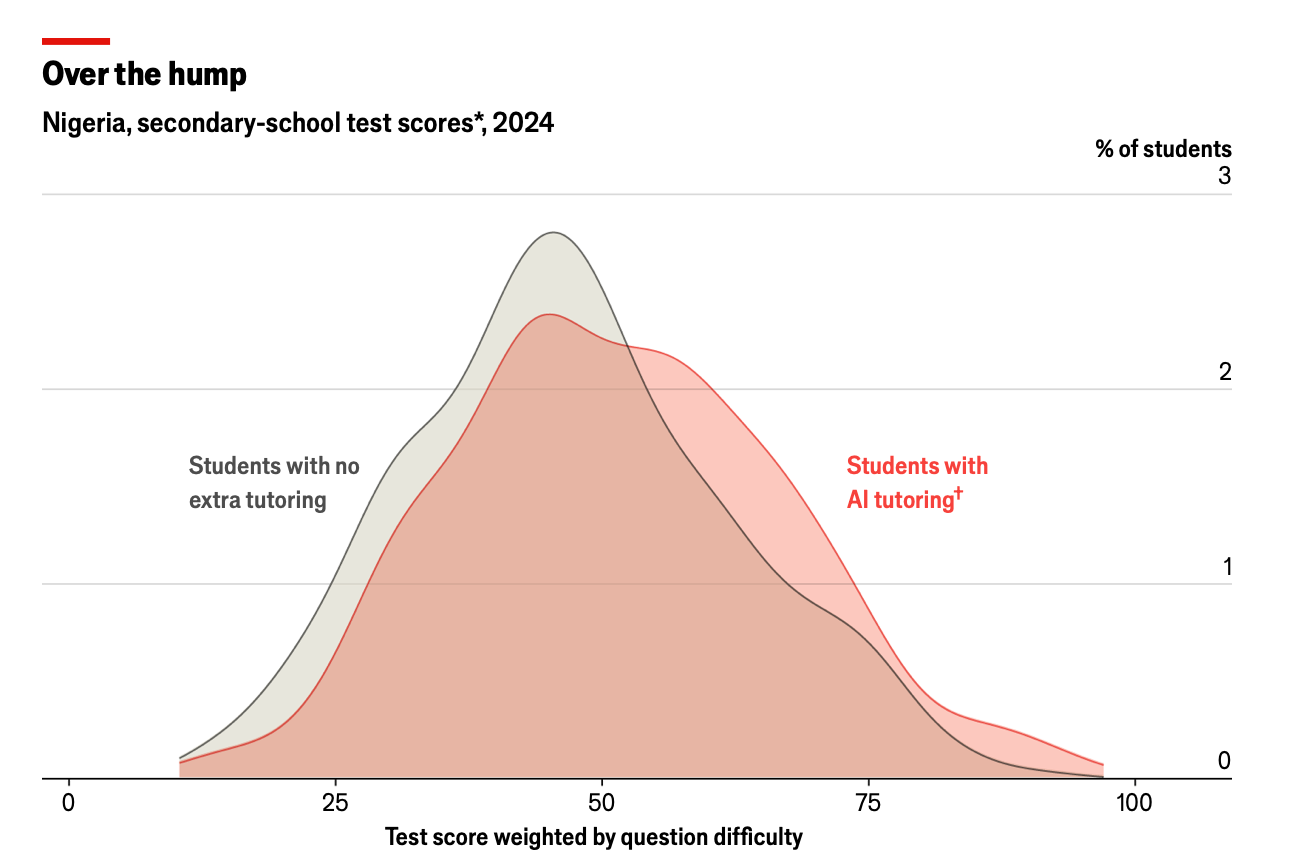
The question of whether AI can be trusted in schools is complex and context-dependent. While concerns persist in wealthier countries about students using AI to cheat or becoming overly reliant on chatbots—sometimes even outpacing teachers in their use of these tools—a recent pilot programme in Nigeria suggests AI can be a powerful educational aid, especially where resources are scarce. In this study, secondary-school students using Microsoft Copilot to improve their English skills made nearly two years’ worth of progress in just six weeks, outperforming their peers even in traditional, pen-and-paper exams. Although the results may partly reflect low baseline learning levels and the effect of additional teacher support, the programme was cost-effective and outperformed most other interventions in similar settings. However, challenges remain around scaling, cost, and infrastructure. Ultimately, while AI is not a panacea and must be used thoughtfully, it holds significant promise for improving learning outcomes in under-resourced schools, provided its limitations are recognized and addressed.
Business — Who Would Pay America’s “Revenge Tax” On Foreigners?

The Economists
America’s proposed “revenge tax” on foreigners—outlined in Section 899 of the tax code—would initially be paid by overseas investors and companies from countries deemed to impose “unfair foreign taxes” on U.S. firms, such as digital services taxes or undertaxed-profit rules. This tax would increase their U.S. tax bills by five percentage points each year, up to a maximum of 20 percentage points, affecting dividends, profits, and property sale proceeds, while also stripping certain treaty protections. However, as foreign investors react by pulling back from U.S. assets, the resulting decline in demand would likely push down American asset prices and raise borrowing costs for U.S. businesses and consumers, meaning the economic pain would ultimately be shared by Americans as well. The measure is thus seen as a political tool to pressure foreign governments, but with the risk that the U.S. economy and ordinary Americans could end up footing much of the bill.
Culture — Asia’s Forgotten Hellscape
The Economists
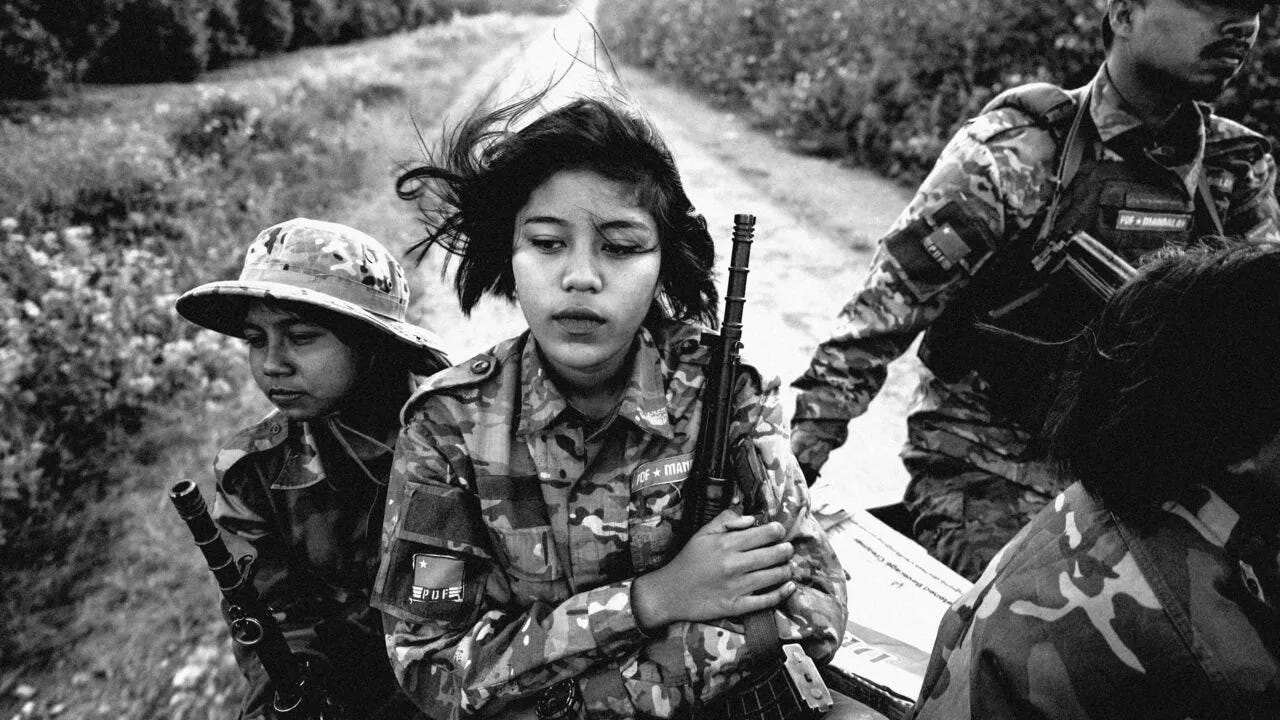
Myanmar’s descent into chaos, with over two million people on the brink of starvation and rampant crime spilling across its borders, stands as both a humanitarian disaster and a stark real-world demonstration of Chinese hegemony in action. As the West has retreated from its once-influential role, China has filled the vacuum, pursuing a values-free foreign policy that prioritizes its own interests—such as securing energy pipelines, mineral access, and regional influence—over any concern for democracy or human rights. Beijing arms and manipulates all sides in Myanmar’s civil war, ensuring instability that serves its strategic aims while the country’s economy collapses and violence surges. With America and Europe distracted or disengaged, and Myanmar’s neighbors largely supporting the junta, the prospects for a democratic or peaceful future remain bleak. The tragedy of Myanmar is thus not only a forgotten crisis but a warning about the global consequences when authoritarian powers set the rules and the rest of the world looks away.
The Daily Spark
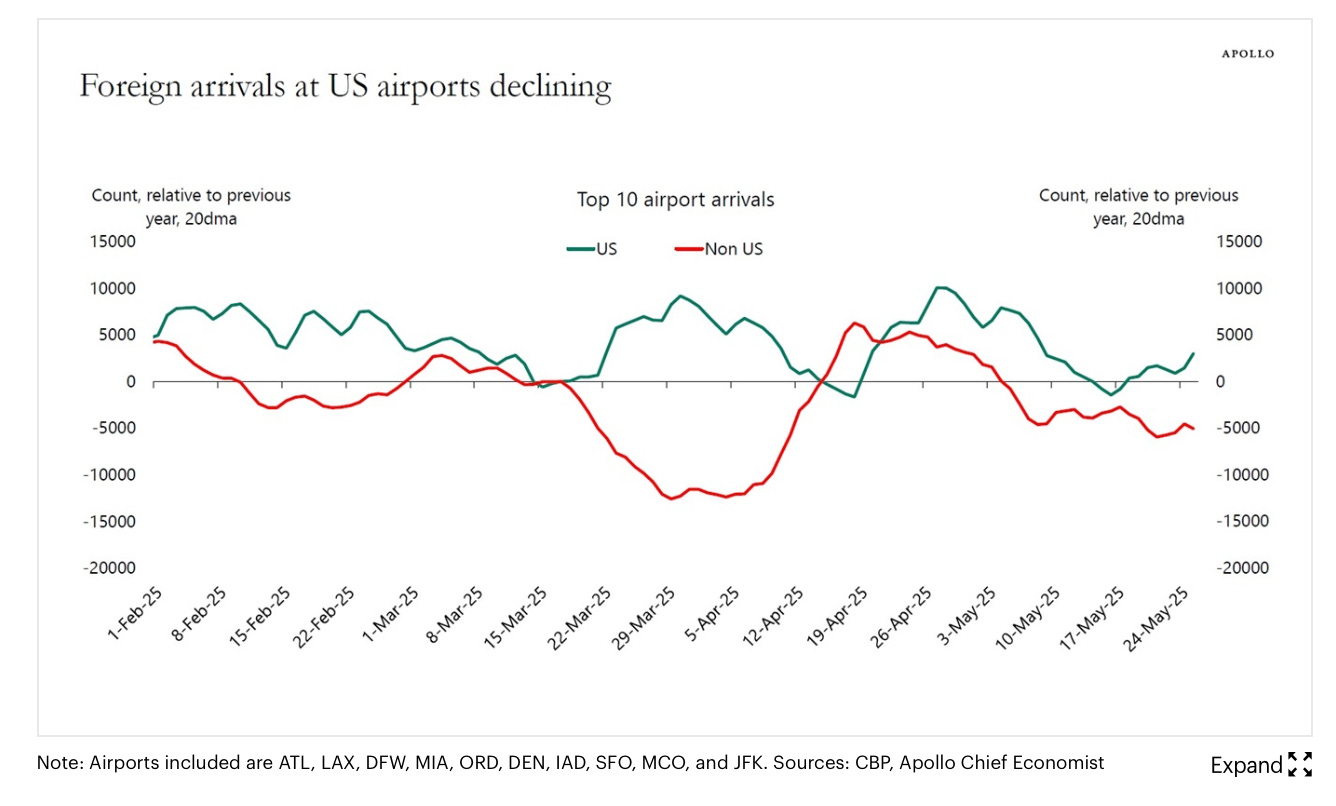
Foreign arrivals at the top 10 busiest US airports continue to decline, see chart below.
Song Recommendation — Think of Us (Chainsmokers)
Quote of the Day
“I never dreamed about success. I worked for it.” —Estée Lauder