

World News - Trump’s War on Renewables
Economists
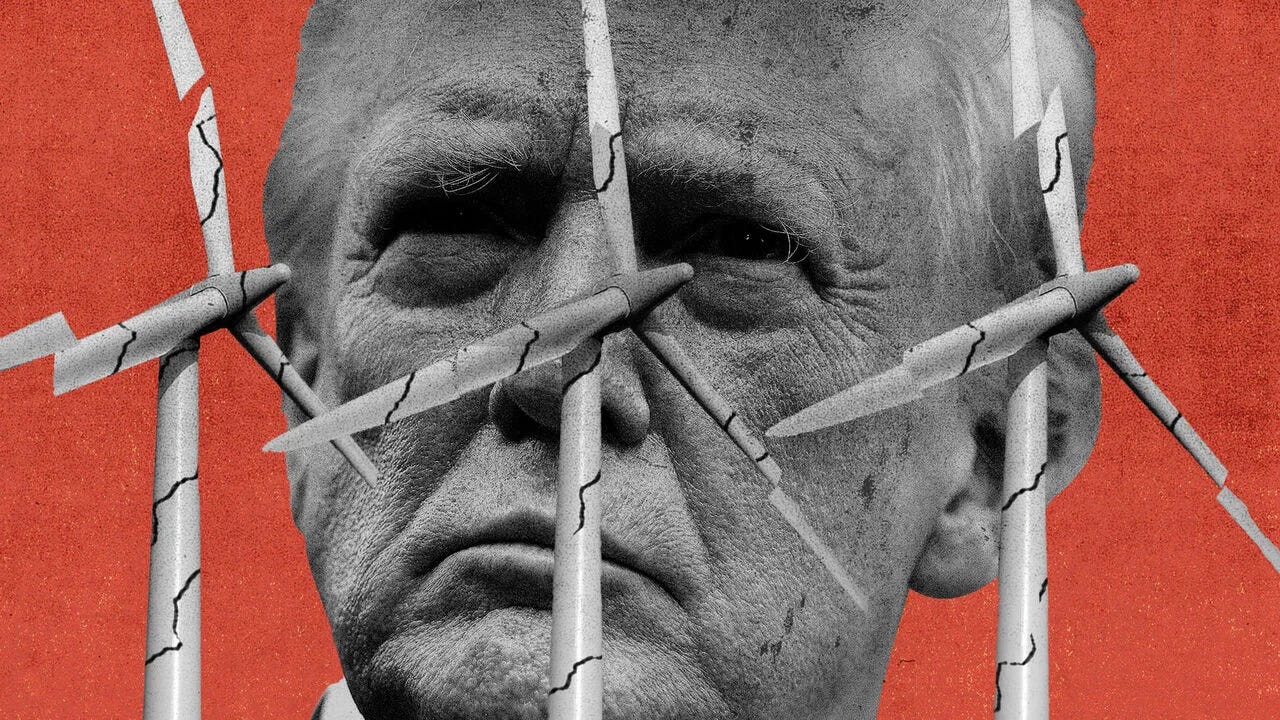
President Trump’s war on renewables in 2025 has meant a sharp reversal of U.S. clean energy progress: through the One Big Beautiful Bill, his administration is phasing out solar and wind tax credits by 2027-28, cutting electric vehicle incentives, and boosting fossil fuel development by expanding drilling and removing key climate-focused regulations. Trump has issued executive orders halting new wind and solar subsidies, adding bureaucratic hurdles for projects, and appointing fossil-fuel allies to regulatory agencies. These moves are already disrupting renewable investment, threatening an estimated $500 billion in clean energy projects and causing analysts to predict higher U.S. energy prices and emissions for years to come, even as nuclear and geothermal see some policy support and momentum for solar may briefly spike before a steep falloff.
Tech - Defense Tech Company Palantir Keeps Defying the Odds
FT
Palantir Technologies reported a landmark quarter in mid-2025, announcing its first-ever $1 billion in quarterly revenue—up 48% year-over-year—as the surge in artificial intelligence adoption fueled explosive growth across both commercial and government sectors. Driven by booming demand for its AI-powered data analytics platforms, U.S. commercial revenue nearly doubled to $306 million and U.S. government revenue skyrocketed 53% to $426 million, with profits climbing 144% to $327 million for the second quarter. The company has lifted its full-year revenue outlook to $4.14–4.15 billion, credits its robust performance to “the astonishing impact of AI leverage,” and recently secured a historic $10 billion contract with the U.S. government. Palantir’s stock, already up more than 100% this year, now places the company among the most valuable U.S. tech firms.
Market - More Downside Risk to the US Market Market
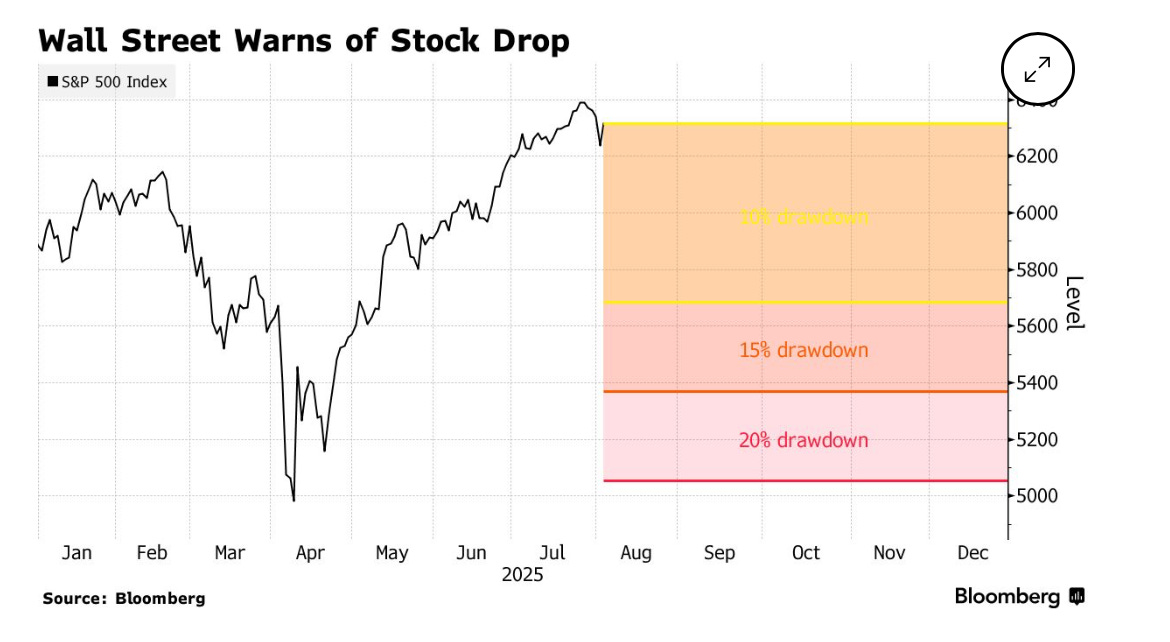
Major Wall Street strategists are warning investors that U.S. stocks are due for a near-term pullback after a record rally pushed valuations to historic highs, while fresh signs of rising inflation, weak job growth, and slowing consumer spending stoke economic jitters. Morgan Stanley expects the S&P 500 could correct by up to 10% this quarter—with Evercore suggesting up to 15%—as tariffs weigh on consumer and corporate finances. Despite these short-term risks, analysts remain bullish on the long-term market outlook, urging clients to buy on any significant dip; they note that August and September have typically been the weakest months for equities over the past thirty years. Options markets show rising demand for downside protection, reflecting mounting caution, but the consensus is that this volatility should ultimately be viewed as a buying opportunity for the ongoing bull market, especially in sectors like AI that continue to fuel investor optimism.
Culture - The Rise of Buy Now Pay Later
Economists
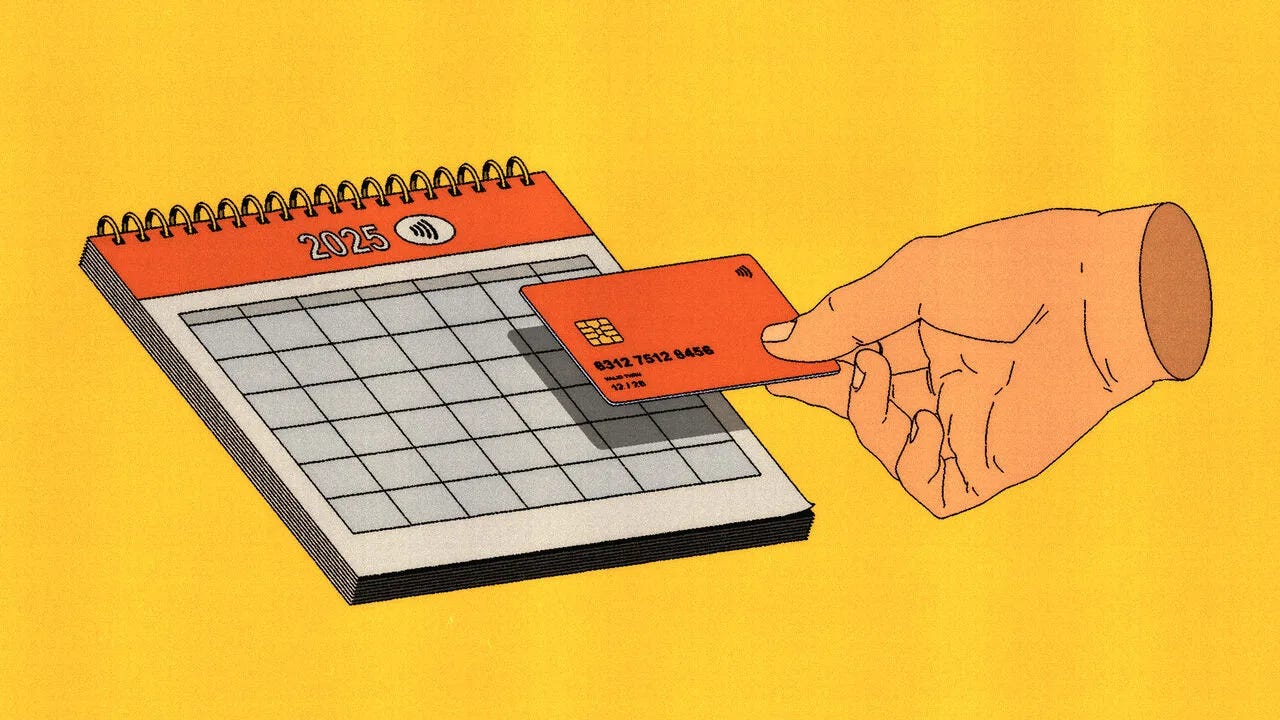
Buy now, pay later (BNPL) financing has rapidly become a mainstream global phenomenon, enabling consumers to split payments for everything from burritos to concert tickets into manageable, often interest-free installments—fueling $342 billion in worldwide BNPL spending last year, up from just $2 billion a decade ago. The model, pioneered by fintechs like Klarna and Affirm and now embraced by giants such as PayPal and JPMorgan, increases average basket sizes for merchants and appeals especially to Millennials and Gen Z, with adoption climbing fast as ever more users demand flexible payments at checkout, both online and in-store. The sector is also expanding into business-to-business lending and has spawned a booming market for securitized BNPL debt, even as concerns about overextension linger; so far, default rates remain below those of traditional credit cards, and credit bureaus are beginning to reward consistent BNPL users. While questions remain about how BNPL will fare in an economic downturn, the service is already reshaping how people and businesses manage purchases and cash flow—and it shows no sign of slowing down.
The Daily Spark
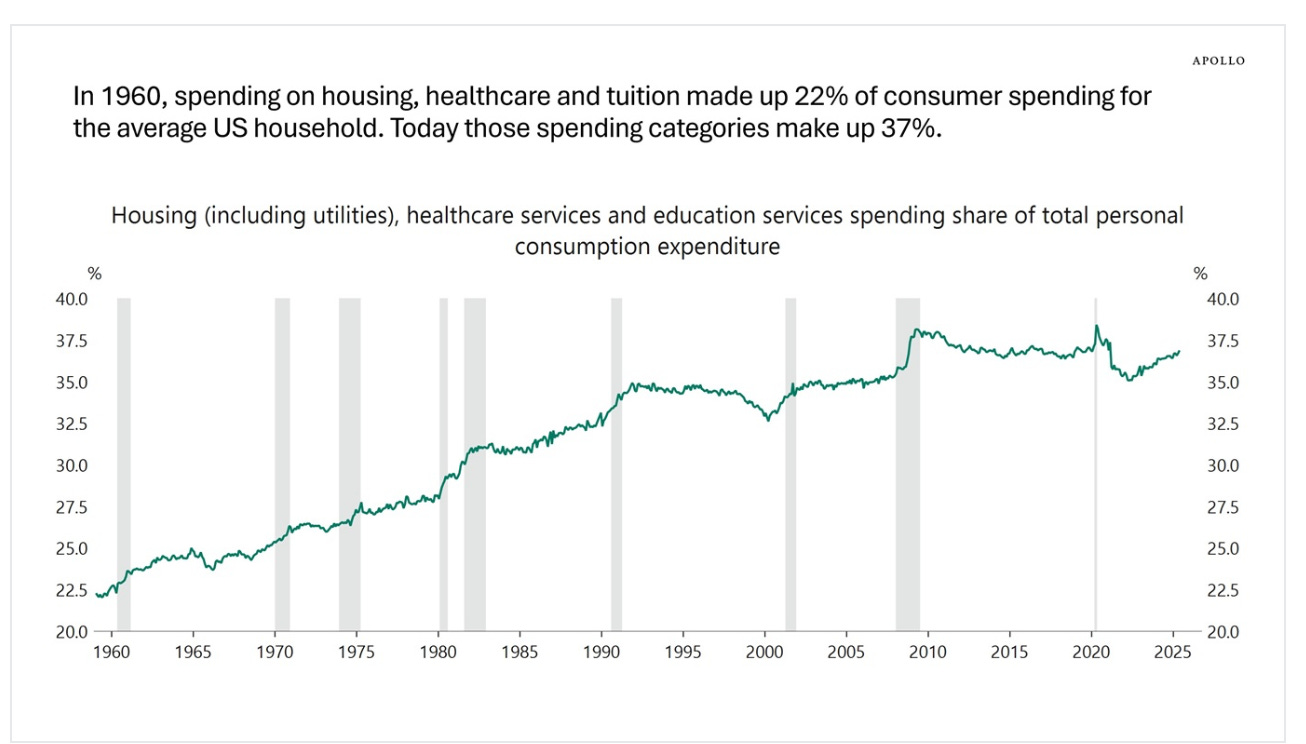
Housing, healthcare and tuition make up a bigger and bigger share of spending for the average US household, which means relatively fewer dollars are available for discretionary spending, see chart below.
Song Recommendation - Juna
Quote of the Day
"We are what we repeatedly do. Excellence, then, is not an act, but a habit." - Aristotle