

America — President Trump Seeks Balanced Trade
Bloomberg
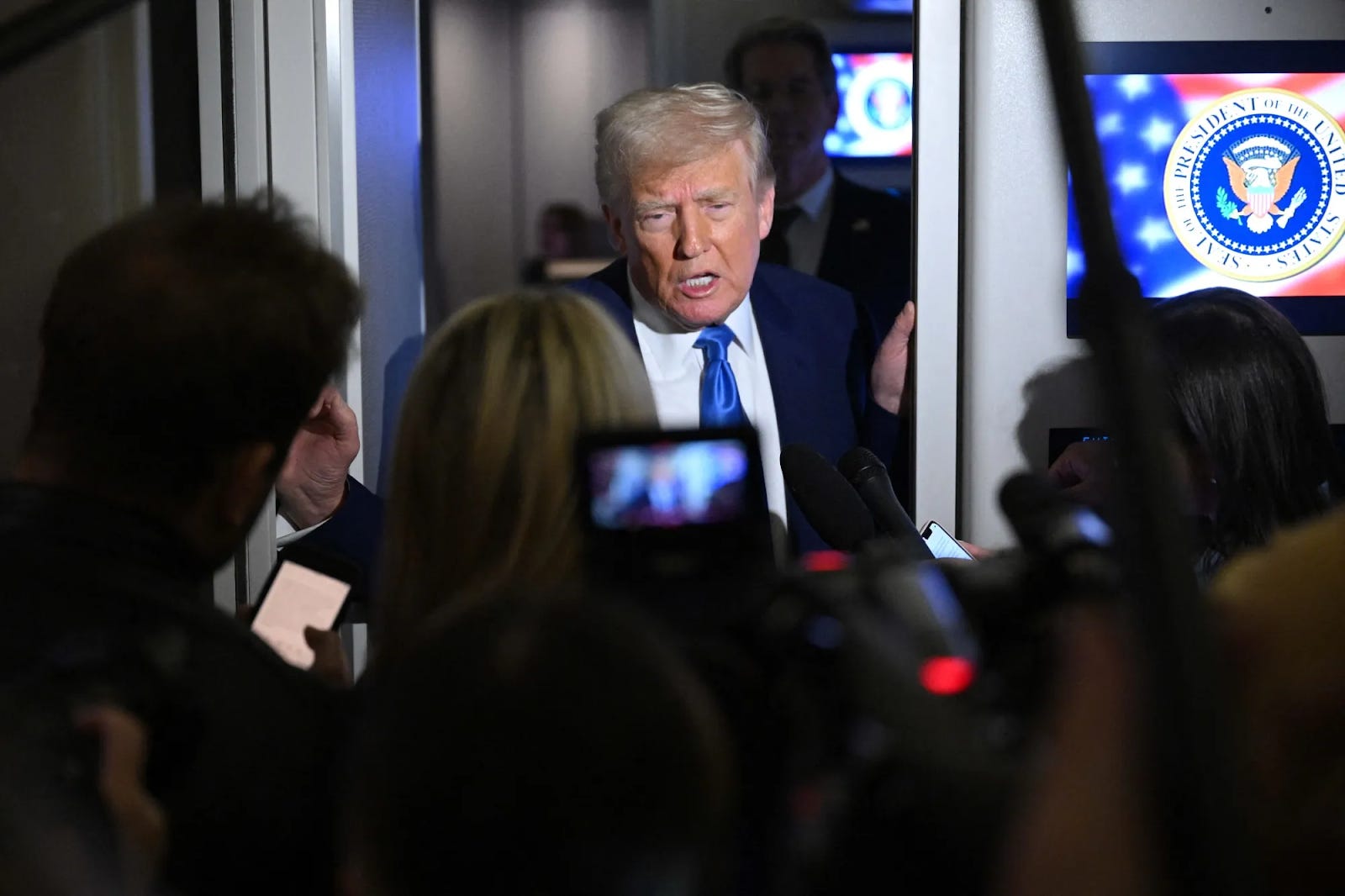
President Donald Trump reiterated his unwavering stance on tariffs during an April 6 press briefing aboard Air Force One, emphasizing that trade deals must eliminate U.S. bilateral trade deficits. Despite acknowledging market volatility triggered by his policies, Trump dismissed concerns about intentionally fueling a selloff, framing tariffs as necessary "medicine" to address trade imbalances. He asserted that negotiations with trading partners would only proceed if they commit to reducing deficits, particularly targeting China, with whom he seeks to resolve the $1.2 trillion goods trade deficit inherited from the Biden administration. New tariffs—including a 10% baseline rate effective April 5 and higher reciprocal rates up to 54% for China and others by April 9—aim to pressure nations into rebalancing trade relationships. Trump also singled out Europe, demanding reparations and annual payments alongside parity in trade terms, while downplaying inflation risks from the measures.
Tech — Meta’s New Llama Model
The Verge
Meta has unveiled two new AI models in its Llama 4 series—Llama 4 Scout and Llama 4 Maverick—positioning them as superior to competitors like OpenAI’s GPT-4 and Google’s Gemini 2.0 in coding, reasoning, and multimodal benchmarks. The smaller Scout model, optimized for efficiency, features a groundbreaking 10-million-token context window and operates on a single Nvidia H100 GPU, outperforming Gemma 3 and Mistral 3.1 in tasks like multi-document summarization. Maverick, a larger multimodal model, rivals GPT-4o and Gemini 2.0 Flash in coding and image understanding while using fewer active parameters. Both employ a mixture-of-experts (MoE) architecture to reduce computational costs, and while released as open-source, their licenses restrict EU-based entities and large corporations with over 700 million users. Meta also previewed Llama 4 Behemoth, a 2-trillion-parameter model still in training, which reportedly surpasses GPT-4.5 and Claude Sonnet 3.7 in STEM benchmarks.
Econ — Looming Global Recession

The Economists
President Donald Trump’s sweeping tariffs—raising average U.S. import taxes to 22%, the highest since 1910—have sparked global market turmoil, with JPMorgan estimating a 60% chance of worldwide recession by year-end. The measures triggered immediate selloffs: U.S. indices plummeted 5-6%, oil prices dropped 12%, and cyclical stocks underperformed defensives at rates unseen since COVID-19 lockdowns. Economists warn of cascading effects: U.S. households could lose $3,800 annually to inflation, while supply chain disruptions and retaliatory tariffs threaten to shrink global GDP by 0.5% and slash U.S. exports by 18%. Though the global economy entered this crisis with relative strength—OECD unemployment below 5%, resilient services sectors—analysts stress that sustained tariffs risk tipping fragile post-pandemic growth into contraction, particularly in trade-dependent Asia and Europe. While immediate U.S. indicators remain robust (2% growth, strong job gains), the combined pressures of consumer price spikes, corporate uncertainty, and potential debt defaults create a precarious backdrop for prolonged trade hostilities.
Running — Why You Should NOT Stretch Before Running
While conventional wisdom often promotes pre-run static stretching, evidence suggests prioritizing mobility exercises over passive flexibility work to optimize performance and reduce injury risks. Static stretching before running may impair muscle tension needed for efficient stride mechanics, potentially increasing injury vulnerability and reducing power output. Instead, dynamic warm-ups (e.g., lunges, leg swings) and targeted mobility drills enhance joint range of motion with strength, addressing areas like hip flexors, ankles, and thoracic spine that directly impact running efficiency. Post-run static stretching remains optional, beneficial primarily for relaxation or addressing specific flexibility deficits. Research indicates dynamic stretching improves running economy and perceived effort, while mobility training strengthens stabilizing muscles and corrects imbalances—key factors in injury prevention. For most runners, a warm-up emphasizing controlled movement patterns proves more effective than passive stretching for maintaining biomechanical integrity during runs.
Everyday Essentials — Creamy Scrambled Egg
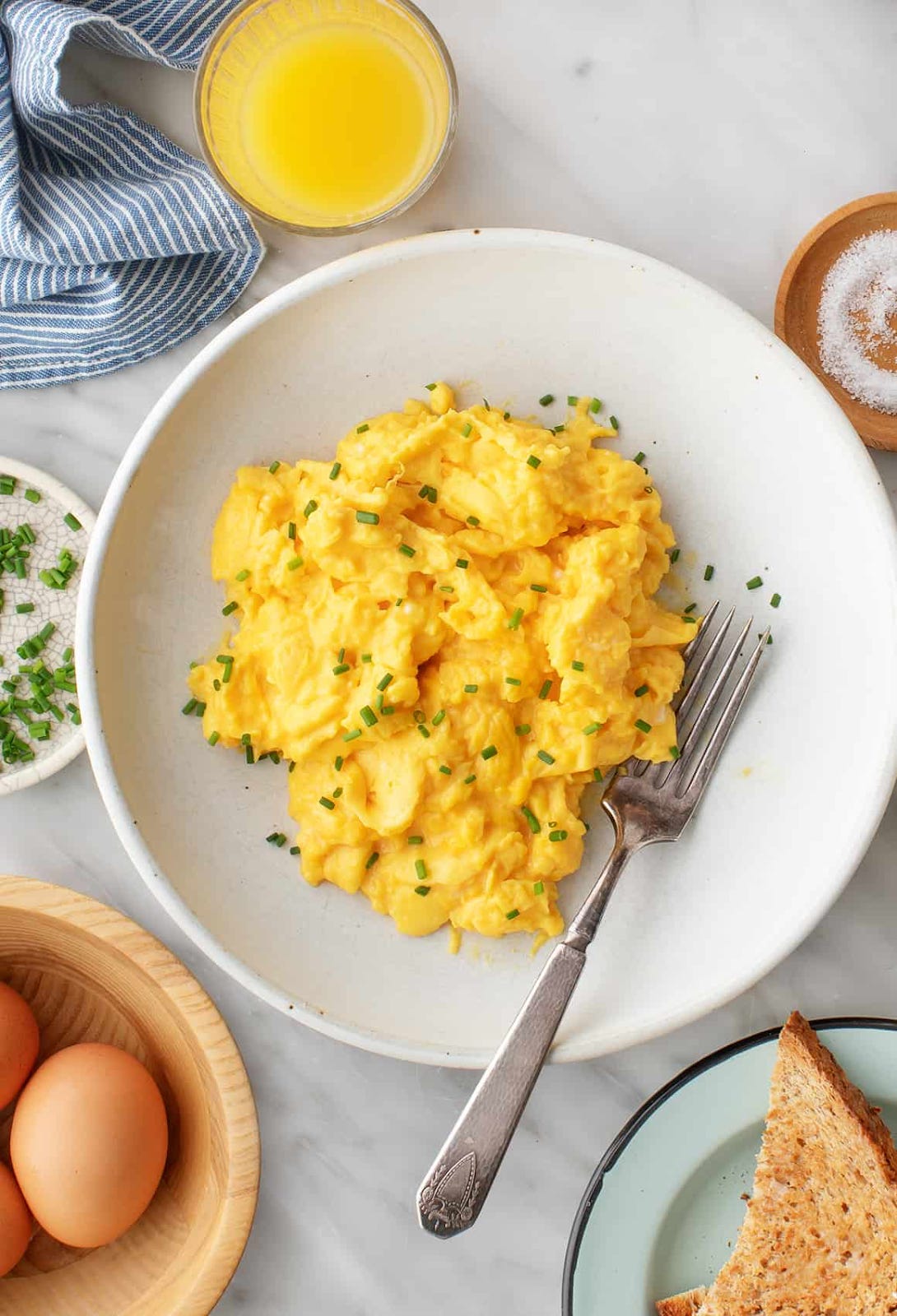
This recipe makes the eggs a little more fluffy. Try it and find out!
Song Rec — So Close (NOTD)
Quote of the Day
a
“Don't spend time beating on a wall, hoping to transform it into a door. ” ― Coco Chanel