

World Events — Putin Unleashes a Summer Offensive to Break Ukraine

Economists
After weeks of inconclusive ceasefire negotiations, with international diplomacy faltering under the looming influence of a semi-engaged Donald Trump, Russia has launched a ferocious summer offensive aimed at shattering Ukrainian resistance and securing a symbolic triumph for Vladimir Putin at any cost. The campaign has unleashed record-breaking missile barrages on Ukrainian cities and sparked intense Ukrainian drone strikes deep inside Russia, but these are preludes to the main objective: breaking Ukraine’s morale and seizing key eastern logistics hubs like Kostiantynivka and Pokrovsk, which serve as gateways to the last Ukrainian strongholds in Donbas. Russian forces are tightening their grip from multiple directions, bombarding Kostiantynivka with up to 25 guided bombs daily and advancing slowly toward Sumy in the north, where they seek to carve out a “buffer zone” and stretch Ukrainian defenses thin. Despite high casualties and slow, grinding progress—often achieved through small, dismounted assault groups to evade Ukrainian drones—Russia continues to outpace Ukrainian recruitment, flooding the battlefield with new soldiers lured by hefty bonuses. Ukrainian defenders, bolstered by early drone supremacy, now face a narrowing technological edge as Russia’s elite Rubikon unit and Chinese-supplied reconnaissance drones disrupt supply lines and complicate air defense. While Ukrainian leaders remain skeptical that Russia can achieve a decisive breakthrough, the relentless Russian onslaught threatens to erode Ukrainian resilience and prolong the war, leaving both sides locked in a brutal stalemate with the specter of further escalation or, perhaps, a future diplomatic window—if either side can find the will to negotiate.
Tech — Can Apple Stay Relevant
Economists
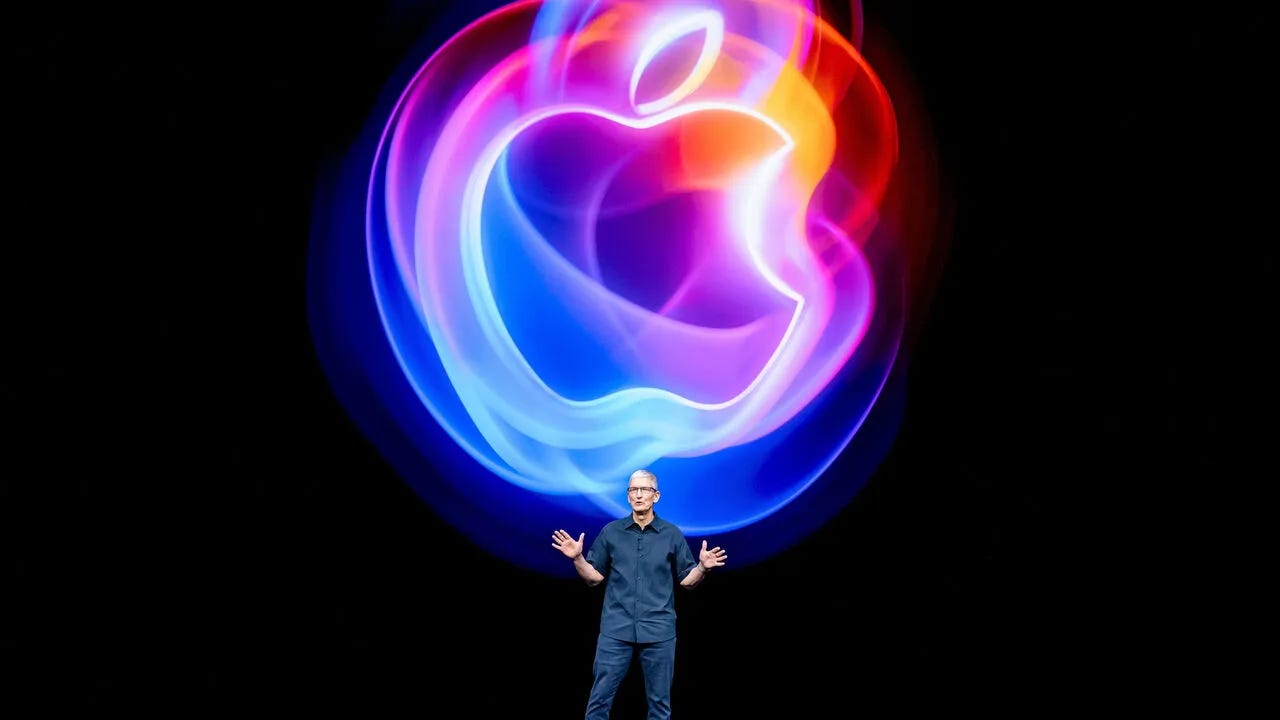
Tim Cook faces a profound challenge: steering Apple away from the fate of Nokia and other fallen tech giants, who lost their edge by failing to reinvent themselves as the market shifted beneath them. While Cook has built on Apple’s legacy with operational brilliance and a relentless focus on privacy, his tenure has been marked by incrementalism rather than the kind of bold product reinventions—like the iPhone or iPod—that once defined Apple’s success. Today, as Apple’s share price lags and its AI ambitions struggle to keep pace with Google, Microsoft, and OpenAI, the company’s vulnerabilities in China, regulatory threats to its services business, and the perception of stalled innovation are mounting. Critics argue that Apple’s “walled garden” approach and privacy-first ethos, while admirable, may now hinder its ability to compete in the AI era, where cloud-based, data-rich models are rapidly advancing. To avoid the Nokia trap, Cook may need to embrace riskier bets—whether in hardware, AI, or partnerships—and rethink Apple’s long-standing playbook, before the company’s core strengths become its greatest liabilities.
Economics — Trade Talks Resumes Between US-China

Bloombergd
Amid escalating US-China trade tensions since President Donald Trump’s return to the White House, top negotiators from both nations are set to meet in London on Monday in a renewed effort to address China’s dominance in rare-earth minerals—a crucial sector for high-tech manufacturing, from electric vehicles to defense systems. The talks follow a breakdown in relations after each side accused the other of failing to honor a deal reached in Geneva in May, with the US complaining about dwindling shipments of rare-earth magnets essential for American industry and China protesting tightened US restrictions on tech exports and foreign student access. While recent exchanges between Trump and Chinese President Xi Jinping have offered a glimmer of hope, and China has signaled some willingness to restart rare-earth exports, the path forward remains fraught with uncertainty and mutual distrust. With Trump’s tariff reprieve set to expire in August unless extended, and both sides seeking clarity on licensing and export controls, the London negotiations represent a critical juncture for global trade—one that could either ease supply chain disruptions or set the stage for further economic confrontation.
Travel — Trump’s New Travel Ban is Coming Into Effects
Economists
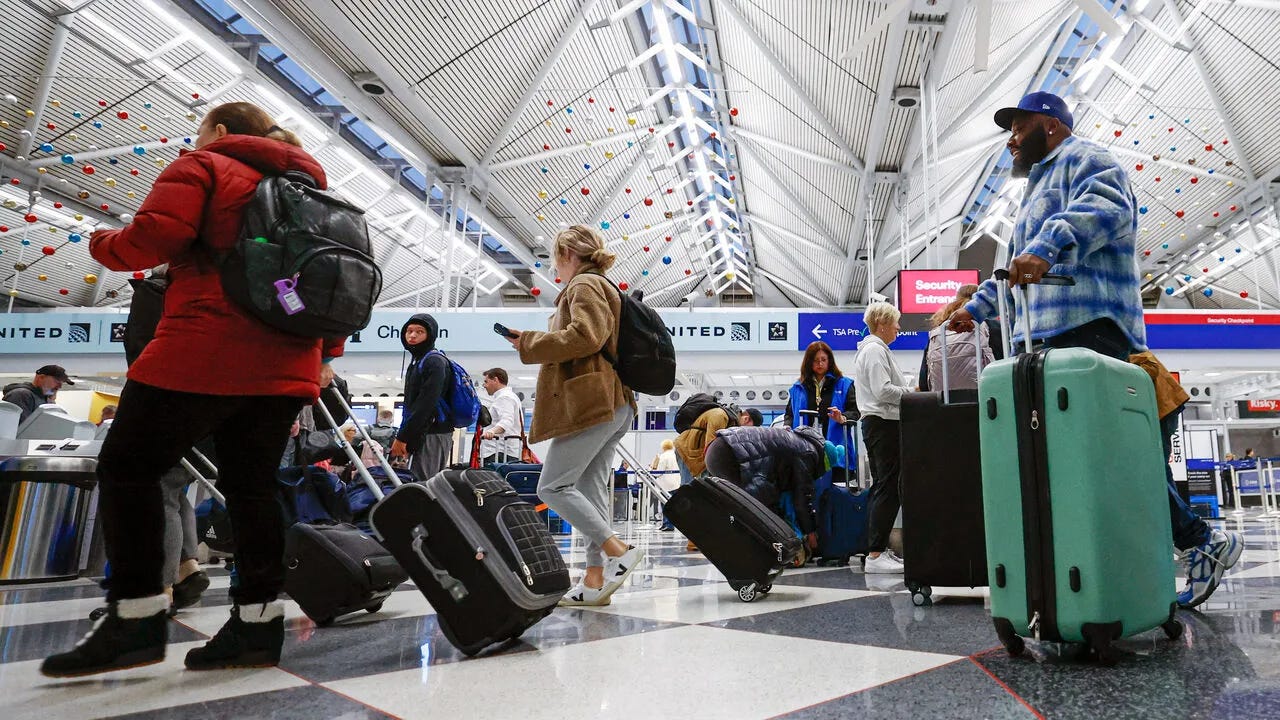
Donald Trump’s new travel ban, set to take effect on June 9th, bars most citizens from 12 countries—primarily in the Middle East and Africa—from entering the United States and imposes partial restrictions on nationals from seven others, including Cuba and Venezuela, citing concerns over national security, insufficient screening standards, visa overstays, and instability. Unlike the chaotic rollout of the original ban in 2017, this iteration is more methodically crafted, with clear exemptions for green-card holders, certain visa categories, and individuals whose entry serves U.S. national interests, reflecting lessons learned from earlier legal battles. The Trump administration’s approach, shaped by the Supreme Court’s broad deference to presidential authority on immigration in Trump v. Hawaii, has made this version more defensible in court, though critics argue that the policy’s national security rationale is undermined by its selective application and the relatively small number of overstays from most banned countries compared to other nations not on the list. Regardless, the ban reinforces a message of growing hostility toward foreign nationals, further shaping America’s image as it navigates a world increasingly anxious about its commitment to openness and constitutional values.
The Daily Spark
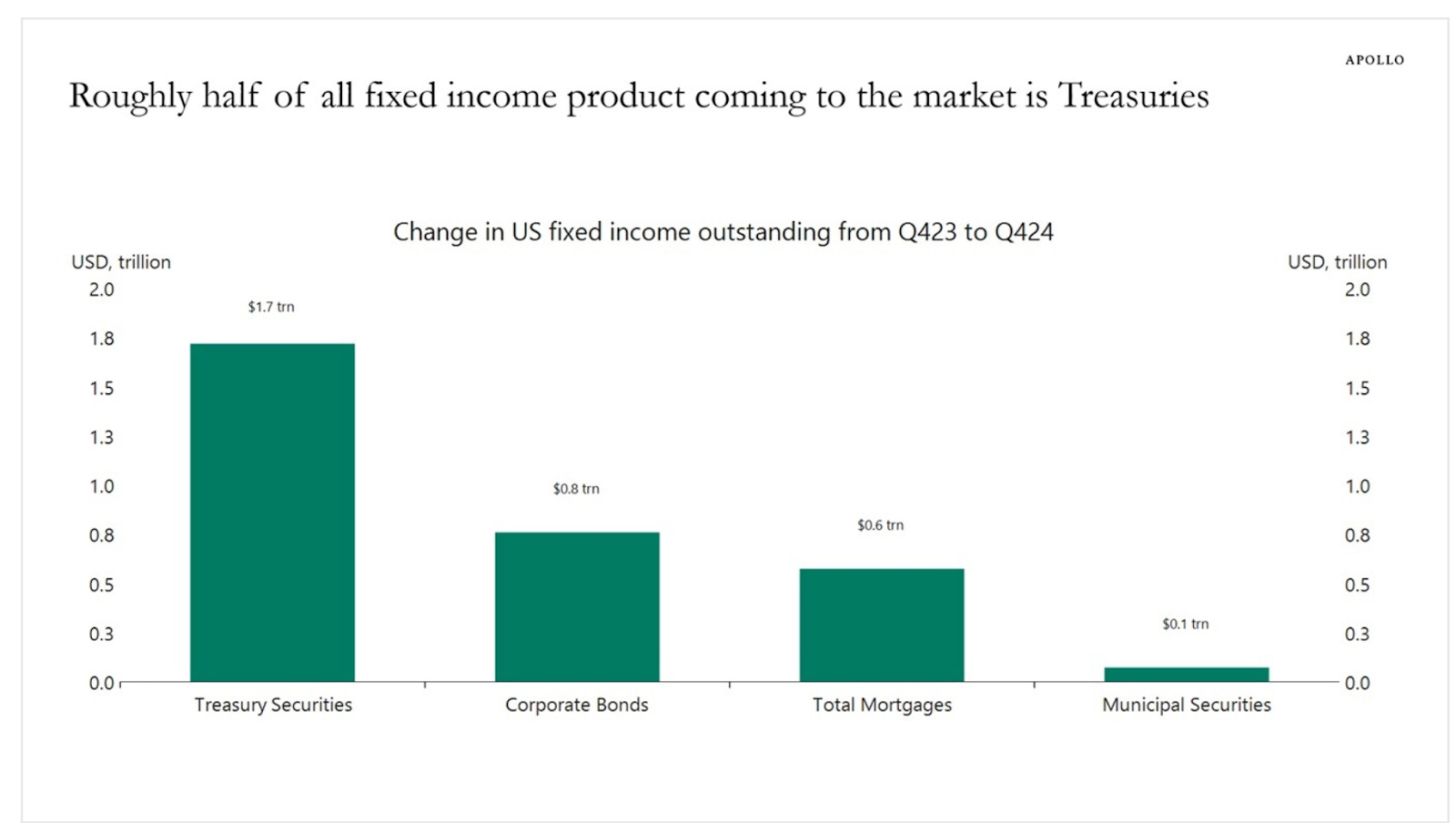
Over the past 12 months, roughly half of all fixed income product coming to the market has been Treasuries, see chart below.
This is not healthy. Half of credit issued in the economy should not be going to the government.
The consequence is that investors need to allocate more and more dollars to finance the government rather than financing growth in the economy through loans to firms and consumers.
The bottom line is that if the level of government debt were significantly lower, more dollars would be available for consumers to buy new cars and new houses, and for companies to build new factories.
Song Recommendation — Baptized in Fear (The Weekend)
Quote of the Day
“Happiness is like those palaces in fairy tales whose gates are guarded by dragons: we must fight in order to conquer it.” — Alexandre Dumas