

World Events — How Golden Ages Really Start, and End

The Economists
Golden ages in history have consistently emerged from societies that embraced openness-welcoming trade, diverse peoples, and new ideas-rather than from isolationist or protectionist policies. Johan Norberg’s “Peak Human” highlights how civilizations like Athens, Song China, and Rome flourished because they fostered economic freedom, intellectual exchange, and social mobility, enabling innovation and prosperity on unprecedented scales. For example, Song China’s meritocratic governance, property rights for peasants, and pioneering use of paper money fueled a rich economy and vibrant urban culture, while Rome’s inclusive citizenship policies and extensive trade networks created a powerful, interconnected empire. However, these golden ages invariably ended when societies turned inward, suppressing free inquiry, restricting trade, and imposing rigid dogmas-often compounded by external shocks like invasions or plagues. The Ming dynasty’s ban on foreign trade and the Roman Empire’s economic mismanagement illustrate how retreating from openness led to decline. Norberg’s analysis suggests that the current global era of openness, which has lifted living standards dramatically since 1990, faces similar risks as protectionism and intellectual suppression rise again. Ultimately, golden ages are not inevitable; they thrive on choice-societies must choose openness and innovation over fear and closure to sustain progress.
Tech — Your AI Meeting Notes Is Ready
The Economists
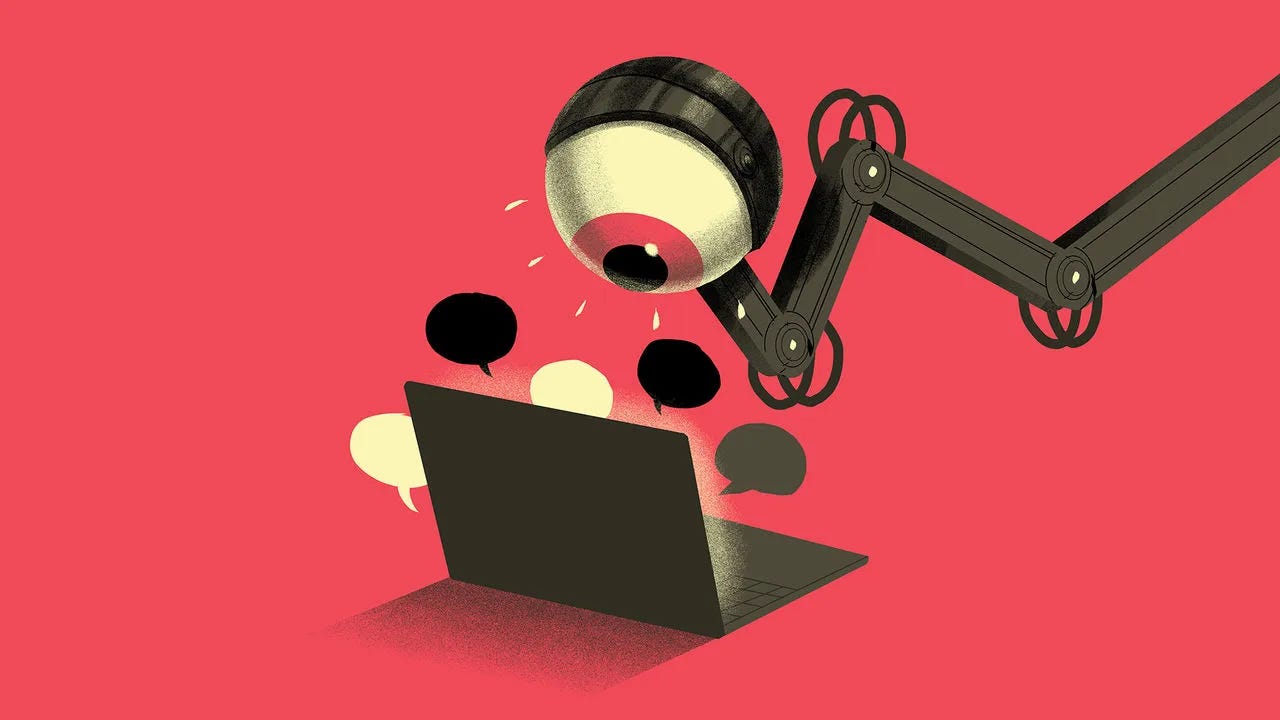
Your AI-generated meeting notes are in, and as usual, they’re thorough, awkwardly candid, and unlikely to spark joy in anyone who reads them. The AI meticulously tracked every moment of the sales team’s monthly call, from the initial small talk about weekend plans and movies (with action items like “Michael to report back on ‘The Accountant 2’”) to the sharp drop in morale when latecomers joined and the real business began. The bot’s sentiment analysis captured every eye-roll, encrypted joke, and passive-aggressive gesture, highlighting Lionel’s dominance in the conversation and the team’s collective dread when he threatened job security over the new Optimate launch. As soon as Lionel left, warmth and irreverence surged, with Tania’s eye-rolls and Robbie’s unprintable remarks duly noted. The AI’s unblinking gaze even caught post-meeting gossip and LinkedIn updates, making these notes less a helpful summary and more a slightly unsettling, all-seeing chronicle of workplace dynamics that no one will enjoy revisiting-except, perhaps, the AI itself.
Trade — China’s Secret Weapon in the Trade War

The Economists
As China’s export sector falters under steep tariffs and millions of manufacturing jobs hang in the balance, the country’s vast gig economy has become a crucial shock absorber, providing work for over 200 million people-more than a quarter of the national workforce and projected to reach 40% by 2025. Platforms like Meituan and Didi have rapidly expanded, with food delivery and ride-hailing offering flexible, if often precarious, employment to young and underemployed workers, many of whom turn to gig work out of necessity rather than choice. The government, once wary of the sector, now actively supports it-encouraging companies to offer social security benefits and positioning gig work as a political and economic safety net amid trade shocks and demographic pressures. However, this reliance comes with challenges: gig jobs frequently lack stability and benefits, wages are under downward pressure, and the looming threat of automation could undermine the sector’s role as a long-term solution. Nonetheless, for now, China’s gig economy remains a vital buffer, keeping millions employed and the economy afloat as traditional industries struggle.
Health — Why Do We Dream?
Cleveland Clinic
Experts still don’t fully understand why we dream, but leading theories suggest dreams help us process and consolidate memories, regulate emotions, and rehearse responses to challenges we face in waking life. Most dreaming occurs during REM sleep, when brain activity is high and regions involved in emotion and memory, like the amygdala and hippocampus, are especially active. Some researchers see dreams as the brain’s way of making sense of random neural activity (activation-synthesis theory), while others propose that dreams simulate threats, discharge unexpressed emotions, or even help the brain “clean up” unnecessary connections. Despite many ideas, no single explanation has been universally accepted, and the meaning of individual dreams remains subjective and elusive.
Here Comes the Summer — Sally, When the Wine Runs Out (Role Model)
Quote of the Day
“This is not the end, this is not even the beginning of the end, this is just perhaps the end of the beginning.” ― Winston S. Churchill