

World News — 5 Dead After Shooting in NYC

FT
A gunman killed four people and wounded another before taking his own life at 345 Park Avenue, a Midtown Manhattan office tower that houses Blackstone's global headquarters and the NFL. The shooter, identified as 27-year-old Shane Tamura who had driven from Las Vegas, entered the building's lobby with a rifle around 6:30 PM on Monday, killing four people including an off-duty police officer providing security and a Blackstone employee, before taking an elevator to the 33rd floor offices of building owner Rudin Management where he shot one more person. Police Commissioner Jessica Tisch said the incident appears to be the work of a lone shooter with no ongoing threat to the public, though investigators are still working to understand why he targeted this particular location.
Tech — AI in Finance

Bloomberg
Wall Street firms like JPMorgan, Robeco, AllianceBernstein, and PanAgora Asset Management are increasingly integrating generative AI—especially large language models (LLMs)—into their daily investment workflows. LLMs are now used to summarize earnings calls, highlight market anomalies, and draft research, as well as to flag deviations in portfolio management and generate investment themes. For example, at JPMorgan, AI is built into their internal platform, Spectrum, where it monitors stock holding periods and alerts managers when action is needed. Robeco uses LLMs to scan regulatory filings and social signals, progressing from drafting investor letters to generating trading signals and designing new products. PanAgora’s systems can now detect nuanced executive communication, leading to deeper company insights. AllianceBernstein is piloting AI agents designed to eventually propose or execute trades within set boundaries, already treating them as “thought partners” to challenge internal assumptions. According to a recent CREATE-Research survey, nearly 30% of institutional investors have already implemented or are implementing generative AI, with its impact poised to grow as early adopters demonstrate tangible results. Despite rapid progress, challenges remain, particularly around the explainability of model decisions and the consistency of results after updates, meaning human oversight and judgment remain crucial as the industry gradually embraces AI-driven transformation.
Business — How Big Tech Plans to Feed AI Energy Demand

Economists
America’s tech giants—including Alphabet, Amazon, Microsoft, and Meta—are confronting the explosive power demands of AI data centers with massive investments and creative strategies. As AI workloads grow, hyperscalers are ramping up capital spending for 2025 to a combined $320–$322 billion, focusing on building and upgrading giant, energy-hungry data centers. Modern AI server racks require about ten times more power than their predecessors, pushing US data center power consumption from 176 terawatt-hours in 2023 to a projected 325–580TWh by 2028, around 7–12% of total US electricity use. To address grid bottlenecks and slow utility response, tech firms are seeking less traditional sites, partnering with “neocloud” providers, repurposing crypto-mining facilities, and exploring innovative energy sources. They’re signing deals for nuclear, hydro, geothermal, and solar power, experimenting with onsite generation, and committing to build-out of flexible power grids—Google, for example, struck a $3 billion hydro deal, and Amazon is investing in small-modular nuclear reactors. With vacancies near record lows and competition for grid access fierce, some hyperscalers are investing in overseas sites, while others focus on direct energy procurement or backup systems like hydrogen fuel cells. These efforts reflect both urgency and uncertainty, as the AI boom rewrites the physical map of the internet—and forces big tech to become power innovators as well as consumers.
Culture — How YouTube Is Building the Next Generation of Chefs
Bloomberg
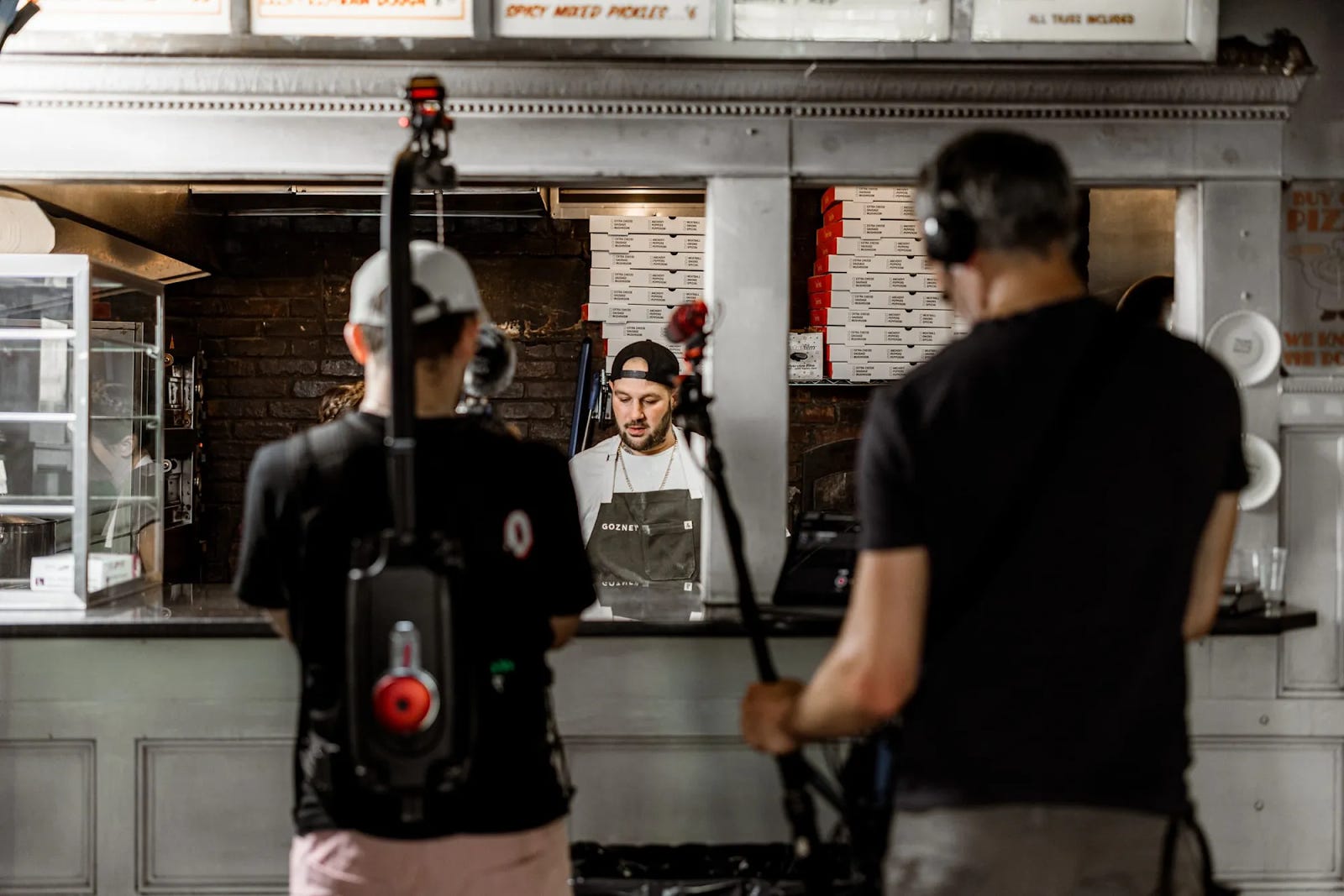
YouTube has fundamentally transformed how a new generation of chefs learn, refine their craft, and earn reputations, providing instant access to an ever-expanding wealth of culinary knowledge previously limited to elite kitchens or rare apprenticeships. From professional chefs like James Lowe, who used YouTube to master butchering a 400-pound bluefin tuna, to entrepreneurs such as Max Lewis and David Ratcliffe who launched pizzerias inspired by video tutorials, cooks everywhere now tap into step-by-step demonstrations, rare techniques, and global trends with just a few clicks. This vast video library not only accelerates skill-building but also democratizes culinary education, enabling self-taught chefs to bypass traditional hierarchies, share knowledge freely, and quickly adapt to emerging styles. As monthly uploads and views for food content skyrocket, YouTube’s influence blurs the lines between amateur and pro, while helping chefs build brands and develop new dishes, sometimes leading to breakout careers. While TikTok may be gaining ground with short, punchy clips for quick inspiration, YouTube’s depth and visual learning remain indispensable, fueling a worldwide shift in how both home cooks and kitchen pros learn, create, and connect.
The Daily Spark
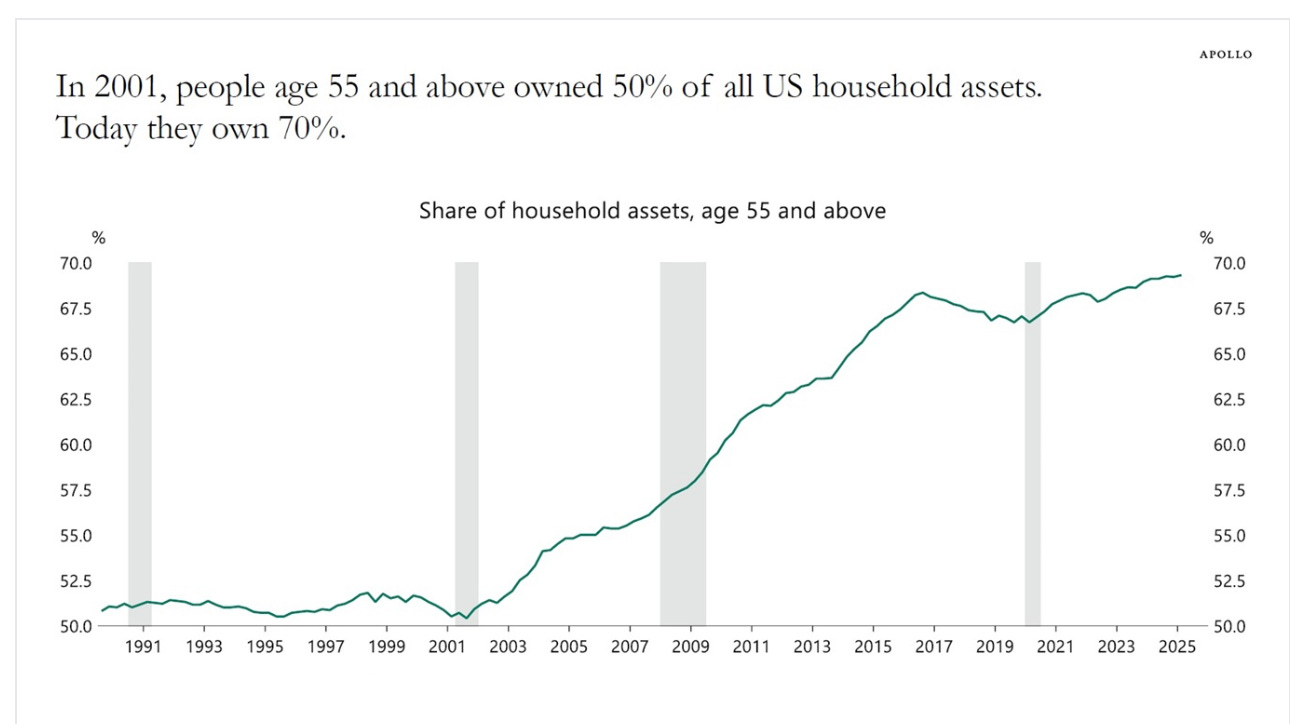
A growing share of US household assets is owned by people age 55 and above, see chart below. A contributing factor is the aging of the population, as there are more and more people in this age group.
Song Recommendation - “The Pool”
Quote of the Day
"The truth is, unless you let go, unless you forgive yourself, unless you forgive the situation, unless you realize that the situation is over, you cannot move forward." - Steve Maraboli