

World Events — Why Donald Trump Is a Globalist

The Economists
Despite branding himself as an "America First" president, Donald Trump is a globalist of a distinctive kind-one whose worldview is shaped less by ideals of international cooperation or brotherhood, and more by the pursuit of economic advantage and dealmaking on a global scale. Trump’s fascination with foreign disputes, from Ukraine to Gaza and Kashmir, reflects not isolationism but an eagerness to leverage American power and his own negotiating prowess to broker high-profile deals, often using economic pressure-like tariffs or threats to cut off trade-as his primary tools. His administration’s approach is not about spreading American values or engaging in nation-building, but about using America’s economic and strategic leverage to extract concessions, secure profits, and demonstrate personal influence, subscribing to a “globalism of greed” where peace and cooperation are transactional and profitable. This brand of globalism is pragmatic and transactional, focused on the belief that money and mutual enrichment can resolve even the most entrenched conflicts, making Trump a globalist not in the traditional sense, but as a leader for whom global engagement is a stage for economic and personal triumphs.
Tech — What Is Behind the Ascent of Palantir?

The Economists
Palantir’s staggering ascent is powered by its unique positioning at the intersection of the AI boom and a renewed focus on national security and government efficiency under the Trump administration. The company has seen explosive growth-39% year-over-year revenue gains and surging U.S. commercial sales-by rapidly deploying generative AI tools and data analytics to both private sector giants and government agencies, including defense and immigration. Palantir’s unorthodox business model, which embeds engineers directly with clients to solve bespoke problems before scaling solutions, has enabled it to maintain high margins and expand efficiently, even as its employee count remains stable. Its provocative, contrarian culture, shaped by CEO Alex Karp’s “us-against-the-world” mentality, attracts both controversy and loyalty, especially as Palantir openly embraces defense contracts and aligns itself with Trump-era priorities like government cost-cutting and military modernization. This combination of AI-driven innovation, aggressive government work, and a cult-like internal ethos has fueled both Wall Street hype and meme-stock fervor, propelling Palantir to a $250 billion valuation despite ongoing debates about its societal impact and the sustainability of its meteoric rise.
Business — Nissan Kept Falling

Bloomberg
Nissan shares fell as much as 3.2% in Tokyo after the automaker reported a staggering annual net loss of ¥670.9 billion ($4.5 billion)-one of the biggest in its history-and withheld a profit outlook for the coming fiscal year, citing ongoing uncertainty. The company’s sweeping restructuring plan, which includes slashing 20,000 jobs (about 15% of its global workforce), closing seven factories, and targeting ¥500 billion in cost reductions, failed to reassure investors concerned about weak sales in key markets like the U.S. and China, large impairment charges, and the potential impact of U.S. tariffs. Nissan’s shares, already down more than 25% this year, underperformed the broader Topix index as the market digested the lack of forward guidance and the scale of the turnaround challenge facing new management.
Health — How You Should Meditate, According to Your Personality

Verywell Mind
Meditation is not a one-size-fits-all practice; its effectiveness often depends on aligning the method with your personality traits. Introverts may find the most benefit in quiet mindfulness meditation, focusing on breath and present sensations in solitude, while extroverts thrive in group meditation settings that foster community and shared energy. Creative individuals are drawn to artful meditation, engaging in artistic activities like drawing or painting with mindful attention, whereas music lovers might prefer immersive sound baths using instruments such as gongs and singing bowls. Type A personalities, who value structure and order, often gravitate toward breathwork meditation with its rhythmic, controlled breathing techniques, while easy-going Type B personalities may enjoy the flexibility and movement of walking meditation. Pessimists can benefit from loving-kindness meditation, cultivating compassion and positive emotions, while optimists might reinforce their outlook through affirmation meditation, repeating positive statements. For those who are easily distracted, guided meditations led by a narrator provide structure and focus, making it easier to stay engaged. Ultimately, the best meditation practice is the one that resonates with you and fits naturally into your lifestyle, so exploring different types can help you discover what brings the most calm and clarity.
The Daily Sparks
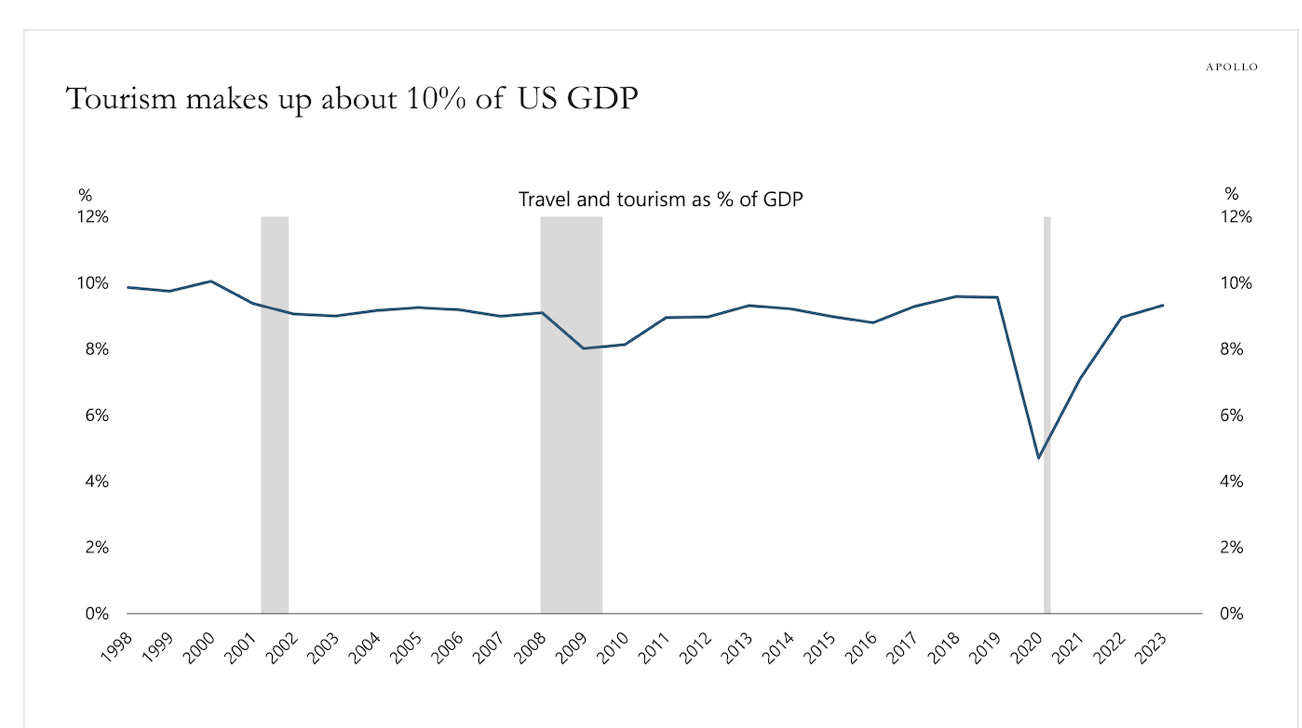
Following the recent US-China trade agreement, which sharply reduced tariffs and eased the risk of a complete trade breakdown, the probability of a US recession in 2025 has dropped to 30%, effectively removing the extreme downside risk tied to a total collapse in bilateral trade. The primary focus for markets now is how rapidly trust and confidence will return among consumers, businesses, and international investors, with the pace of this recovery-whether swift or prolonged over several quarters or years-remaining uncertain. Tourism is a particularly sensitive sector to watch; it accounts for roughly 9% of US GDP, and the country is projected to lose $12.5 billion in travel revenue this year due to a 22% decline in international visitor spending since 2019, with notable drops in arrivals from Canada and Europe negatively impacting airlines, hotels, and restaurants. While financial markets may rebound quickly from the trade turmoil, restoring confidence among consumers, corporations, and foreign stakeholders is likely to be a slower process, especially given the ongoing weakness in travel demand and persistent negative perceptions abroad.
Song Recommendation — More To Lose (Miley Cyrus)
Quote of the Day
"The only way to do great work is to love what you do." — Steve Jobs