

World Events — De-escalation Between India and Pakistan?

The Economists
The latest crisis between India and Pakistan has once again exposed how fragile peace is between these two nuclear-armed rivals, with sheer luck often standing between de-escalation and catastrophic war. The cycle of provocation and retaliation-this time sparked by a deadly terrorist attack in Indian-administered Kashmir and followed by Indian missile strikes deep into Pakistan-has become alarmingly familiar, yet each episode grows more dangerous as new weapons, domestic instability, and international indifference raise the stakes. While both sides have so far shown some restraint-targeting militant camps rather than military or civilian infrastructure, and agreeing to a ceasefire after days of intense exchanges-the underlying drivers of conflict remain unresolved: Pakistan’s tolerance of militant groups and India’s heavy-handed policies in Kashmir. With Pakistan’s internal decay, India’s rising power, and outside actors less willing to intervene, the risk is that luck will eventually run out, and the next crisis could spiral beyond anyone’s control.
Tech — How Google’s Anti-trust Is Already Changing Search

Bloomberg
The Google antitrust trial has dramatically shifted the landscape of online search, breaking open a market that had been largely “frozen” for two decades by Google’s dominance through default agreements and exclusive deals with device makers and browsers. Judge Amit Mehta’s ruling that Google illegally monopolized web search and advertising has already spurred increased competition and innovation, with startups and rivals-such as OpenAI’s ChatGPT, which Apple chose over Google’s Gemini for its new AI search feature-gaining new business opportunities and partnerships that would have been unlikely without the trial’s pressure on Google. The proceedings have also accelerated industry-wide discussions about transparency in search algorithms, data usage, and the ethics of digital advertising, while prompting major players like Apple to consider revamping their platforms to prioritize AI-powered search engines. As the remedies phase unfolds, potential outcomes range from breaking up parts of Google’s ecosystem (like divesting Chrome) to imposing new regulations that could reduce Google’s ad monopoly and foster a more competitive, innovative, and consumer-friendly search environment.
Business — Huawei Is Catching Up to Nvidia in the Chip Business
The Economists
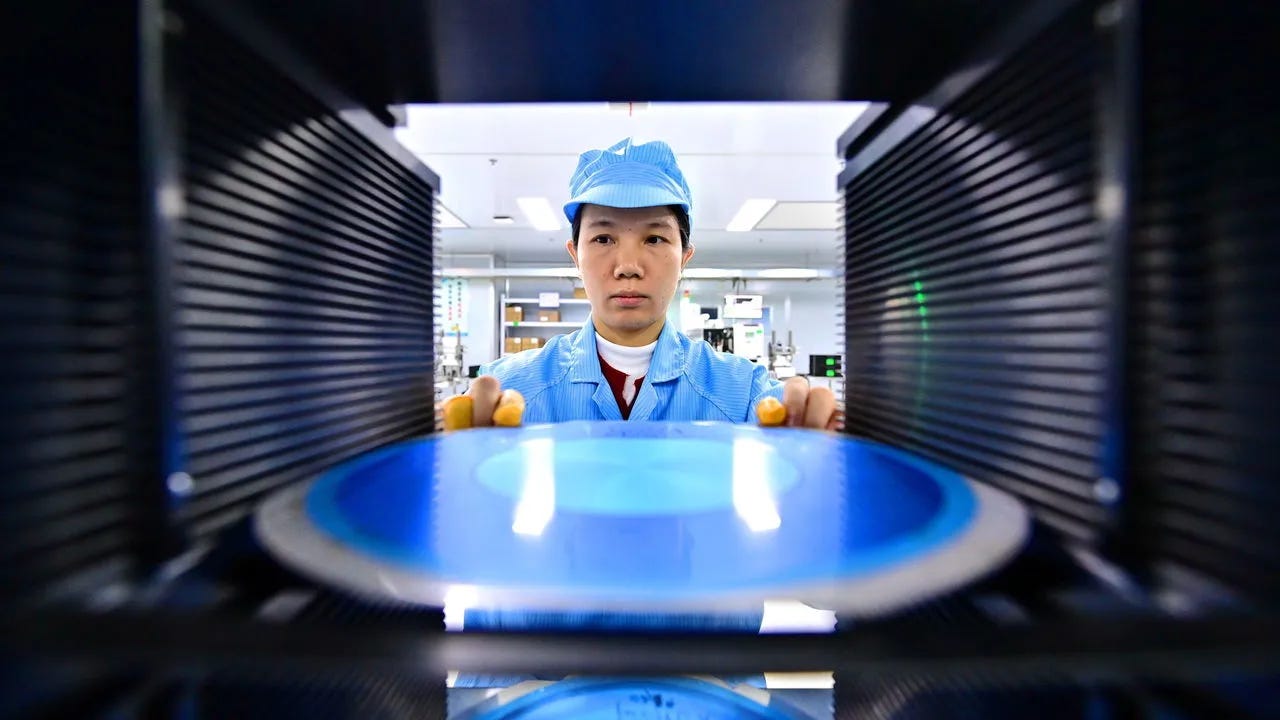
A surge of optimism has recently swept through China’s semiconductor industry as domestic firms like Cambricon and Huawei rapidly advance in AI chip technology, fueled by soaring stock prices and strong government support for self-sufficiency. Despite US-led export restrictions that have barred Nvidia from selling its most advanced processors in China, local tech giants such as Alibaba and Tencent continue to expand AI data centers, seemingly unimpeded, thanks to both efficiency breakthroughs by startups like DeepSeek and a shadowy supply chain that still delivers Nvidia hardware. Meanwhile, Chinese chipmakers are achieving technical milestones once thought out of reach: Huawei’s new CloudMatrix cluster, powered by its Ascend chips, reportedly outperforms Nvidia’s top AI clusters, and Cambricon has begun supplying viable alternatives to Nvidia’s A100 chip, while other firms like Hygon and CXMT are catching up in high-bandwidth memory and chipmaking equipment6. However, China’s chip sector remains dependent on foreign technology in critical areas such as advanced lithography tools, high-end software platforms like Nvidia’s CUDA, and some key chip components, limiting full independence. Nonetheless, as geopolitical tensions and US sanctions intensify, a growing number of Chinese companies-many state-owned-are embracing homegrown chips and software, betting that domestic innovation will eventually close the remaining technological gaps and reduce reliance on Western suppliers.
Health — Breathing to Reduce Stress
Conscious diaphragmatic or abdominal breathing is an effective way to reduce stress by shifting from shallow, upper chest breathing-common during the stress response-to deeper breathing that engages the diaphragm. This technique activates the body’s relaxation response, helping to lower heart rate, blood pressure, and levels of stress hormones like cortisol, while also balancing oxygen and carbon dioxide in the blood and improving immune function. Scientific studies have shown that practicing diaphragmatic breathing can decrease both physiological and psychological markers of stress, making it a low-cost, self-administered intervention that promotes calm and well-being. Regular use of this breathing method can help manage chronic stress, enhance relaxation, and support overall health.
Song Rec - Save Your Tear (the Weekend and Arianna)
The Daily Spark
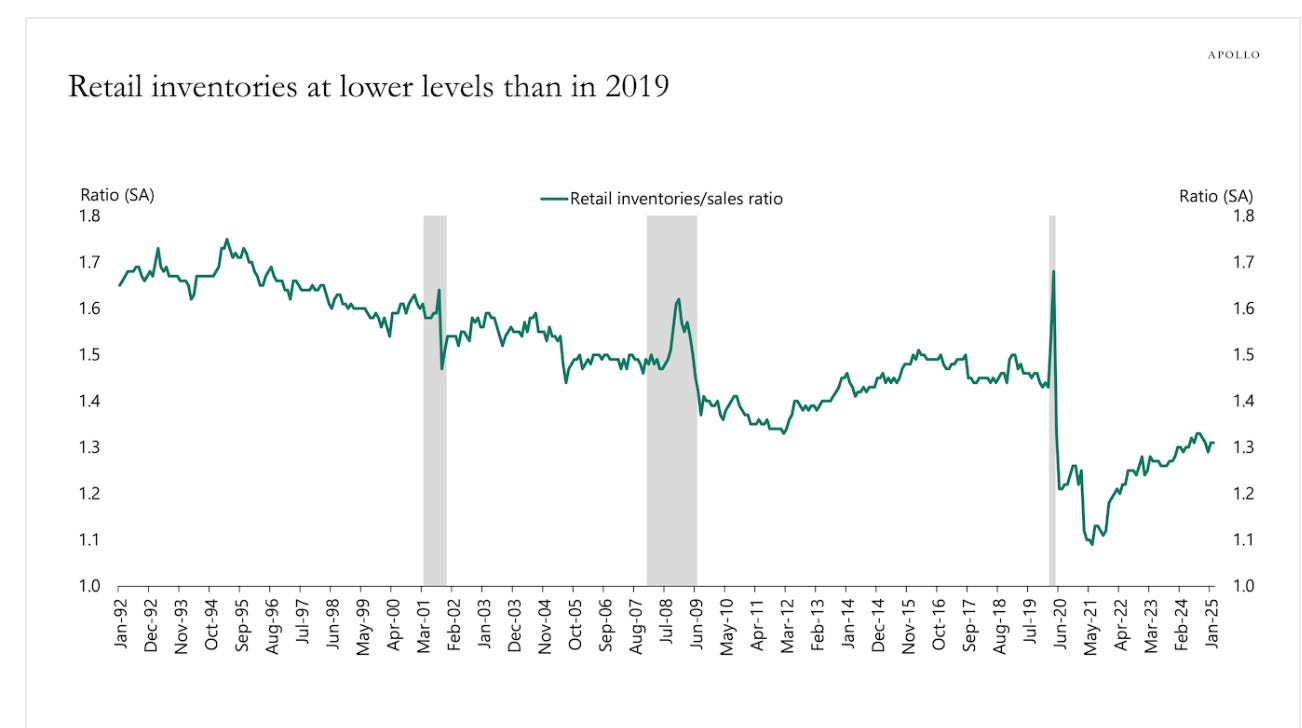
The inventory-to-sales ratio for retailers in the US has dropped from 1.5 before the pandemic to 1.3 now (see chart above). This means that if shipments from China are disrupted, retailers’ shelves will run empty more quickly than they did in the past.
Quote of the Day
“Data are just summaries of thousands of stories—tell a few of those stories to help make the data meaningful.” — Dan Heath