

Nihilist (n.)
Someone who rejects the fundamental aspects of human existence, such as morality, meaning, or knowledge, and is often associated with extreme pessimism and radical skepticism.
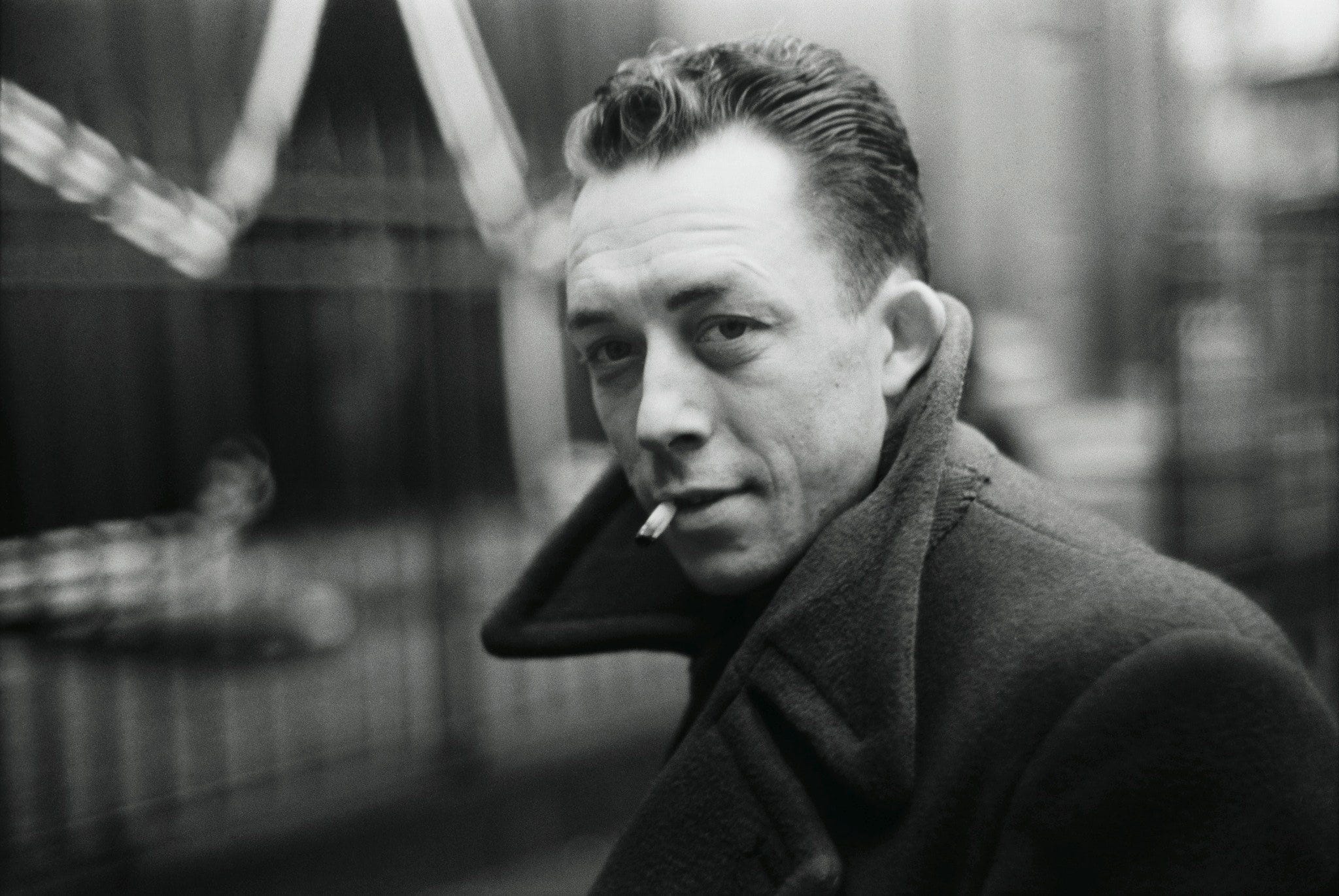
An image of Albert Camus
The Stranger
One reader recommended The Stranger by Albert Camus. I had the chance to read over this book yesterday.
The novella explores themes of nihilism and absurdity through the story of Meursault, a detached and amoral young man living in Algiers. The novel begins with Meursault's indifferent response to his mother's death and follows his interactions with various characters, including his involvement in a revenge plot and a chance encounter that leads to the murder of an Arab man. Meursault's actions and reactions are guided by his belief that life is inherently meaningless, which underscores the novel's exploration of nihilistic and absurd perspectives on human existence. The second part of the book details Meursault's trial and his eventual acceptance of his fate.
Meursault embodies a radical form of nihilism, perceiving no inherent meaning in anything, including societal constructs deemed significant. This perspective leads to a flattening of experiences: Raymond's morally questionable behavior elicits no judgment, Marie's affection is met with indifference rather than coldness, and the sun's heat becomes more palpable than the act of taking a life. This nihilistic worldview raises profound questions: In the absence of inherent meaning, how does one differentiate between murder and environmental discomfort? What significance can love hold in a meaningless universe?
While Meursault is termed an "absurd hero," he's not presented as a role model. Instead, he serves to illustrate the extremes of living within the absurd without rebelling against it. His character highlights the absurdity of the absurd itself. Camus' philosophy advocates for rebellion against the absurd, but Meursault largely dwells within it. His final rebellion isn't against the absurd per se, but against others' unawareness of it. Only in his last moments does Meursault truly rebel by embracing happiness in the face of his impending execution, but he no longer has the time to fully appreciate it.
Selected Passages From the Last Chapter of the Story
Then, I don't know why, but something inside me snapped. I started yelling at the top of my lungs, and I insulted him and told him not to waste his prayers on me. I grabbed him by the collar of his cassock. I was pouring out on him everything that was in my heart, cries of anger and cries of joy. He seemed so certain about every thing, didn't he? And yet none of his certainties was worth one hair of a woman's head. He wasn't even sure he was alive, because he was living like a dead man. Whereas it looked as if I was the one who'd come up emptyhanded. But I was sure about me, about everything, surer than he could ever be, sure of my life and sure of the death I had waiting for me. Yes, that was all I had. But at least I had as much of a hold on it as it had on me. I had been right, I was still right, I was always right. I had lived my life one way and I could just as well have lived it another. I had done this and I hadn't done that. I hadn't done this thing but I had done another. And so? It was as if I had waited all this time for this moment and for the first light of this dawn to be vindicated.
Nothing, nothing mattered, and I knew why. So did he. Throughout the whole absurd life I'd lived, a dark wind had been rising toward me from somewhere deep in my future, across years that were still to come, and as it passed, this wind leveled whatever was offered to me at the time, in years no more real than the ones I was living. What did other people's deaths or a mother's love matter to me; what did his God or the lives people choose or the fate they think they elect matter to me when we're all elected by the same fate, me and billions of privileged people like him who also called themselves my brothers? Couldn't he see, couldn't he see that? Everybody was privileged. There were only privileged people. The others would all be condemned one day. And he would be condemned, too. What would it matter if he were accused of murder and then executed because he didn't cry at his mother's funeral? Sala mano's dog was worth just as much as his wife. The little robot woman was just as guilty as the Parisian woman Masson married, or as Marie, who had wanted me to marry her. What did it matter that Raymond was as much my friend as Celeste, who was worth a lot more than him? What did it matter that Marie now offered her lips to a new Meursault? Couldn't he, couldn't this condemned man see. And that from somewhere deep in my future . . . All the shouting had me gasping for air. But they were already tearing the chaplain from my grip and the guards were threatening me. He calmed them, though, and looked at me for a moment without saying anything. His eyes were full of tears. Then he turned and disappeared.
With him gone, I was able to calm down again. I was exhausted and threw myself on my bunk. I must have fallen asleep, because I woke up with the stars in my face. Sounds of the countryside were drifting in. Smells of night, earth, and salt air were cooling my temples. The wondrous peace of that sleeping summer Rowed through me like a tide. Then, in the dark hour before dawn, sirens blasted. They were announcing departures for a world that now and forever meant nothing to me. For the first time in a long time I thought about Maman. I felt as if I understood why at the end of her life she had taken a "fiance," why she had played at beginning again. Even there, in that home where lives were fading out, evening was a kind of wistful respite. So close to death, Maman must have felt free then and ready to live it all again. Nobody, nobody had the right to cry over her. And I felt ready to live it all again too. As if that blind rage had washed me clean, rid me of hope; for the first time, in that night alive with signs and stars, I opened myself to the gentle indifference of the world. Finding it so much like myself-so like a brother, really felt that I had been happy and that I was happy again. For everything to be consummated, for me to feel less alone, I had only to wish that there be a large crowd of spectators the day of my execution and that they greet me with cries of hate.
Thank you dear reader for the recommendation. I look forward to reading the other recommendations that were sent in and sharing about them in next week’s Weekend Special.