

World News — EU Reach a Trade Deal With the US

Bloomberg
The US and European Union reached a crucial agreement to avert a transatlantic trade war just days before the deadline for higher US tariffs threatened by President Donald Trump. The deal imposes a 15% tariff on most EU exports to the US, including key sectors like automobiles and pharmaceuticals, staving off a possible rise to 50% and delivering relief to financial markets. European leaders, such as German Chancellor Friedrich Merz and Italian Prime Minister Giorgia Meloni, praised the agreement as "sustainable," while the pact also includes significant EU commitments to purchase $750b in American energy, invest $600b in the US, and further open markets. Although the tariffs for EU goods are higher than reciprocal US rates and some European industry groups criticized the outcome, leaders on both sides credited the pact with maintaining stability and predictability in global trade, even as quotas and higher tariffs remain for sensitive sectors like steel and aluminum. The outcome, though asymmetric, was seen by EU officials as the best available path to preserve robust transatlantic commerce and avoid an economic shock.
Tech — Samsung Partners Up With Tesla
Bloomberg
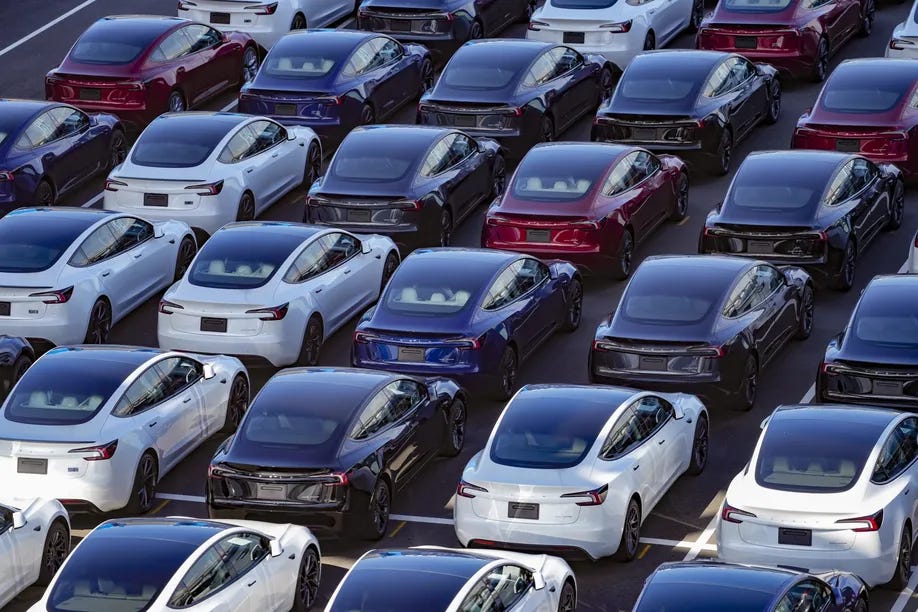
Samsung Electronics has secured a landmark $16.5 billion, multiyear contract to manufacture Tesla’s next-generation AI6 chips, with production set to take place at Samsung’s new Taylor, Texas plant through 2033. The deal, confirmed by Tesla CEO Elon Musk, is regarded as a pivotal boost for Samsung’s loss-making foundry business, which has struggled with underused capacity and stiff competition from TSMC. The agreement is expected to boost Samsung’s foundry sales by up to 10% annually and improve its standing in advanced 2-nanometer chip technology. Musk himself will be involved in optimizing the production line, underscoring the strategic importance for both companies—securing supply for Tesla and revitalizing Samsung’s chip division.
Business — LVMH’s Struggle

Economists
Louis Vuitton’s striking new flagship in Shanghai—a 17,000-square-foot “boat”-shaped complex—was meant to symbolize LVMH’s luxury dominance, but instead arrives as the group faces deepening turmoil. After decades of rapid expansion under Bernard Arnault, LVMH commands over 75 brands and once soared to a €450bn market value, yet its fortunes have soured amid slowing luxury demand in the US and China, a 4% revenue dip and a 22% profit slump in H1 2025, and a share price decline to less than €250bn. Heavy post-COVID price hikes have alienated buyers, and recent scandals—from labor abuses to workplace harassment—have further damaged its image. Meanwhile, Hermès has become the world’s most valuable luxury group, even with a fraction of LVMH’s sales. With its wine and spirits business faltering and calls emerging for major divestments, Arnault faces pressure to steer LVMH through market and reputational storms while laying the groundwork for family succession, as all five of his children take up key roles in the vast empire. For now, the company’s future—whether reinvigorated or at risk of further decline—remains uncertain.
Culture — “Comrade” Is Coming Back In China

Economists
The Chinese government is encouraging a revival of the term “comrade” (tongzhi) in everyday speech, hoping to evoke the egalitarian spirit and revolutionary camaraderie associated with Maoist China. The recent call by the People’s Daily to restore tongzhi as a common greeting is part of a wider campaign to stoke nostalgia for the socialist past and bolster support for the Communist Party—mirrored in “red tourism” and team-building exercises that romanticize early party history. Yet the push faces obstacles: since the 1990s, tongzhi has become widely used as slang for gay people, complicating its mainstream political use. More fundamentally, critics note that today’s China is sharply unequal, with a Gini coefficient exceeding even America’s, making the idea of widespread “comradeship” ring hollow for many. As one social media user put it, vast disparities in rights and incomes mean the term feels out of touch with modern realities—limiting its prospects for a genuine comeback beyond official circles.
The Daily Spark
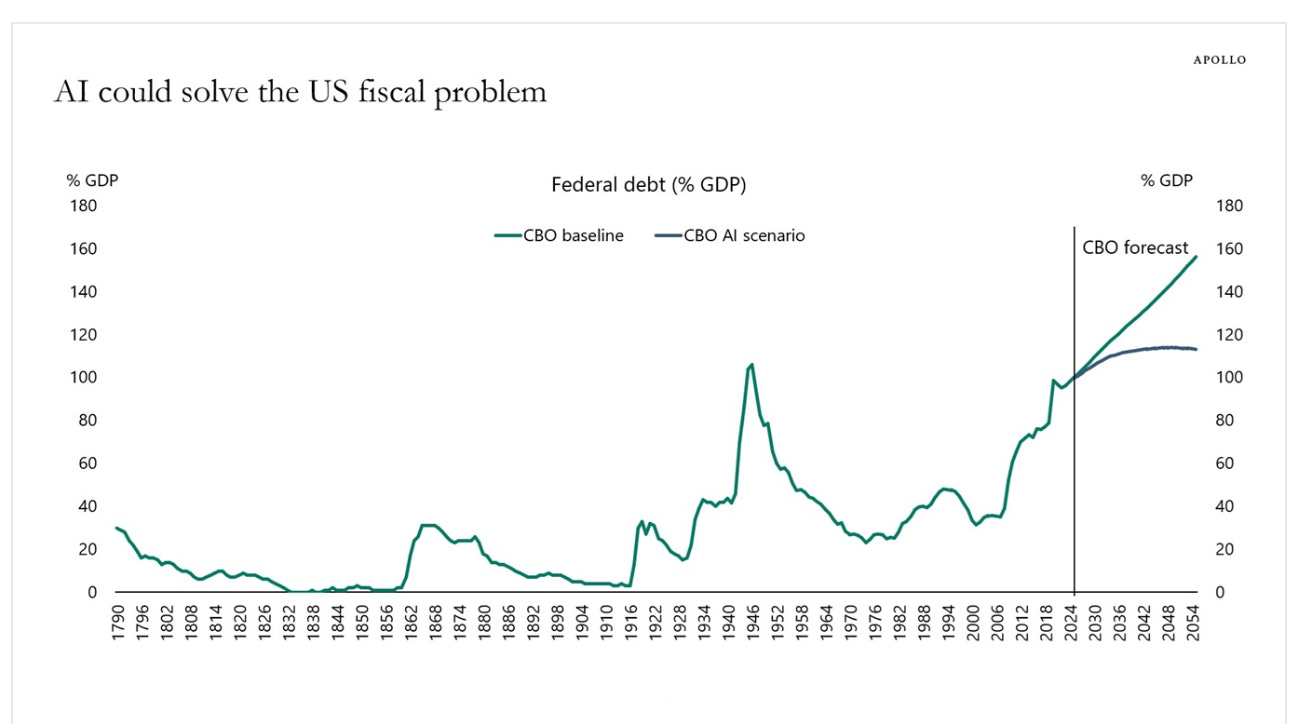
The Congressional Budget Office estimates that if AI results in permanently higher GDP growth and permanently lower inflation, it could solve the US fiscal problem, see chart below.
Song Recommendation — Love Me Not
Quote of the Day
"Yesterday I was clever, so I wanted to change the world. Today I am wise, so I am changing myself." - Rumi