

World Events - War in the Middle East

Economists
The ongoing Israel-Iran war has become a brutal test of staying power for both nations, as each unleashes arsenals honed over decades for just such a conflict—Israel with its advanced air defense systems like Iron Dome and long-range strike capabilities, and Iran with its vast missile stocks and deeply buried nuclear infrastructure. Despite Israel’s initial successes in intercepting most incoming Iranian missiles and drones, and its targeting of Iranian military and nuclear sites, the damage to Iran’s nuclear program has so far been limited, setting it back by months rather than years, while Israel’s own resilience is being strained by the cost of war and the risk of depleting its interceptor reserves. With the conflict’s outcome hinging on Israel’s ability to maintain momentum and possibly draw in American support for a decisive knockout blow against Iran’s most fortified nuclear sites, and with both sides facing mounting economic and societal pressures, the next crucial phase will determine not only which nation can endure but also whether a diplomatic solution or further escalation awaits, as Israel’s leaders seek to pressure Iran’s regime while acknowledging the limits of their own military reach and the necessity for a viable exit strategy.
Tech - Galaxy S25 Edge
Bloomberg
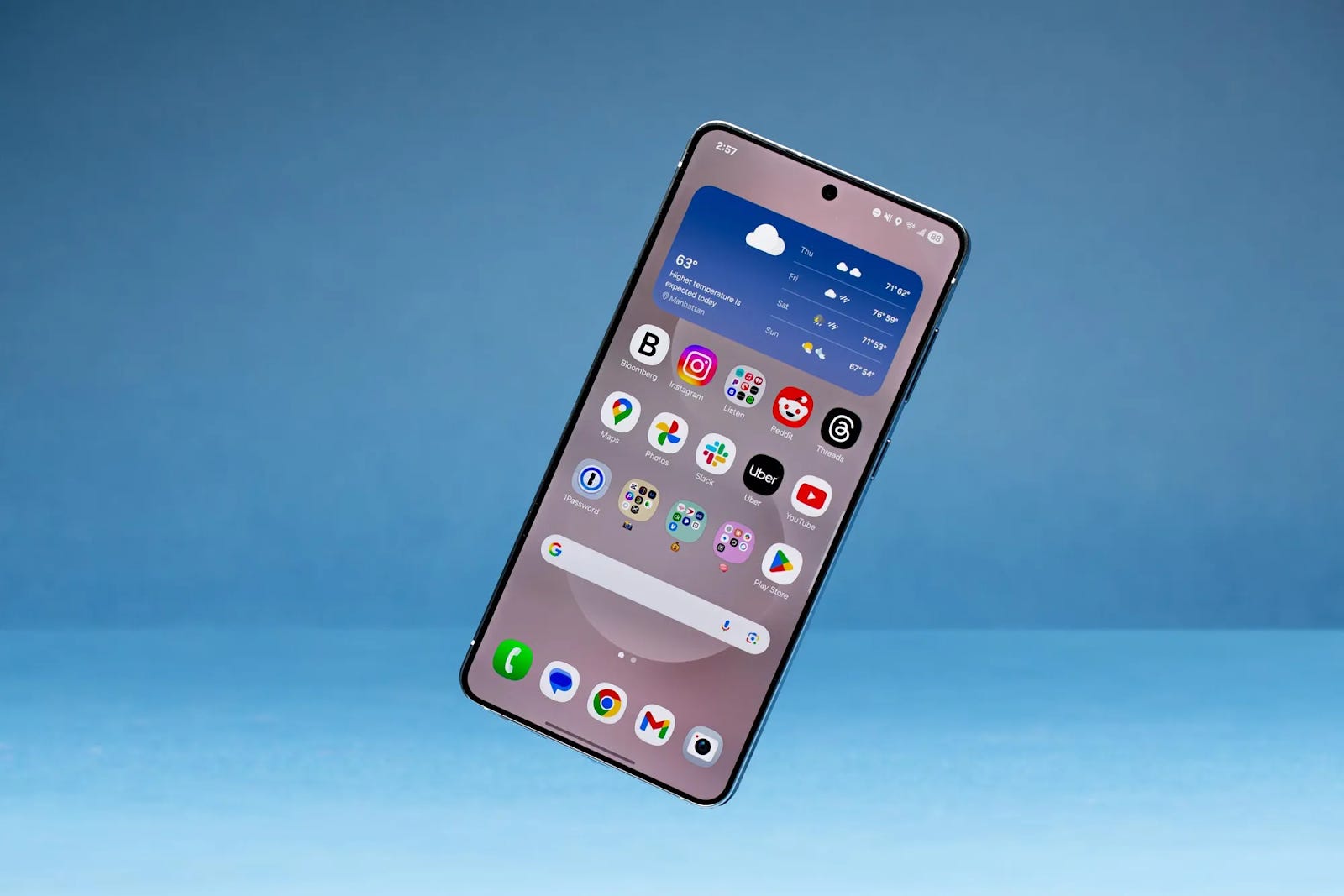
Samsung’s Galaxy S25 Edge marks a bold return to the pursuit of ultra-thin smartphone design, delivering a remarkably sleek, 5.8mm-thick handset that feels almost weightless at 163 grams, yet still packs the powerful Snapdragon 8 Elite processor and a standout 200MP camera borrowed from the S25 Ultra. The phone’s thinness and premium build—featuring a titanium frame, Gorilla Glass Ceramic 2, and IP68 rating—make for a luxurious, durable experience, though its glossy screen lacks the anti-glare coating of its bulkier sibling. However, the S25 Edge’s major compromise is battery life: its 3,900mAh cell is smaller than even the base S25’s, and while background optimizations help, power users will find themselves needing a recharge before the day’s end, especially with heavy camera, video, or gaming use. Charging is capped at a modest 25W, further underscoring the trade-off between svelte design and all-day endurance, a challenge that will soon be mirrored in Apple’s upcoming skinny iPhone—leaving consumers to decide if the allure of thinness outweighs the inconvenience of shorter runtime.
Economics - Dollar Sinks to a 3-Year Low
FT
The US dollar plunged to a three-year low after President Donald Trump announced plans to impose new tariffs on trading partners within the next two weeks, rattling markets and amplifying concerns over global trade tensions and geopolitical instability. The greenback fell nearly 1% against a basket of major currencies, including the euro and pound, as investors reacted to the prospect of renewed trade escalation and absorbed news of a US-China trade truce alongside heightened tensions in the Middle East, while also weighing the impact of lower-than-expected US inflation data and speculation about earlier Federal Reserve rate cuts. Analysts noted that the dollar’s weakness is compounded by a rising US budget deficit, investor unease over foreign investment taxation, and signs of reduced global appetite for US assets, with some warning that the currency’s decline may have further to go as the market reassesses the outlook for US economic and geopolitical leadership.
Culture - Can Startup Success Be Taught?

FT
The question of whether start-up success can be taught is sparking lively debate as more universities launch entrepreneurship courses, with industry leaders and academics offering sharply differing views on their value. While high-profile founders like DoorDash’s Evan Moore and Elon Musk argue that business school teaches little about the realities of launching a company, and that hands-on experience is far more valuable, demand for entrepreneurship education is surging—reflected in a 6% rise in specialized master’s programs over five years and a growing share of students aiming for self-employment or start-up roles. Supporters of business education, such as Stanford’s Ilya Strebulaev, point to data showing that nearly a third of US unicorn companies have at least one founder with a graduate business degree, and highlight the importance of networks, exposure to risk, and the ecosystem around top schools, which provide opportunities, mentorship, and the confidence to take the entrepreneurial leap. However, many agree that while business schools can offer valuable resources and connections, true start-up success ultimately depends on practical experience, resilience, and the willingness to learn from failure—qualities that are difficult to fully instill in a classroom.
The Daily Spark
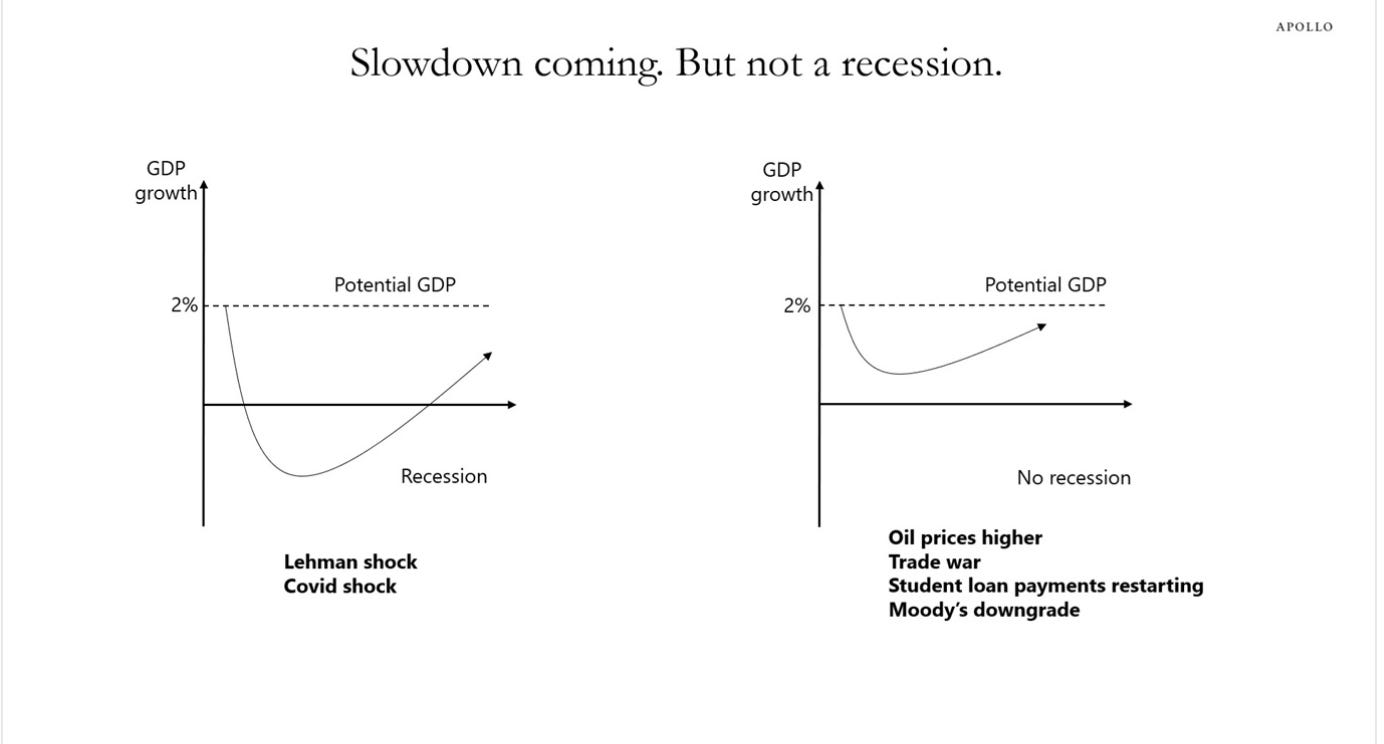
US economic growth is currently facing headwinds from higher oil prices, increased tariffs, the resumption of student loan payments, and higher long-term interest rates associated with the fiscal situation.
When we quantify these four drags on growth, we conclude that they are insufficient to push the economy into a recession.
In other words, these shocks are milder than those of Covid-19 and the Lehman crisis, see chart below.
However, we are closely monitoring these four risks to assess whether they become significant enough to put GDP growth into negative territory later this year—for example, if oil prices, tariffs, or long rates increase further.
Song Recommendation - I’ll Never Love Again
Quote of the Day
“A cynic is someone who knows the price of everything and the value of nothing” - Oscar Wilde