

The last time you watched Zootopia, you were probably in elementary school. Maybe middle school. A decade ago, Judy Hopps was teaching kids about grit, perseverance, and believing in your dreams despite being underestimated.
Now Zootopia 2 is here, breaking box office records, and those kids who watched Judy become a cop? They’re adults now. They’re navigating jobs, relationships, dating apps, and a world that feels fundamentally broken.
And Disney knows it. Because Zootopia 2 isn’t about chasing your dreams anymore. It’s about something way harder: being vulnerable enough to tell someone you care about them.
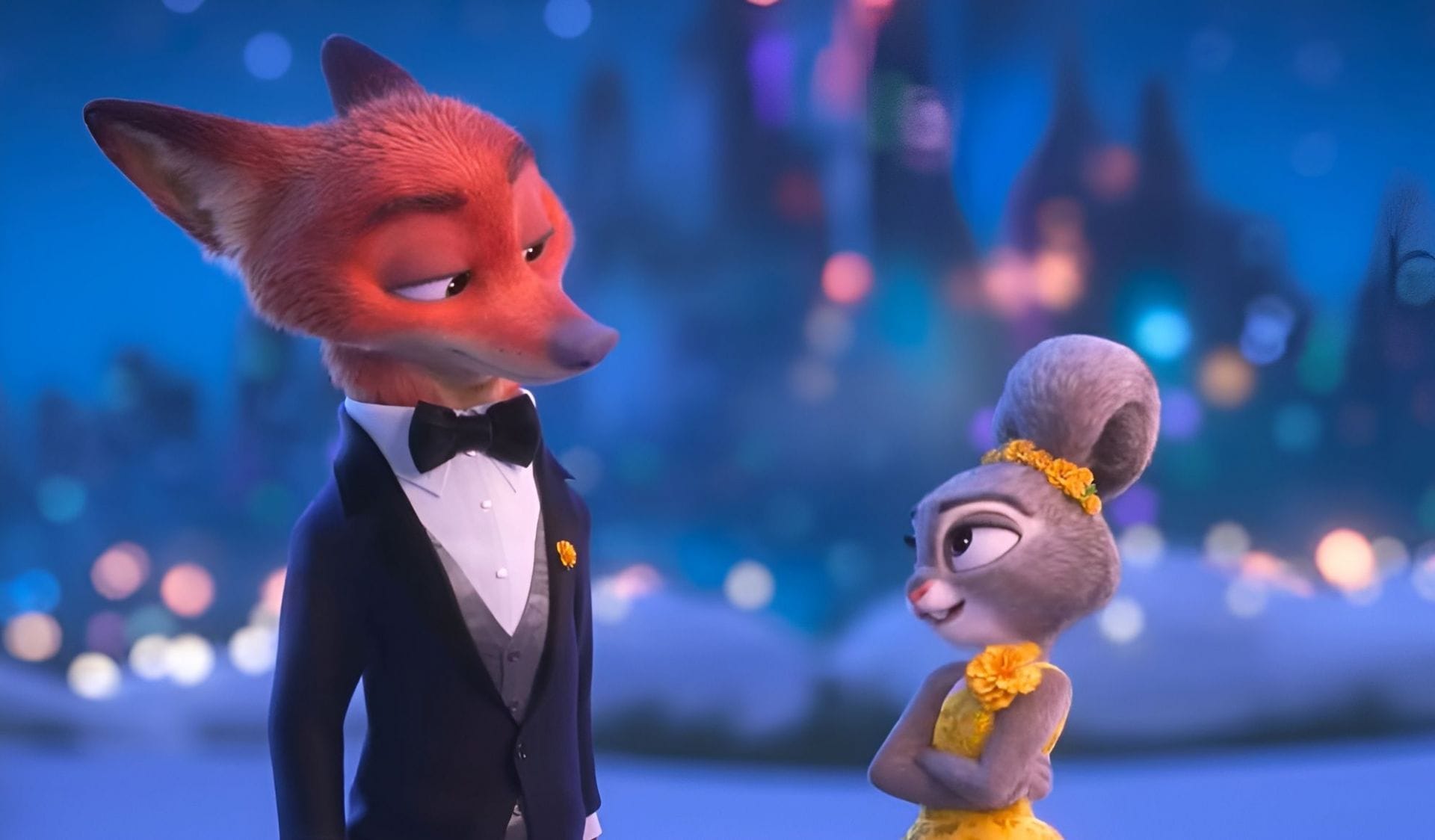
There’s a scene late in the movie where Nick finally breaks. He’s spent the entire film pushing Judy away, making jokes, deflecting—classic emotionally unavailable behavior. And then he says it: “I didn’t tell you you’re the best thing that’s ever happened to me because I’ve been on my own my whole life. It’s not an excuse. But the truth is I just don’t want you to get hurt, because nothing matters to me more than you do.”
Judy responds: “I only take what you say personally because you’re the only one in my life who ever believed in me when I don’t even believe in myself. I should have told you that no one else in the world matters to me more than you do.”
If you’re sitting in the theater and this hits you in the chest—if you feel called out by two animated animals finally being honest with each other—you’re not alone.
Here’s the uncomfortable question: When did we all become so terrified of being vulnerable?
Our generation grew up with social media. Instagram taught us that everyone else’s life is perfect. TikTok taught us to perform instead of feel. Dating apps taught us that people are disposable and connection is optional.
The numbers tells the story. 93% of Gen Z report comparing themselves to others online. 44% experience body image pressure from social media. For women, it’s even worse: 69-84% report body dissatisfaction and desire for lower weight. Among teen girls, 53% feel unhappy with their bodies at 13, rising to 78% by 17. Nearly 70% of women withdraw from activities due to body concerns.
This isn’t vanity. This is survival. When everything you post can be screenshotted, when every vulnerability can be turned into gossip or content, when every flaw can become a meme—you learn to hide. You learn to perform. You learn to never, ever let people see the real you.
And that armor we built to protect ourselves? It’s suffocating us.
Psychologists have a term for what happens when you can’t be vulnerable: insecure attachment. When you’re terrified of rejection, you develop anxious attachment—constantly seeking reassurance, clinging, spiraling over texts left on read. Or you develop avoidant attachment—pulling away, refusing to commit, keeping everyone at arm’s length so they can’t hurt you.
Both patterns destroy relationships before they even start. Anxious people come off as needy and exhausting. Avoidant people seem cold and emotionally unavailable. And both are just trying to protect themselves from getting hurt.
Sound familiar? It should. Because Gen Z’s relationship stats are dire.
Only 56% of Gen Z adults report having romantic involvement as teens, compared to 70%+ for older generations. Currently, 75% of Gen Z are single, and 37% of singles under 30 express zero interest in dating. The predicted lifetime marriage rate for Gen Z is 56-58%—a sharp drop from 70+% for previous generations.
We’re not choosing to be single because we’re happier that way. We’re choosing it because vulnerability feels impossible, and relationships without vulnerability don’t work.
Now go back to that scene in Zootopia 2. Nick’s whole character is built on deflection. He’s the smooth-talking con artist who never lets anyone in. Classic avoidant attachment. And Judy? She’s the overachiever who suppresses all discomfort because showing weakness feels like failure. Classic anxious attachment masking as competence.
They spend the entire movie hurting each other because neither can say what they actually mean. Nick makes jokes instead of saying “I care about you.” Judy pushes herself to the breaking point instead of admitting “I’m scared I’m not good enough.”
It takes a crisis—a literal action movie climax—for them to finally be honest. And when they are, it’s messy. It’s uncomfortable. Nick admits he’s emotionally stunted. Judy admits she’s insecure and afraid of failing. Neither of them has it figured out.
But they say it anyway. And that changes everything.
Many of us have been taught that vulnerability is weakness. That admitting you care gives someone power over you. That being “chill” and “nonchalant” is the only way to survive modern dating.
But research shows the exact opposite. Vulnerability builds intimacy and trust. When you share something real—something that scares you—and the other person responds with support instead of judgment, it creates closeness that nothing else can.
The problem isn’t that we don’t want connection. It’s that we’re terrified to take the first step. Because social media taught us that everything we do will be judged. That showing emotion is cringe. That caring too much makes you weak.
So we all perform apathy. We ghost instead of saying “I’m not interested.” We avoid difficult conversations. We end relationships through slow fades instead of honest discussions. We’d rather be alone than risk looking desperate.
And the irony? Everyone is doing this. Everyone is pretending they don’t care while secretly desperate for someone who does.

When Zootopia came out in 2016, the message was simpler: work hard, believe in yourself, and you can achieve anything. That’s the narrative Millennials were raised on. Hustle culture. Girl boss energy. Manifest your dreams.
But Gen Z inherited a different world. We watched our parents’ generation burn out. We graduated into a pandemic. We entered a job market that demands experience for entry-level positions and pays wages that haven’t kept up with inflation. We were told if we worked hard enough, we’d be fine—and then we did everything right and still can’t afford rent.
The “believe in yourself” narrative doesn’t hit the same when believing in yourself didn’t actually lead to stability or success.
So Zootopia 2 adjusts the message. It’s not about individual achievement anymore. It’s about connection. It’s about admitting you can’t do everything alone. It’s about being honest even when it’s uncomfortable.
Because here’s what Disney figured out that the rest of society hasn’t: the crisis isn’t that Gen Z lacks ambition. It’s that we lack each other.
There’s something devastating about the fact that a kids’ movie has to teach adults how to communicate feelings. But maybe that’s exactly the point.
When we were children, we said what we meant. If we liked someone, we told them. If we were scared, we cried. If we were happy, we laughed. We didn’t perform or strategize or protect ourselves.
Then we grew up. We learned that honesty gets weaponized. That caring too much makes you a target. That vulnerability is dangerous. So we built walls. We learned to be “chill.” We mastered the art of seeming like we don’t need anyone.
Zootopia 2 isn’t telling us to grow up. It’s telling us to grow back down. To remember what we knew instinctively before the world taught us otherwise: that connection requires honesty, that love requires risk, that relationships only work if you’re willing to be seen.
Nick’s confession isn’t smooth or practiced. It’s awkward and messy and real. He admits he’s emotionally stunted, that he uses humor to avoid feelings, that he’s terrified of losing Judy. And Judy admits she’s insecure, that she feels like a fraud, that she only pushes so hard because she’s afraid of being exactly what everyone thinks she is.
Neither of them is perfect. But they say it anyway.
And that’s the thing about vulnerability: someone has to go first. Someone has to risk looking stupid or desperate or too invested. Someone has to say “I care about you” without knowing if the other person will say it back.
And that’s all it takes. One person being brave enough to be real. One person choosing connection over self-protection. One person saying what everyone else is too scared to say.
Maybe that person could be you.
Or maybe you’re waiting for someone else to go first—someone to prove it’s safe, to show you that honesty won’t destroy you, to demonstrate that vulnerability is worth it.
That’s fair. But just know: everyone else is waiting too.
So who’s going to be the first one to stop playing it cool and start being real?
Because here’s what Disney got right: the world doesn’t need more people who are perfect. It needs more people who are honest.
Even if that means risking looking like a fool. Even if it means getting hurt. Even if it means being chalant in a world that rewards nonchalance.

Zootopia 2 isn’t a kids’ movie. It’s a mirror. And if you see yourself in Nick’s deflection or Judy’s insecurity—if that climactic confession scene made you uncomfortable because it hit too close to home—then maybe it’s time to ask yourself:
When was the last time you told someone they mattered to you?
Not through a like or a repost or a vague caption. Actually told them. Out loud. With words. Risking rejection.
Because nothing in the world matters more than the people who matter to you.
Even if you haven’t said it yet.
Especially if you haven’t said it yet.
If you liked this piece, please share it with your friends and loved ones. Subscribe to The Americano, the voice of Gen Z on economics and culture.
-AL
Such a beautifully written piece and so relatable. This reminds me of the impact of Inside Out, at least for me. So many thoughts and reflections after reading…you are very right about the impact of Zootopia!
love this : ) if you make any more movie psychology analysis ill be sure to read. im glad i am not the only one who caught judy's anxious attachment and nick's avoidant attachment. judy actually isn't perfect or "the healthy one in the relationship", despite being the golden good girl. the whole movie she drags nick along her achieving bus, despite his fear of reptiles & wanting to run away with fake identities when the criminal boss lynxes threaten to eliminate them. he stays because he cares about her wellbeing and she's partially oblivious to how deeply his care runs for her. that's what avoidants do, they'll do any act of caring except outright say I love you. Judy doesn't take his complaints seriously the first half of the movie. he doesn't know how to advocate for himself in their partnership and is probably terrified of the strength of his feelings for her.
overall, i love how they have to have healthy adult conversations about their emotional differences. they're a great fictional couple because they make each other grow healthier. nick appreciates judy's relentless need to help and calms her down. judy genuinely believes in nick's heart and ability to be more than his circumstances, and loves having HIM around as a co-worker and friend.