

You can’t scroll through TikTok without seeing it. Boys in backwards caps demonstrating their 7-step skincare routines. Guys reviewing retinol serums between gym videos. The comments section? Half impressed, half confused: “men finally discovered moisturizer at 23 and thinks he’s revolutionary.”
And then there’s the tote bags. The Stanley cups. The guys reading bell hooks with a cup of matcha in their hand while wearing a Laufey tee. The internet has a name for this: performative men. But what if this isn’t performance? What if Gen Z men aren’t pretending to care about skincare—what if they actually do?

Let’s go back for a second. When Estée Lauder started mixing creams in her kitchen in 1946, she wasn’t thinking about men. Nobody was. For decades, skincare was women’s territory—marketed to women, sold to women, used by women. Walk into a Sephora even ten years ago and you’d be hard-pressed to find a single guy browsing the aisles.
The entire beauty industry was built on a simple assumption: men don’t care about this stuff. Real men have weathered skin and work with their hands. Moisturizer? That’s for women who have time to worry about appearances.
But something shifted. Quietly at first, then all at once.
The male skincare market is now worth $17.96 billion globally in 2025. By 2034, it’s projected to hit $31.40 billion—growing at 6.37% annually. Men aged 19 to 35 are driving this explosion, and they’re not just buying face wash. They’re building routines. They’re watching tutorials. They’re asking their dermatologist about vitamin C serums.
In South Korea and Japan, this isn’t news—male skincare has been normalized for years. Male K-pop idols openly discuss their skincare routines. Athletes endorse face masks. It’s not considered feminine; it’s considered basic hygiene, like brushing your teeth.
The West is catching up fast. L’Oréal, Dove Men+Care, and Kiehl’s have all launched men’s lines, but what’s interesting is that they’re not marketing them as “beauty products.” They’re framing them as performance optimization, skin health, wellness. Masculinity repackaged for a generation that actually cares about self-care.
Here’s where it gets interesting. This isn’t just about TikTok trends or influencer culture, though that’s part of it. This is about a fundamental shift in what masculinity means to Gen Z men.
Previous generations tied male identity to being the provider, the protector, the stoic breadwinner who didn’t have time for “frivolous” things like face cream. But Gen Z men grew up in a different world. They watched their mothers and sisters become financially independent. They saw the 2008 recession destroy the myth that hard work guarantees stability. They inherited an economy where a college degree doesn’t guarantee a job, where houses cost ten times what their parents paid, where traditional markers of manhood feel increasingly out of reach.
So they’re redefining what it means to take care of themselves. If they can’t buy a house at 25, at least they can have good skin. If traditional masculinity offered economic security in exchange for emotional suppression, Gen Z men are asking: what if we just... don’t do that?
The “performative” criticism misses the point entirely. Yes, some guys are doing it for the aesthetic, for the attention, for the bit. But most are doing it because they genuinely feel better. Because taking care of yourself—actually investing in your own wellbeing—shouldn’t be gendered. Because the old rules about what men can and can’t care about are exhausting.
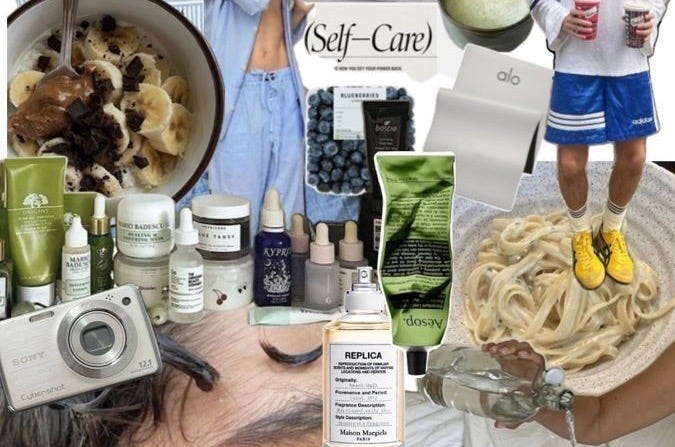
Here’s what’s wild: while some people mock Gen Z men for being “soft” or “too feminine,” these guys are literally just... taking care of their skin. They’re using sunscreen. They’re moisturizing. They’re preventing premature aging and skin cancer. The healthiest generation of men in history is being called performative for doing what dermatologists have begged people to do for decades.
And maybe that’s the real story here. Maybe the revolution isn’t that men are becoming more feminine. Maybe it’s that we’re finally letting go of the idea that self-neglect is masculine.
The skincare boom isn’t about vanity. It’s about a generation of men who watched their fathers ignore their health, suppress their emotions, and die young—and decided to try something different. It’s about men who grew up with sisters and female friends and realized that “girl stuff” and “guy stuff” is an arbitrary distinction that doesn’t actually serve anyone.
The economic transformation is already here. Major brands are betting billions on the idea that men’s skincare isn’t a fad—it’s the new normal. Subscription services, personalized regimens, celebrity endorsements—the industry is building infrastructure around male consumers they once ignored.
But the cultural shift matters more than the market numbers. When young men normalize taking care of themselves, when they reject the notion that suffering in silence is strength, when they choose wellness over performance—that changes everything. Not just for them, but for the women in their lives who’ve been carrying the emotional labor. For the kids who’ll grow up seeing their dads model self-care. For a society that’s finally questioning whether the old rules about masculinity were ever worth following.
So yes, Gen Z men are washing their faces. They’re using toner. They’re talking about skincare routines with the same enthusiasm their grandfathers reserved for cars or sports.
And honestly? It’s about time.
The man we need isn’t the one who’s too tough to moisturize. It’s the one who’s secure enough to take care of himself.