

The fireball erupts at dawn, turning the Caribbean waters orange. A small fishing boat—wooden hull, faded paint, nets still draped over the sides—disintegrates in an instant. The missile strike is clinical, precise, delivered from a drone circling at 15,000 feet. On the deck of the USS Gerald R. Ford, now positioned fifty miles off Venezuela’s coast, sailors track the explosion on radar screens. Another “narco-terrorist” neutralized, the official report will say. But when the wreckage washes ashore in Trinidad days later, locals find something that wasn’t mentioned in the Pentagon briefing: charred personal effects, a child’s shoe, a fisherman’s ID card.
It’s November 2025. The world’s largest aircraft carrier leads an armada in the Caribbean—eight warships, B-52 bombers, Marines rehearsing beach landings. Over sixty people have died from strikes since September. President Trump has declared Venezuelan President Nicolás Maduro’s “days are numbered.” The question is why America is on the verge of starting a war with Venezuela, and why this matters to you.
This story dates back to over a hundred years ago. In December 1902, European warships blockaded Venezuela’s coast. Theodore Roosevelt intervened not because he was opposing European imperialism, but rather to claim it for America. He created the Roosevelt Corollary, declaring the United States as the Western Hemisphere’s policemen. “We cannot afford to let Europe get a foothold in our backyard,” he insisted. What followed was a century of interventions with changing justifications but an identical script: Guatemala in 1954 for United Fruit Company, Chile in 1973 backing Pinochet against Allende, Grenada in 1983, Panama in 1989 arresting Noriega on drug charges, Nicaragua throughout the 1980s during Reagan’s Contra war. The rationale shifts between business interests, communism, drugs, and terrorism, but the pattern remains constant.
Trump’s first term in 2016 brought Venezuela’s turn. He recognized opposition leader Juan Guaidó as the “legitimate” president, seeking regime change. But he backed down when generals warned it would be a nightmare. Maduro survived. By 2025, Trump is back with renewed determination. After briefly allowing Chevron to resume oil shipments in July, everything changed overnight. The Treasury designated “Cartel de Los Soles” a terrorist organization with Maduro as leader. Trump doubled his bounty to $50 million. In August, he authorised military force against Latin American cartels. On September 2nd, missiles started falling.
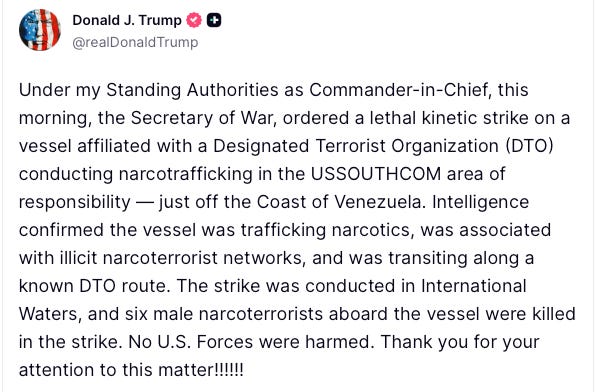
Donald Trump took this matter personally. For Trump, whose identity revolves around never appearing weak, this is unfinished business. He’s offering deals, warning that Maduro “doesn’t want to fuck around with the United States.” But Maduro won’t take them. To Trump, that’s not just politics, it’s personal insult. Toppling Maduro also lets Trump claim he solved Venezuela’s refugee crisis at its source, even as he simultaneously deports 600,000 Venezuelans back to the country he’s calling a terrorist state.
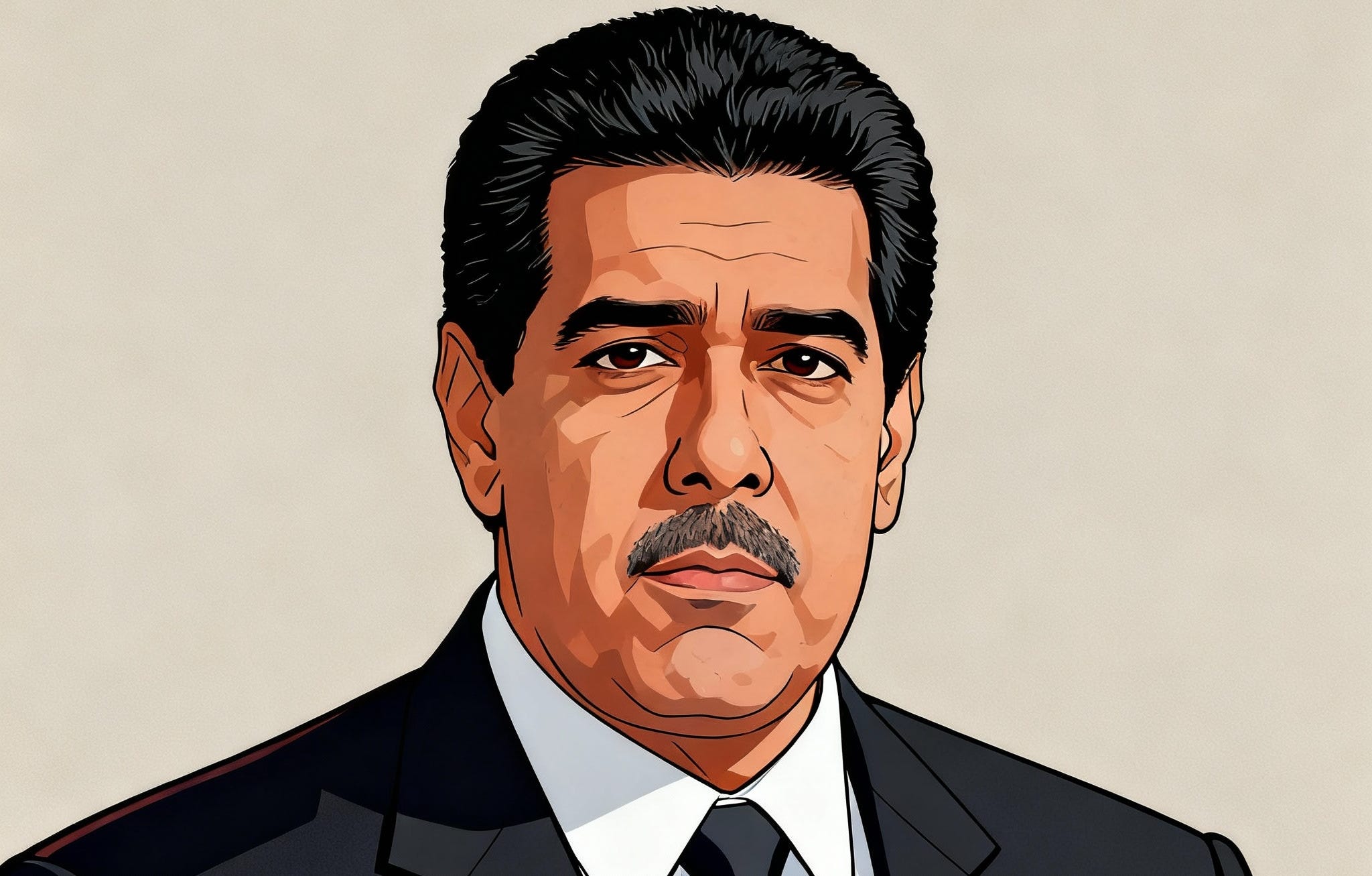
Nicolás Maduro is fighting for his survival, having witnessed the fates of Saddam Hussein, the Iraqi dictator overthrown and executed after the 2003 US invasion, and Muammar Gaddafi, Libyan dictator killed during NATO-backed uprising in 2011. With Cuban intelligence support, he’s purged disloyal officers, tortured them, imprisoned their families. He’s mobilized militias and prepared defenses, betting that if war looks costly enough, Trump backs down. For Maduro, this is survival.
Meanwhile, Marco Rubio architects this war from his dual position as Secretary of State and National Security Advisor, fusing neoconservative ideology with Trump’s nativism into “Americas First”—treating domestic problems as foreign policy targets. He’s reframed gangs as “the al-Qaeda of the Western Hemisphere,” despite US intelligence disputing Venezuela’s role in drug trafficking. If Maduro falls, Cuba and Nicaragua lose Venezuelan oil subsidies and destabilize too. For Rubio, this is legacy.
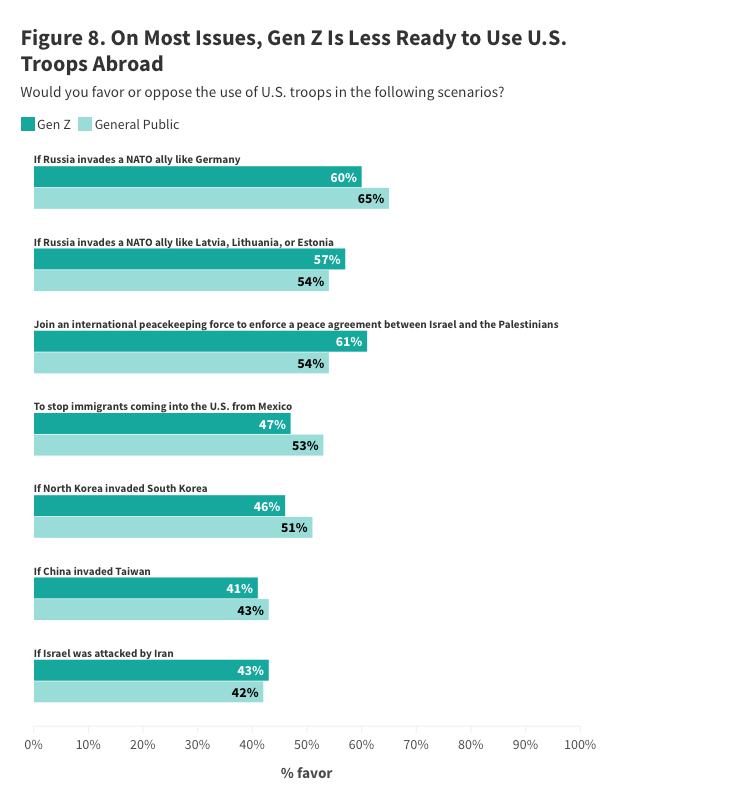
The American public, particularly younger voters, doesn’t want this. This generation grew up watching “forever” wars fail: Afghanistan lasted 20 years and cost $2.3 trillion in total failure, Iraq was built on lies and created ISIS, Libya is now a failed state. Gen Z has never seen America win a war, only lose them expensively and pointlessly. They can’t afford housing or healthcare, drown in student debt, face climate catastrophe—yet somehow there’s always money for war. The carrier cost $13 billion. Air campaigns cost tens of billions. A ground invasion? Try trillions.
Two futures loom before us. In the optimistic scenario, Tomahawk missiles destroy air defenses at 3:00 AM, B-2 bombers eliminate military bases, and by dawn Venezuela has no air force. Senior officers defect and arrest Maduro. Opposition leader María Corina Machado emerges to cheering crowds. Trump declares victory like Grenada in 1983 or Panama in 1989—quick and decisive. But cracks appear immediately. Machado inherits ruins with no loyal army. Officers who arrested Maduro saved themselves, not democracy. Pro-Chavez militias wage insurgency while Colombian guerrillas fight to keep jungle territory. Within weeks, Machado begs for American troops. Trump sends 5,000 “temporarily.” The stabilization drags on with attacks on patrols and mounting casualties. The mission becomes year two, then three, and Iraq parallels become undeniable.
In the darker scenario, air strikes can’t find Maduro. He broadcasts from underground bunkers, calling for resistance. An F-35 is shot down, its pilot captured and paraded on TV. After three weeks of bombing, Trump faces a choice: accept failure or escalate. Marines land near Caracas and push inland, entering urban warfare hell with narrow streets, snipers, and IEDs. A 17-year-old with an RPG kills the first Marine, then vanishes into crowds. Images of troops kicking in doors and families killed at checkpoints go viral globally. Maduro’s guerrilla strategy aims to make occupation so costly and unpopular that Americans leave—it worked in Vietnam, Iraq, and Afghanistan. Refugees flood Colombia by the millions. Within three months, 50,000 US troops are deployed at costs exceeding $100 billion.
The narrative on the “war” against Venezuela has been simplified into something remarkably simple: drug trafficking, terrorism, authoritarianism. But this isn’t as straightforward as Trump portrays it. This is a war like many others the country has funded under the banner of advancing national interest and world peace—wars that, in retrospect, did neither. The brutality of Maduro’s regime and the suffering of Venezuelans under his rule are real and undeniable. Yet history suggests that replacing one evil with another is often not the solution. If it were, the Taliban wouldn’t be in power today. American military intervention Afghanistan, Iraq, and Libya all promised liberation and delivered chaos. The question isn’t whether Maduro deserves to fall, but whether American military intervention serves actual strategic interests and world stability, or whether it’s propelled by personal grudges and exaggerated claims that will simply trade one catastrophe for another while draining resources that could address crises at home.
Thank you for reading the Americano.
Monday, November 10th, 2025.