

World Events — The Institutions Protecting US Democracy Have Turned Into Traps
Bloomberg Essay
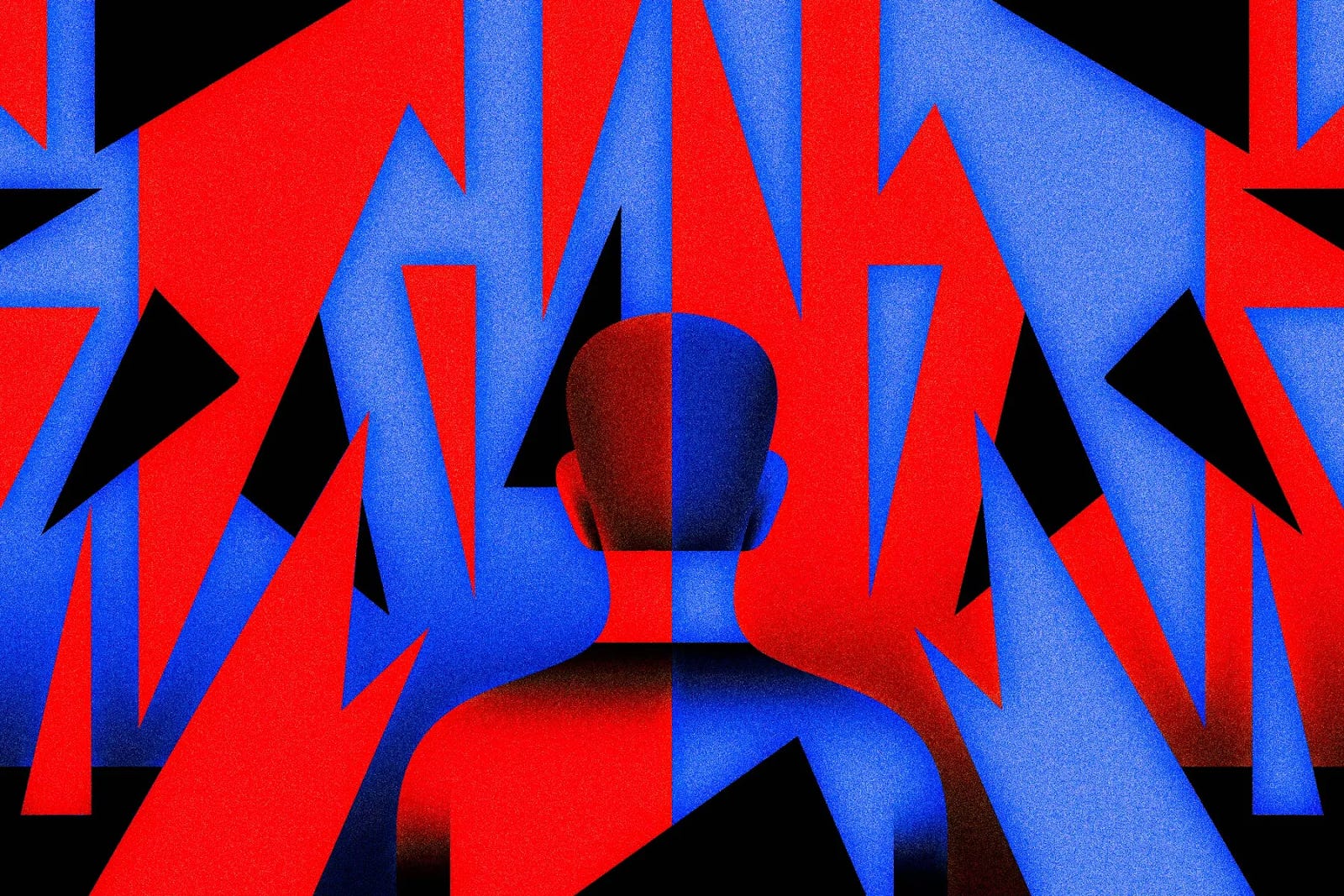
America’s political institutions—once celebrated as bulwarks against extremism—have become vulnerable traps in an era of deep polarization. The two-party system, designed to moderate politics by forcing parties toward the center, now accelerates extremism: as polarization intensifies, parties are captured by their most fervent factions, leaving little room for moderation and insulating extremists from competition. Decentralized election administration, once a safeguard against centralized fraud, now makes it easier for partisan actors in key states to tip close contests, especially as elections hinge on a handful of battlegrounds. Meanwhile, the Supreme Court’s recent rulings, such as granting presidents immunity for “official acts,” show how even constitutional protections can be reinterpreted in ways that erode checks on executive power. The Trump administration’s expansion of presidential authority, efforts to override Congress, and confrontations with the judiciary underscore how these institutional strengths—when exploited in a polarized context—can undermine democracy rather than defend it. As Americans’ faith in their democracy plummets, the features that once ensured stability now risk accelerating the nation’s slide toward autocracy unless reforms address the new realities of polarization and institutional fragility.
Tech — How Xiaomi Succeeded Where Apple Failed
Bloomberg
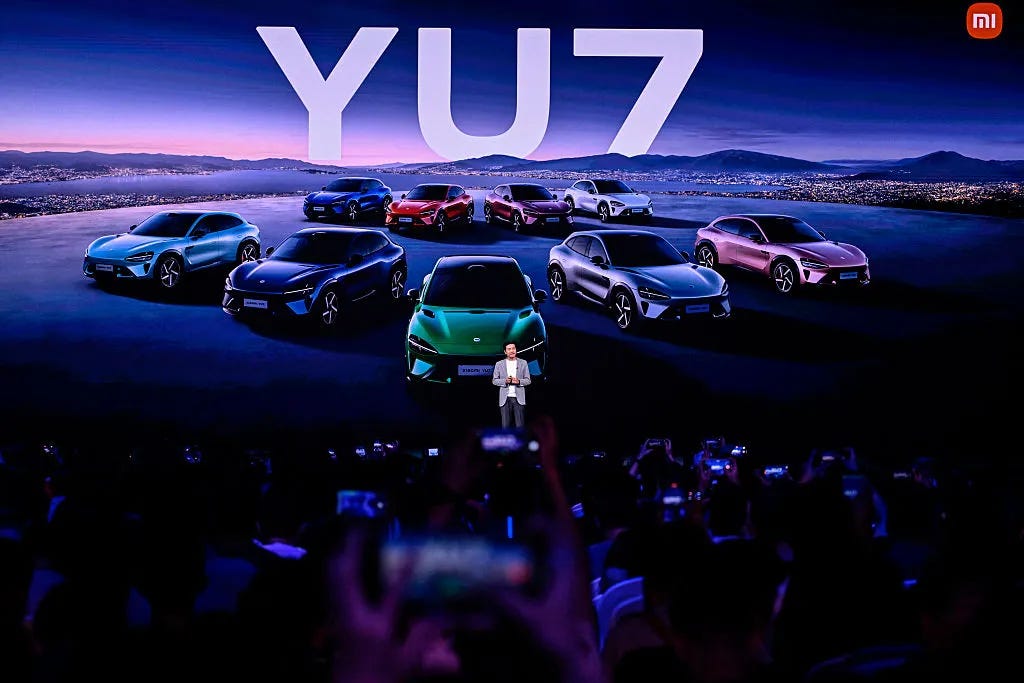
Xiaomi succeeded where Apple failed by adopting a pragmatic, focused approach to electric vehicles, leveraging China’s robust EV ecosystem, and capitalizing on its brand strength and supply chain mastery. While Apple’s $10 billion, decade-long “Project Titan” floundered amid shifting ambitions—oscillating between a standard EV and a fully autonomous vehicle—and internal leadership turmoil, Xiaomi’s founder Lei Jun set clear, achievable goals, rapidly brought the SU7 sedan and YU7 SUV to market, and staked his personal reputation on their success. Xiaomi’s strategy included recruiting top automotive talent from established Chinese carmakers, investing over $1.6 billion in its own supply chain, and building its own factory to ensure production control and cost efficiency. The company’s deep integration with China’s state subsidies, charging infrastructure, and mature supplier network gave it a structural advantage Apple never had. Xiaomi’s affordable, tech-forward vehicles resonated with its loyal “Mi Fan” base, resulting in over 289,000 SUV orders within an hour of launch and a projected 350,000 deliveries in 2025, with profitability expected by the end of the year. In contrast, Apple’s ambition to leapfrog the industry with disruptive technology led to delays, spiraling costs, and ultimately, cancellation—demonstrating that Xiaomi’s grounded, consumer-centric execution outperformed Apple’s moonshot gamble in the complex, capital-intensive auto sector.
Economics — How America’s Economy Is Dodging Disaster

Economists
Despite initial fears of economic disaster following President Trump’s sweeping “Liberation Day” tariffs, the US economy has so far avoided the predicted recession: consumer prices have not surged, unemployment remains steady, and the S&P 500 has rebounded to record highs. This relative calm is largely due to a 90-day pause on many tariffs, which allowed markets to recover after an initial crash, and to companies stockpiling imports ahead of the tariffs, temporarily muting price increases for shoppers. For now, most businesses are absorbing the higher import costs rather than passing them on to consumers, hoping the tariffs will be rolled back, and the impact on inflation has been minimal. However, there are signs of economic strain: household spending has dipped, private sector job growth is slowing, and GDP growth estimates have dropped from 2-3% to around 1%. Much hinges on whether Trump extends the tariff pause after July 9; if not, the risk of a sharper slowdown rises, as uncertainty and higher costs could further suppress investment and demand. Ultimately, while the tariffs have not yet produced a crisis, they have left the US economy more fragile and uncertain, with the public largely insulated from immediate pain but likely to be poorer in the long run.
Culture — Are Startup Founders Different?
Startup founders do tend to differ from the general population, particularly in their appetite for risk, openness to novelty, and a strong internal “locus of control”—the belief that they can shape their own destinies rather than being ruled by external forces. The best entrepreneurs, like Salar al Khafaji of Monumental, often set themselves apart by asking the “Hamming question”: What is the most important problem I could be working on? This drive to tackle big, meaningful challenges—rather than simply seeking a higher salary or a more convenient commute—distinguishes many founders from typical employees. Research supports these observations, showing that founders are generally more adventurous, less modest, and more willing to take risks, though startup success also depends heavily on external factors like access to capital and team diversity. Ultimately, while founders may share certain traits and a mindset oriented toward impact, their success is not predetermined by personality alone, and anyone can benefit from adopting some of their reflective, ambitious approaches to work and problem-solving.
The Daily Spark
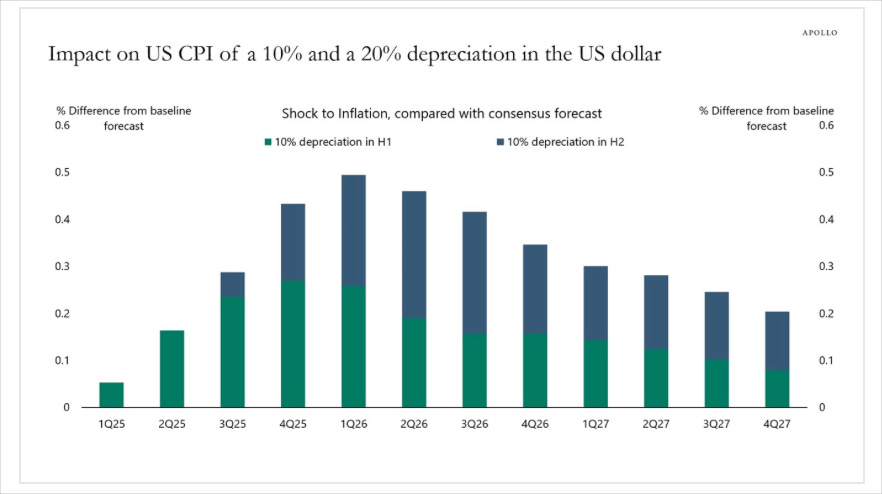
There is already upward pressure on inflation from tariffs, oil prices, and immigration restrictions, and the chart below shows the impact on inflation of a 10% and a 20% depreciation in the dollar. The bottom line is that we should see inflation move higher over the coming months; that is what the consensus expects, what the Fed expects, and what we expect.
Song Recommendation — No Need To Worry
Quote of the Day
"Family is where life begins and love never ends." — Oprah Winfrey